Wall Clock Facing Main Door: Feng Shui vs Practical
According to Vastu Shastra and Feng Shui, placing a wall clock opposite the main door is discouraged due to symbolic concerns of repelling opportunities and energy flow. However, scientific evidence does not support these beliefs. Your home decor choices should reflect personal preference and practicality for a truly welcoming space.
Have you ever felt uneasy walking into your home only to see a wall clock staring directly at the main door? This common placement is often discouraged in Feng Shui and Vastu Shastra, as it's believed to push away time and opportunities, creating a sense of instability and urgency. We explore the symbolic reasons behind this advice, the psychological effects on your daily mood, and practical design solutions to ensure your entrance feels harmonious and welcoming—balancing tradition with your personal aesthetic preferences for a truly peaceful and inviting home environment.
- Can a wall clock face the main door? The definitive answer
- Vastu Shastra Principles for Wall Clock Placement
- The Psychological And Design Impact Of Your Clock's Position
- Science vs. belief: what really matters in clock placement
- Practical Tips For Positioning Your Wall Clock
- Answering your common questions about clock placement
Can a wall clock face the main door? The definitive answer
No scientific evidence supports placement rules for wall clock main door configurations. Cultural traditions like Feng Shui and Vastu Shastra offer guidance, but these are subjective beliefs with no empirical basis. Practical and aesthetic considerations should guide your decision. Always prioritize what feels right for your home. There's no universal rule to follow.
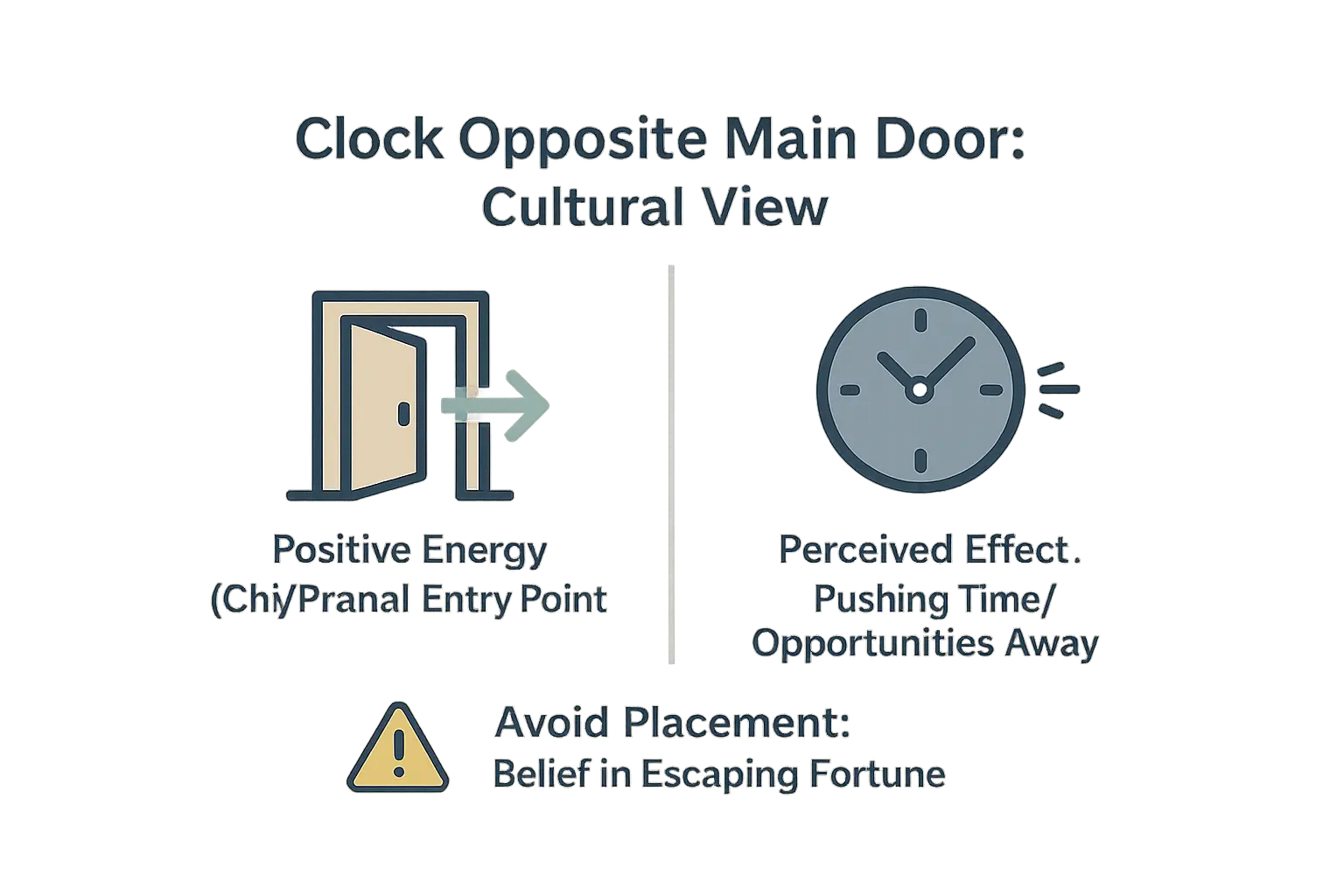
The common belief: why you should avoid this placement
In Feng Shui, a clock facing the main door may reflect incoming Chi energy, blocking positive flow into your home. Vastu Shastra also advises against it, suggesting it creates a sense of rushing time and disrupts energy movement. These are cultural interpretations, not facts.
Many homeowners place clocks opposite the entrance without issues. The idea of 'time rushing away' is symbolic. There's no empirical proof of negative effects. Personal preference plays a key role in placement choices.
Distinguishing cultural practices from universal rules
These traditions are not universal rules. No scientific studies confirm the claimed effects of clock placement. Placement decisions depend on personal preference and home aesthetics. Always prioritize your comfort and style.
Some follow Feng Shui practices for harmony, while others ignore them entirely. The choice is yours. Focus on creating a beautiful, functional space. Remember, these beliefs lack scientific backing. Your home should reflect your personal taste, not unverified traditions.
Vastu Shastra Principles for Wall Clock Placement
There is no scientific evidence supporting Vastu Shastra clock placement rules. These are cultural beliefs rooted in tradition. Prioritize personal aesthetics and practical needs over unverified claims.
The Best Directions for Positive Energy Flow
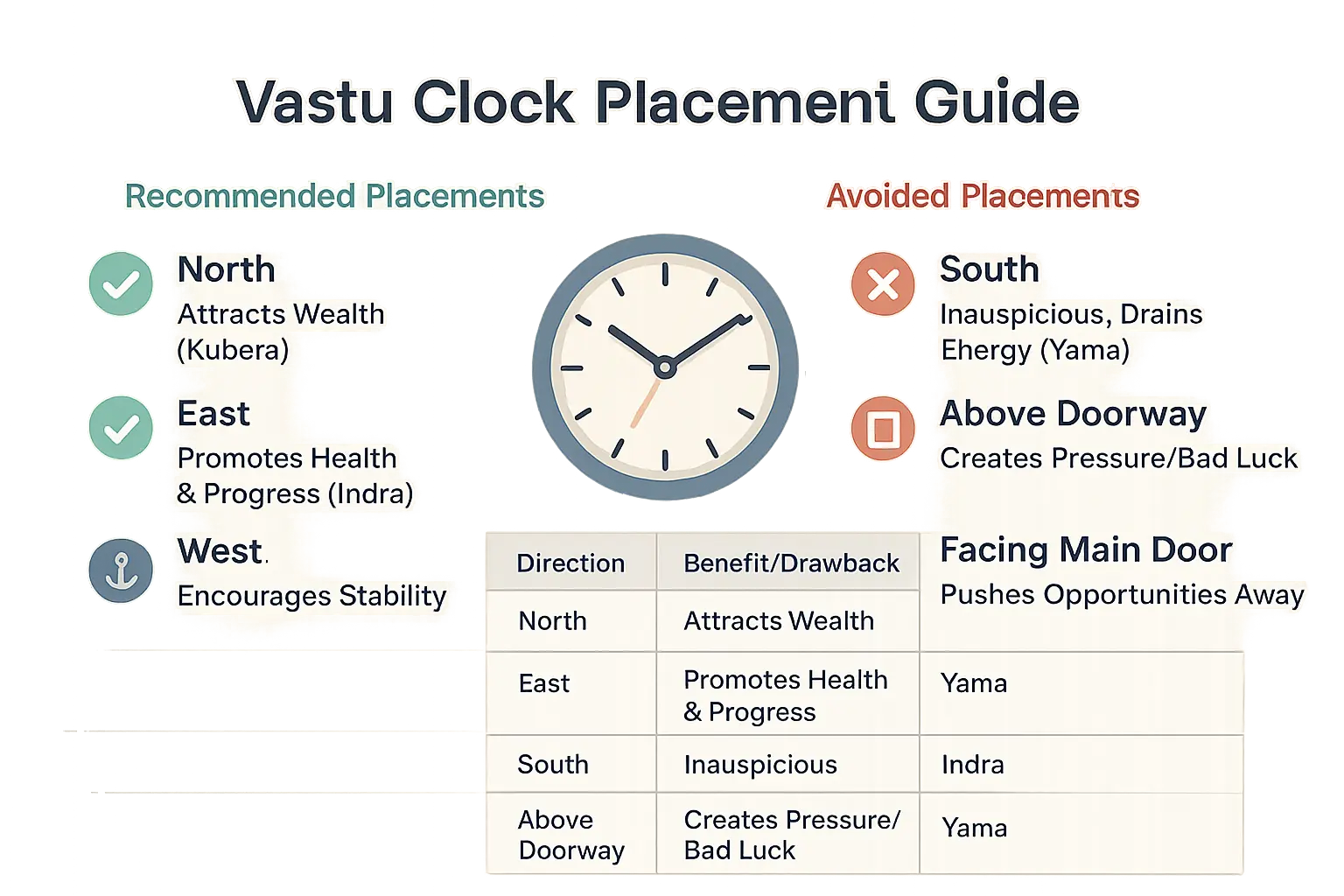
The North direction is linked to Kubera, the deity of wealth. Placing a clock here is believed to attract prosperity according to Vastu traditions.
East, governed by Indra, promotes health and positive progress. West offers stability and is a secondary choice. These directions hold symbolic meaning in Vastu Shastra.
Circular clocks are ideal for neutral energy flow. Rectangular shapes suit the East wall. Black and white clocks work best for West placements.
Light colors like white, cream, or sky blue suit all directions. North walls pair with metallic tones. East walls suit wood or dark green shades.
Ensure your clock functions properly. A stopped clock symbolizes stagnation and must be repaired immediately to maintain positive energy flow.
Directions and Areas to Strictly Avoid
South, South-West, and South-East directions are discouraged in Vastu. They are thought to drain energy and attract negativity. Avoid these placements for harmony.
Never place clocks above doorways or facing the main entrance. These positions create symbolic pressure and block energy flow. Indoor placement is required only.
In bedrooms, keep clocks away from beds to prevent sleep disruption. Avoid placing them near headboards or facing sleepers for restful nights per guidelines.
Broken or dirty clocks must be replaced immediately. They symbolize stagnation and attract negative energy. Clean, functioning clocks maintain positive vibes in your space.
Never place clocks outside the home. They are meant for indoor use only. Outdoor placement risks damage and disrupts energy flow.
| Direction | Associated Benefit / Drawback (Vastu Perspective) | Ruling Deity / Element |
|---|---|---|
| North | Attracts wealth and prosperity | Kubera (God of Wealth) |
| East | Promotes health and positive progress | Indra (King of Gods) |
| West | Encourages stability and gains | Varuna (God of Water) |
| South | Considered inauspicious, drains energy | Yama (God of Death) |
| Above a doorway | Creates symbolic pressure and bad luck | N/A |
| Facing the main door | Pushes opportunities and time away | N/A |
The Psychological And Design Impact Of Your Clock's Position
Creating A Welcoming Entrance: The Psychological Effect
No scientific evidence supports clock placement restrictions. Feng Shui traditions are cultural beliefs without empirical backing. Prioritize comfort.
Placing a clock in your immediate line of sight upon entering can subconsciously create a feeling of being rushed, preventing your home from being a true sanctuary.
Time perception varies. Some find entryway clocks helpful for routines like leaving for work; others feel stressed by constant reminders. Kitchen clocks aid meal prep, but entryway clocks may disrupt relaxation after a long day.
Aesthetic And Practical Considerations For Your Entryway
Entryways benefit from mirrors (expand space), snake plants (greenery), artwork, and consoles (storage). Mirrors enhance light; consoles keep entries clutter-free.
Position clocks at eye level (150-160 cm), avoid main doors. Ensure proper lighting. Minimalist digital suits modern; wooden analog fits traditional. Clock above console with mirror adds function and style.
Many designers recommend mirrors or art over clocks. Clocks are better suited for kitchens or offices where time management is crucial. A mirror serves as a practical check before leaving.
Personal preference matters. Feng Shui lacks evidence; modern design prioritizes comfort. Your entryway should reflect personality and needs while inviting.
Science vs. belief: what really matters in clock placement
Is there any scientific evidence?
No scientific evidence supports rules for clock placement affecting luck or health. Peer-reviewed studies confirm these beliefs lack empirical backing. Cultural traditions like Feng Shui are subjective and not scientifically validated. Environmental psychology research shows no correlation between clock placement and life outcomes.
While cultural beliefs like Feng Shui offer meaningful guidelines for many, these placement rules are subjective and lack empirical evidence in scientific studies.
Some traditions claim a clock facing the main door 'pushes opportunities away.' However, this is symbolic, not factual. Practical considerations like visibility and aesthetics matter more than unverified myths. Your personal comfort should guide placement decisions. Scientific consensus confirms that environmental factors like clock placement do not influence life outcomes.
Prioritizing personal preference and aesthetics
Your wall clock's placement should prioritize practicality and visual appeal. For example, mount it 150-160 cm above the floor for optimal visibility. Trust your judgment over unproven cultural rules. Aesthetics and functionality are key factors.
- Rules about placing a wall clock facing the main door stem from cultural traditions like Vastu and Feng Shui, not science.
- The main symbolic concern is that it pushes time and opportunities out of the home.
- Ultimately, personal preference, practicality, and aesthetics should be the most important factors in your decision.
Many choose to follow Feng Shui guidelines for tradition, but there's no scientific reason to avoid a specific placement. If you like how a clock looks facing the door, go for it. Your space should reflect your style and needs. Remember, the goal is a comfortable and visually pleasing environment. Practical considerations like height and visibility matter more than symbolic beliefs.
Practical Tips For Positioning Your Wall Clock
Choosing The Right Shape And Condition
There is no scientific evidence supporting specific wall clock placement rules. Cultural beliefs like Feng Shui may favor round or oval shapes for harmonious energy, but these are subjective and lack empirical support. Similarly, avoiding sharp shapes like triangles or octagons in certain traditions has no basis in reality. The most important factor is ensuring the clock functions properly and aligns with your personal style. A working clock provides accurate timekeeping for daily use, not superstition-based benefits. Choose designs that complement your interior decor while maintaining practicality.
- Feng Shui suggests North or East wall placement for positive energy, but no scientific studies confirm this. These are cultural traditions without evidence.
- Keep clocks clean and operational for reliable timekeeping, not due to unproven luck beliefs. A functioning clock supports daily routines effectively.
- Avoiding doors or South-facing walls is based on cultural suggestions, not facts. Prioritize visibility and room flow for practical placement.
- Replace broken clocks for aesthetic reasons only. Non-working timepieces can be visually distracting but have no impact on luck or fortune.
Finding The Ideal Height And Location In A Room
Mount clocks at eye level (1.55–1.6 meters from the floor) for comfortable reading. Adjust height based on room size and furniture—e.g., 20 cm above a sofa. Avoid glare from sunlight or artificial lights. Position in high-traffic areas like hallways or above fireplaces for easy access. There are no scientific rules for placement. Focus on practical considerations: visibility, room layout, and personal preference. Many users seek advice on platforms like Quora, but ultimately, your aesthetic and functional needs should guide your choice.
Answering your common questions about clock placement
What if the only available wall is opposite the main door?
Some cultural traditions, like Feng Shui, recommend avoiding clocks facing the main door. Yet, there's zero scientific evidence backing these claims. If this wall is your only choice, prioritize practicality. Opt for a compact clock that fits the space. Ensure it's easily visible from entry points. Aesthetics should align with your home's style. There's no evidence that placement here affects your well-being. Focus on what looks good to you.
Is it really bad to hang a clock on the south wall?
Many people ask if hanging a clock on the south wall is bad on sites like Quora. Vastu Shastra considers it inauspicious, but there's no scientific evidence behind this belief. No studies confirm negative effects. Let preference and design guide placement. Ensure the clock is securely mounted. Choose a style that complements your decor. There's no empirical basis for avoiding this direction. Focus on visual harmony over unverified traditions. Safety and style matter more than superstition.
Does the clock's color matter?
While some practices link clock colors to energy flow, there's no scientific evidence for this. Color choice is purely aesthetic. Select shades that harmonize with your walls and furniture. Neutral tones like beige or grey work universally. Choose colors you find pleasing; they have no impact beyond visual appeal. Prioritize your personal taste over cultural guidelines. A clock should enhance your space, not conform to unproven rules.
While Vastu and Feng Shui suggest avoiding a wall clock facing the main door, these are cultural beliefs with no scientific basis. Prioritize your personal style, practicality, and comfort. Your home should reflect your preferences, not rigid traditions—choose a placement that feels right for you.
FAQ
Is it recommended to place a wall clock facing the main door?
According to Vastu Shastra and Feng Shui traditions, positioning a wall clock directly facing the main door is discouraged. These practices suggest the clock’s movement and reflective surface may block or repel positive energy (Chi or Prana) from entering your home, symbolically "pushing away" opportunities. While there’s no scientific evidence supporting these beliefs, many find value in aligning their spaces with cultural guidelines for harmony. If you prioritize these principles, opt for a side wall instead.
Is it acceptable to position a clock in front of the door?
Placing a clock directly in front of any entrance—especially the main door—is generally not advised in Feng Shui. The glass surface of the clock can act like a mirror, reflecting incoming energy and disrupting its flow into your home. This may create subconscious feelings of unease or urgency. For a more balanced energy flow, choose a North or East-facing wall, which aligns with both Vastu and Feng Shui recommendations for prosperity and health.
Where is the best spot for a wall clock to attract positive energy?
For optimal positive energy, position your wall clock on the North or East walls of your home. In Vastu Shastra, the North is linked to Kubera, the deity of wealth, while the East corresponds to Indra, promoting health and growth. Feng Shui also favors these directions for their calming and prosperous vibrations. Remember to prioritize practicality—place the clock where it’s easily visible and complements your room’s aesthetics without disrupting daily routines.
What are the latest trends in wall clock designs?
Modern wall clocks blend functionality with innovative style. Minimalist designs with clean lines, smart clocks synced to digital devices, and eco-friendly materials like bamboo or recycled metals are gaining popularity. Retro analog clocks with vintage finishes and artistic sculptural pieces are also making a comeback. Many designers now focus on timeless aesthetics that adapt to various interior styles while ensuring readability and ease of use for everyday life.
What’s the ideal placement for a clock in your home?
The best location depends on both practicality and energy principles. Vastu recommends North or East walls for wealth and health benefits, while Feng Shui emphasizes the living room as the central hub for energy flow. Avoid placing clocks near doors, windows, or high-traffic areas where they might create a sense of urgency. Always choose a spot where you naturally check the time—such as a hallway or kitchen—without compromising the room’s visual harmony or energy balance.
What are the Vastu Shastra guidelines for clocks?
Vastu Shastra provides clear rules for clock placement: avoid South, Southwest, and Southeast walls, as these directions are associated with negative energy. The North wall attracts wealth (Kubera), the East enhances health (Indra), and the West promotes stability (Varuna). Never hang a clock above doors or windows, and ensure it’s always functioning correctly—broken clocks symbolize stagnation. Opt for round or square shapes to maintain balanced energy flow, and keep the surface clean and unobstructed.
What are the Feng Shui rules for front doors?
Feng Shui advises against placing clocks directly facing the front door, as this can block incoming Chi energy. Avoid positioning clocks near doors or windows to prevent the subconscious feeling of time passing too quickly. Instead, enhance your entryway with welcoming elements like a mirror, artwork, or plants to encourage positive energy flow. A clutter-free, well-lit entrance with a sturdy door is essential for attracting opportunities and prosperity into your home.
How can I enhance my front door to attract wealth?
To attract wealth through your front door, focus on creating a vibrant, welcoming entryway. Keep the area clean, well-lit, and free of clutter. Use auspicious colors like red, gold, or deep green on the door itself. Adding a water feature (like a small fountain) or lush greenery near the entrance symbolizes abundance and growth. Regularly maintain the door’s condition—smooth operation and fresh paint signal prosperity and positive energy flow into your home.
Does a wall clock contribute to a room’s aesthetic value?
A well-chosen wall clock can significantly enhance a room’s aesthetic appeal. Modern designs range from sleek metallic finishes to handcrafted wooden pieces and artistic statement clocks that double as decor. When placed thoughtfully—away from high-traffic zones like doorways—it adds character, function, and sophistication. Prioritize quality craftsmanship and a style that complements your interior palette to create a cohesive, visually pleasing space that also keeps you on time.
You May Also Enjoy
-
How to choose a modern wall clock for your interior ?
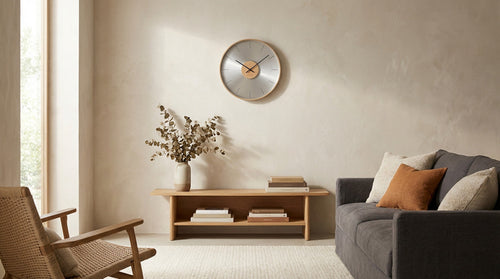
A modern wall clock serves as a functional statement piece where design must align with the room's purpose. Harmonizing materials like raw metal or warm wood ensures aesthetic unity, while opting for a silent sweep mechanism preserves the atmosphere. Proportional placement ultimately transforms a simple timekeeper into a cohesive element of interior design.
-
Wall Clock Placement on North Wall: Myths vs Facts
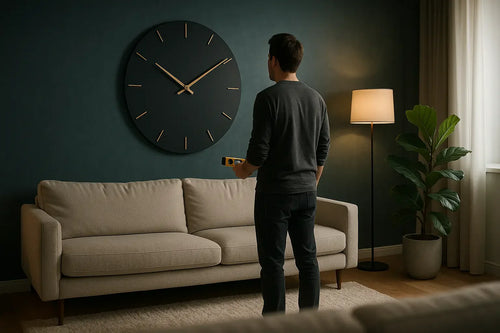
You can place a wall clock on a north wall without issue. Modern decor prioritizes visibility, aesthetics, and functionality over traditional beliefs. For radio-controlled clocks, signal reception may require positioning toward the transmitter source (e.g., Fort Collins, Colorado for US users). Choose what works best for your space.
-
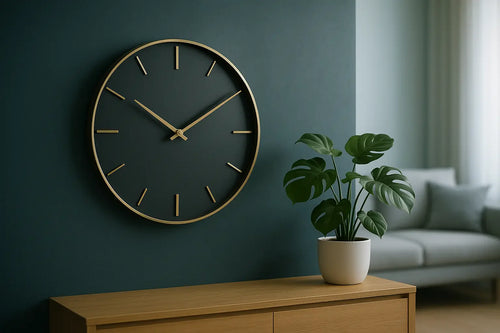
Can a wall clock face north? Vastu Shastra insights
Vastu Shastra designates the north wall as ideal for wall clocks, governed by Lord Kubera, the deity of wealth. This placement attracts financial prosperity, career advancement, and positive energy flow while eliminating monetary hurdles. Ensuring the clock is functional and well-maintained maximizes these benefits, aligning tradition with daily life.
-
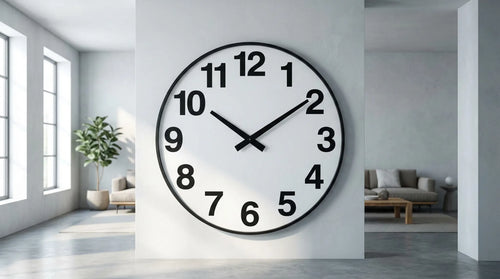
Read wall clock from a distance: size and placement tips
Optimal legibility depends on matching the clock diameter to the viewing distance while prioritizing high contrast between hands and the dial. This balance ensures instant readability without visual clutter or eye strain. For most standard living areas, a 12-to-18-inch diameter typically provides the ideal combination of function and proportion.
-
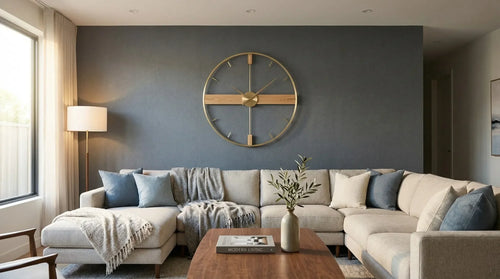
Unique wall clock ideas to transform your space
Wall clocks have evolved beyond mere utility into central design elements that define a room's character. Selecting a statement piece whether featuring industrial moving gears, organic raw materials, or minimalist negative space instantly elevates a living area. This strategic choice turns a functional object into a captivating focal point, provided a silent mechanism preserves the home's tranquility.
-
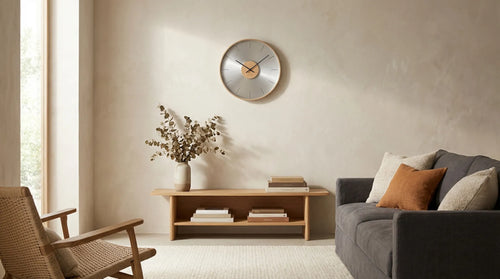
Design around a wall clock: the styling secrets
Designing around a wall clock requires treating it as a focal point. Harmonizing scale, materials, and placement transforms functional timekeeping into a cohesive style statement. Applying the "rule of two-thirds" relative to underlying furniture guarantees visual balance, ensuring the arrangement anchors the room effectively
-

How to choose a modern wall clock for your interior?
A modern wall clock serves as a functional statement piece where design must align with the room's purpose. Harmonizing materials like raw metal or warm wood ensures aesthetic unity, while opting for a silent sweep mechanism preserves the atmosphere. Proportional placement ultimately transforms a simple timekeeper into a cohesive element of interior design
-
Vastu-compliant west wall clock placement
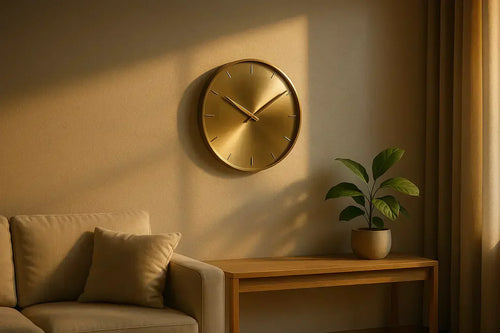
Placing a clock on the west wall is acceptable in Vastu Shastra, especially when north or east directions are unavailable. Associated with Varun, the god of rain, it fosters stability in life. Using blue enhances calming energy flow, preventing stagnation and ensuring steady progress in both personal and professional spheres for harmonious living.
-
How to decorate around a large wall clock?