Wall Clock Placement on North Wall: Myths vs Facts
You can place a wall clock on a north wall without issue. Modern decor prioritizes visibility, aesthetics, and functionality over traditional beliefs. For radio-controlled clocks, signal reception may require positioning toward the transmitter source (e.g., Fort Collins, Colorado for US users). Choose what works best for your space.
Are you unsure whether placing a wall clock on the north wall is acceptable? Conflicting advice from Feng Shui and Vastu traditions often creates confusion, but the reality is simpler: modern interior design prioritizes practical factors like visibility, room aesthetics, and personal preference over superstition. This guide debunks common myths about wall clock placement north and provides actionable tips to help you choose the perfect spot. Learn how to position your clock for optimal functionality, whether optimizing radio-controlled signal reception or enhancing your space's style—ensuring it's both beautiful and functional without unnecessary restrictions.
- Practical Factors to Consider Before Hanging Your Clock
- Understanding traditional perspectives on north wall placement
- A Technical Factor: Do Radio-Controlled Clocks Need a North Wall?
- Universal Do's And Don'ts For Placing Any Wall Clock
- Final verdict: the best wall for your clock is your choice
Can you place a wall clock on a north wall? the simple answer
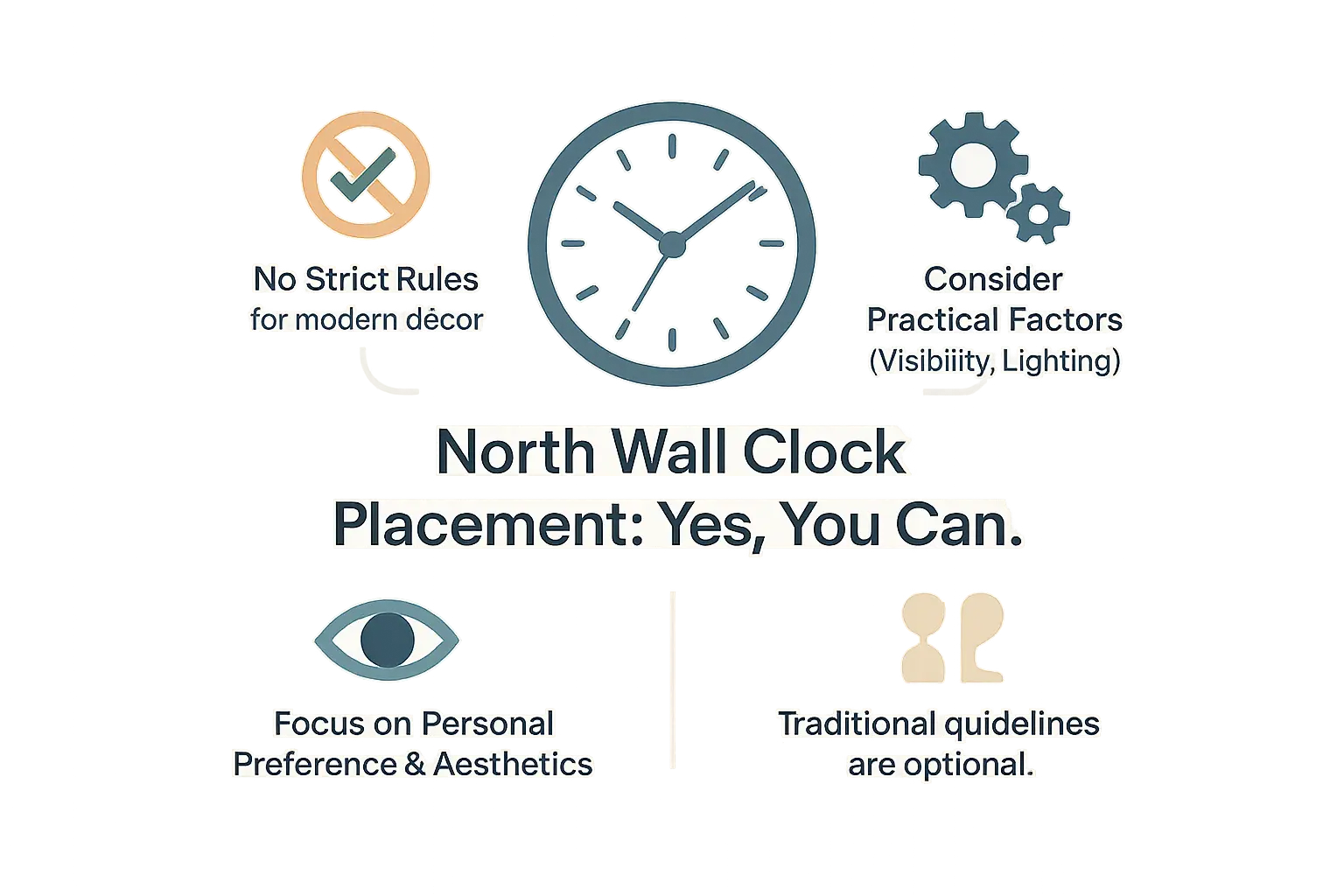
Yes, you can place a wall clock on a north wall. Modern design has no strict rules against north wall placement. Key factors include personal preference, aesthetics, and practical aspects like visibility and room layout. Some traditions like Feng Shui or Vastu suggest directions, but these aren't universal requirements. Contrary to common misconceptions, there are no universal restrictions on north wall clock placement. Focus on aesthetics and functionality. Ensure the clock is visible from seating areas and fits your decor. Choose a size that complements the wall without overwhelming it. No evidence shows north wall placement affects energy flow or household well-being. Prioritize your own style—avoid unverified claims.
Practical Factors to Consider Before Hanging Your Clock
No restrictions for north walls. Placement depends on visibility, layout, and noise—personal preference guides decisions.
Visibility and Readability
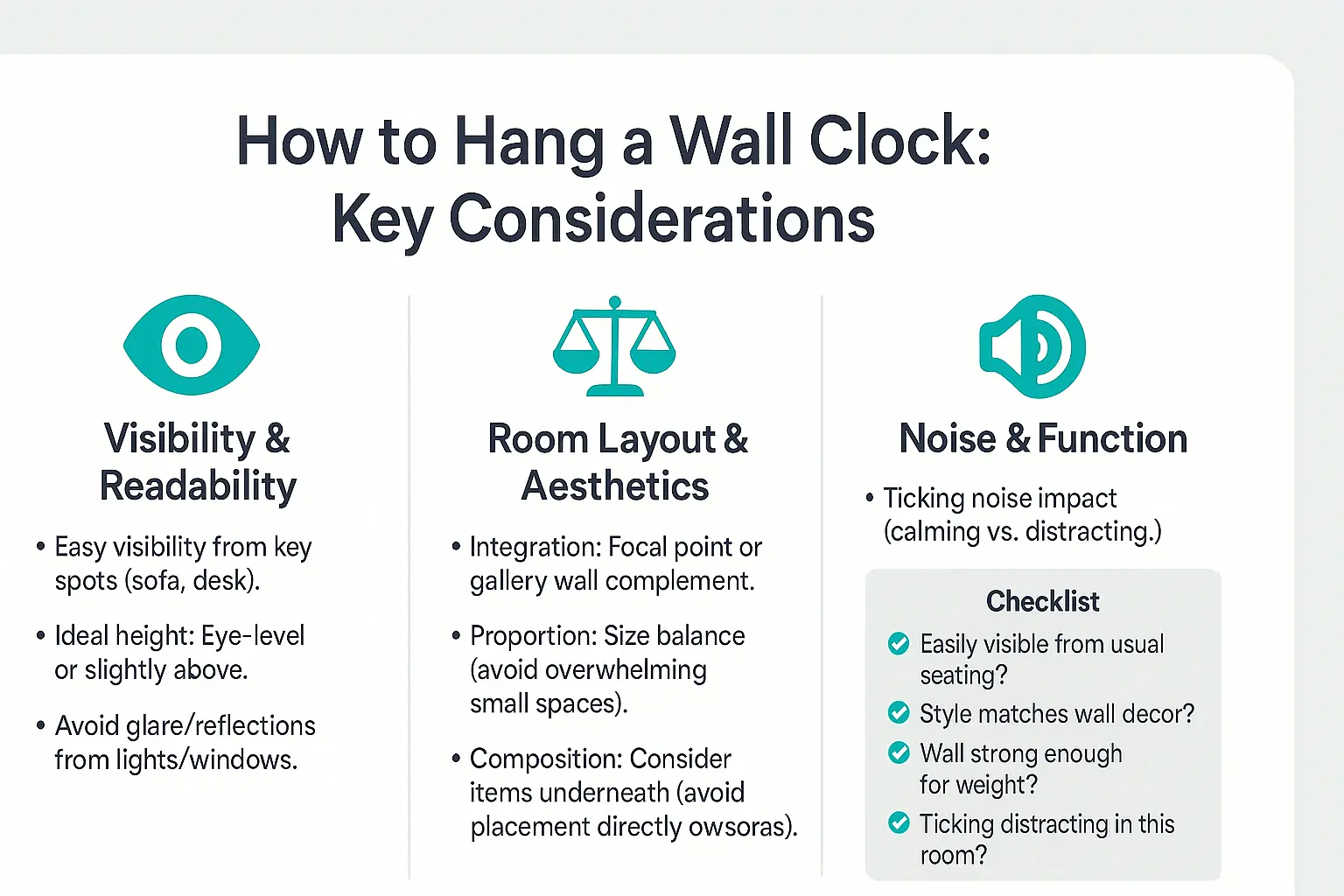
Position where visible from seating areas. Eye level (1.55-1.60m) ensures comfort. Mount 20cm above furniture. Avoid glare. Size based on viewing distance; larger numbers for distant seats.
Room Layout and Aesthetics
Size proportional to room: 20-30cm for small spaces, 40-60cm for large rooms. Avoid above sofas; match style to decor. Ensure it complements surrounding elements without overcrowding.
Noise and Function
Ticking soothing in living rooms but disruptive elsewhere. Silent quartz for bedrooms; ticking for living areas. Rhythmic ticking improves focus in workspaces. Test before installing to avoid disruptions.
- Is the clock easily visible from where I usually sit?
- Does the clock's style match the decor on this wall?
- Is the wall strong enough to support the clock's weight?
- Will the ticking sound be a distraction in this specific room?
Test sound before final installation; adjust if disruptive.
Understanding traditional perspectives on north wall placement
Many wonder if north wall clock placement is allowed. Traditional beliefs often cause confusion. However, there are no known restrictions. Place your clock based on visibility and room layout. Prioritize functionality over unverified directional rules.
The Vastu Shastra view: attracting wealth
Vastu Shastra, an ancient Indian architectural system, associates the north wall with Kubera, the deity of wealth. Some practitioners believe placing a clock here attracts prosperity. However, these are cultural traditions, not universal rules. Modern decor focuses on practicality rather than spiritual beliefs. There's no evidence that north placement affects wealth. Always ensure the clock functions properly and is visible, regardless of wall direction.
The Feng Shui interpretation: career and water element
Feng Shui associates the north direction with career and water energy. Some believe it supports professional growth. However, these are symbolic interpretations, not strict guidelines. Practical placement considers visibility and room harmony. There are no known restrictions for north wall clock placement. Choose based on personal preference and space needs. Avoid high-traffic areas to prevent damage.
Comparing different approaches to clock placement
Here's a comparison of practical and traditional perspectives on north wall clock placement. Understanding these differences helps make an informed choice.
| Aspect | Practical (Modern Decor) | Vastu Shastra Belief | Feng Shui Belief |
| Directional Meaning | Neutral; chosen for visibility, aesthetics, and room functionality. No directional restrictions exist in modern decor practices. | Associated with Kubera, God of Wealth. Highly auspicious according to tradition. Not a scientific rule. | Associated with Career sector and Water element. Positive for professional life symbolically. Not mandatory. |
| Primary Goal | Functionality, readability, and complementing the room's design. | To attract financial prosperity through cultural practice. | To support career progression symbolically, not as a strict rule. |
| Key Takeaway | The best wall is the one that works best for your space and needs. | A spiritually recommended direction for positive vibrations in some traditions. | A symbolic placement to enhance a specific life area, not a binding guideline. |
Ultimately, there are no restrictions on placing a wall clock on the north wall. Focus on what works best for your space. Prioritize functionality and personal style over unverified directional beliefs. Trust your judgment for the perfect placement.
A Technical Factor: Do Radio-Controlled Clocks Need a North Wall?
Radio-controlled clocks sync with signals like WWVB from Fort Collins, Colorado. Placement depends on the transmitter's direction, not the north wall itself. For example, if you're east of Colorado, a west-facing wall may improve reception. The NIST provides detailed troubleshooting tips for optimal signal reception. Check NIST's guide for specific advice.
Signal reception depends on factors like building materials, electronic interference, and time of day. Metal roofs or walls can block the 60 kHz signal. Placing the clock near a window facing the transmitter improves chances. Rotate it 90 degrees if reception is poor. Avoid placing near computers or TVs. Reception is usually better at night due to atmospheric conditions. If your clock fails to sync, try resetting it by removing batteries or moving it temporarily to a different wall. WWVB covers North America, but terrain affects reception. Consult NIST's resources for regional considerations. Some clocks use advanced signal processing for better reception in challenging areas.
For standard wall clocks without radio features, there are no directional restrictions. Placement should focus on aesthetics, visibility, and room layout. The north wall is perfectly suitable if it fits your decor. Personal preference and practical needs matter most. There are no technical or traditional restrictions for non-radio clocks.
Common misconceptions suggest north walls are problematic, but these lack scientific basis. Practical factors depend on transmitter location, not cardinal directions. Always prioritize room functionality and personal taste over unverified directional rules. For radio clocks, the key is aligning with the signal source, which varies by region. East Coast users may need more sensitive receivers due to weaker signal strength. The NIST recommends checking their official troubleshooting guide for location-specific advice. Remember, no universal rule dictates north wall placement.
Universal Do's And Don'ts For Placing Any Wall Clock
No restrictions for north wall clock placement. Directional placement myths are unfounded. Focus on practical factors like visibility and room layout. Personal preference and aesthetics should guide your choice. Safety and functionality matter more than direction.
Position your clock where it's easily visible from common areas. Ensure its size matches the wall space. A large clock in a small room overwhelms; a small one in a large space gets lost. Mount it securely at eye level for the best readability. Use a level to keep it straight.
- Do: Keep your clock clean and functional. A working clock enhances your space.
- Do: Ensure the size is proportional to the wall space for balance.
- Don't: Place it in a high-traffic hallway where it could be easily knocked.
- Don't: Hang it directly above your headboard in the bedroom for safety.
Avoid mounting clocks above doors or windows. Vibrations from opening doors can damage them. Reflective surfaces facing entrances may cause visual distractions. In bedrooms, place clocks on nightstands instead of above beds to prevent noise disturbances and ensure safety.
Use proper mounting hardware for your wall type. Drywall requires anchors for heavier clocks. Check the clock's weight before installation. Avoid direct sunlight to prevent fading. Ensure the ticking sound is quiet for peaceful environments.
Regular maintenance is key. Check batteries, clean surfaces, and ensure accurate timekeeping. A well-maintained clock adds value without direction-based concerns. Trust practical considerations over unverified traditions.
Final verdict: the best wall for your clock is your choice
Current research shows no restrictions for placing a wall clock on the north wall. Placement should prioritize your personal preference, visibility, and room layout. Practical factors matter more than unverified directional rules.
Many believe traditions like Feng Shui impose strict north wall rules, but this is a misconception. There are no universal guidelines. Focus on how the clock integrates with your space's design and functionality.
Choose a spot where the clock is easily visible and complements your decor. Avoid overcomplicating with unproven theories. Your clock's location should enhance your daily life.
Ultimately, the perfect spot is the one that brings you joy and keeps you punctual. Trust your instincts and practical needs for the best placement.
Absolutely, placing a wall clock on a north wall is perfectly acceptable. Modern design prioritizes personal preference, visibility, and aesthetics over traditional beliefs. Practical factors like room layout and functionality matter most. Ultimately, the perfect spot is the one that brings you joy and keeps you on time.
FAQ
Should a wall clock face north?
According to Vastu Shastra, placing a wall clock on the north wall is highly favorable as it's governed by Kubera, the deity of wealth, and can attract prosperity and opportunities. Feng Shui offers mixed perspectives: some traditions view the north as ideal for career growth (linked to the Water element), while others caution against it due to its association with calm and isolation. However, practical considerations like visibility, room aesthetics, and functionality often take precedence over directional beliefs. If you choose the north wall, ensure the clock is easily readable and complements your space's design.
Which directions should be avoided for clock placement?
South and west walls are generally discouraged in traditional practices. Vastu Shastra associates the south with Yama, the god of death, which may bring negative energy affecting family health and finances. The west is linked to distractions and loss of time. Feng Shui also advises against the south for clocks, though it's more about reputation and fame. For practical reasons, avoid placing clocks in high-traffic areas, directly above doors or windows, or near electrical devices that could interfere with signal reception for radio-controlled clocks.
What items are recommended for the north wall?
The north wall is ideal for items that enhance wealth and career energy. In Vastu and Feng Shui, a wall clock is a top choice here to attract prosperity. Other suitable options include artwork featuring water elements (like flowing rivers or ocean scenes), symbols of abundance, or mirrors to reflect positive energy. However, prioritize functionality—your clock should be visible and harmonize with the room's design. Avoid cluttering the north wall; simplicity and intentionality matter most for optimal results.
What's the best placement for a clock in the living room?
In the living room, position the clock at eye level for easy visibility from seating areas like the sofa or dining table. Vastu Shastra recommends the north or east walls for positive energy flow, while Feng Shui favors the north (career) or southeast (wealth) sectors. Avoid placing it directly above the sofa or opposite the entrance to prevent distractions. Ensure the clock's size matches the wall space—too large can overwhelm, too small may get lost. A well-placed clock enhances both function and aesthetics.
Where is the luckiest place to position a clock?
According to Vastu Shastra, the north wall is considered the luckiest for attracting wealth, while the east supports health and family harmony. Feng Shui highlights the north (career) and southeast (wealth) as favorable zones. However, the "luckiest" spot depends on your personal goals and room layout. Prioritize practical factors like visibility and aesthetics—ensuring the clock is easily readable and complements your space. Traditional beliefs can guide you, but functionality should always come first.
Where should you avoid placing clocks?
Avoid placing clocks on south or west walls due to negative energy associations in Vastu and Feng Shui. Other no-go zones include directly above doors or windows (symbolizing time slipping away), above beds in bedrooms (disrupting sleep), inside bathrooms (poor energy flow), and near electrical appliances that interfere with radio signals. Also, skip high-traffic areas where the clock could be easily knocked over. Always prioritize safety, functionality, and harmony with your space's design.
What direction should a wall clock's face face?
The clock's face should orient toward the primary living areas for optimal readability—like facing the sofa or dining table. For radio-controlled clocks, aligning the face toward the signal source (e.g., Fort Collins, Colorado for WWVB signals) improves reception. In Vastu, ensure the face isn't blocking pathways, and in Feng Shui, position it to promote smooth energy flow without disrupting the room's balance. Practical visibility trumps directional rules for most modern homes.
Can wall clock placement affect your sleep?
Absolutely. In bedrooms, placing a clock directly above the bed or in your line of sight can create subconscious anxiety about time, leading to sleep disturbances. Vastu Shastra recommends positioning it on the north or east wall, away from the bed, with a silent mechanism. Avoid ticking clocks in sleep areas; opt for silent digital or analog models. Keeping the clock out of direct view ensures a restful environment, free from time-related stress.
Should you place a clock on the south wall?
Generally, it's not advisable. In Vastu Shastra, the south wall is governed by Yama, the god of death, and can invite negative energy affecting family health and finances. Feng Shui also cautions against it, as the south relates to fame and reputation but may attract instability. If unavoidable, choose a small, minimalist clock and position it away from focal points to minimize impact. However, prioritizing north or east walls for better energy flow is a wiser choice.
You May Also Enjoy
-
How to choose a modern wall clock for your interior ?
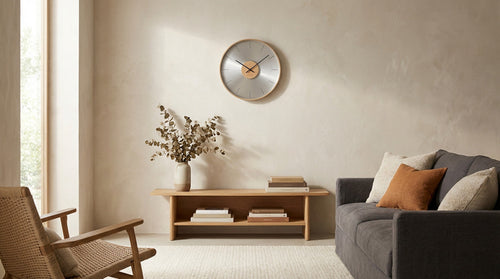
A modern wall clock serves as a functional statement piece where design must align with the room's purpose. Harmonizing materials like raw metal or warm wood ensures aesthetic unity, while opting for a silent sweep mechanism preserves the atmosphere. Proportional placement ultimately transforms a simple timekeeper into a cohesive element of interior design.
-

Wall Clock Facing Main Door: Feng Shui vs Practical
According to Vastu Shastra and Feng Shui, placing a wall clock opposite the main door is discouraged due to symbolic concerns of repelling opportunities and energy flow. However, scientific evidence does not support these beliefs. Your home decor choices should reflect personal preference and practicality for a truly welcoming space.
-
Can a wall clock face north? Vastu Shastra insights
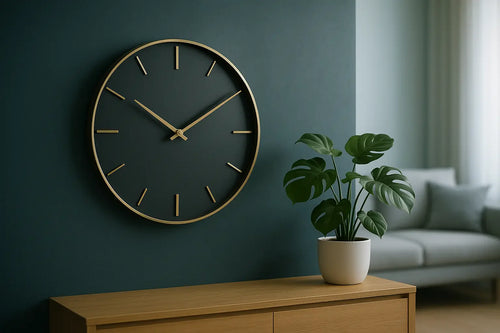
Vastu Shastra designates the north wall as ideal for wall clocks, governed by Lord Kubera, the deity of wealth. This placement attracts financial prosperity, career advancement, and positive energy flow while eliminating monetary hurdles. Ensuring the clock is functional and well-maintained maximizes these benefits, aligning tradition with daily life.
-
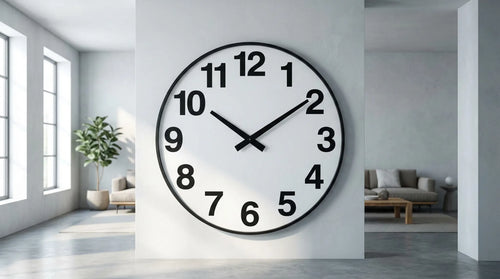
Read wall clock from a distance: size and placement tips
Optimal legibility depends on matching the clock diameter to the viewing distance while prioritizing high contrast between hands and the dial. This balance ensures instant readability without visual clutter or eye strain. For most standard living areas, a 12-to-18-inch diameter typically provides the ideal combination of function and proportion.
-
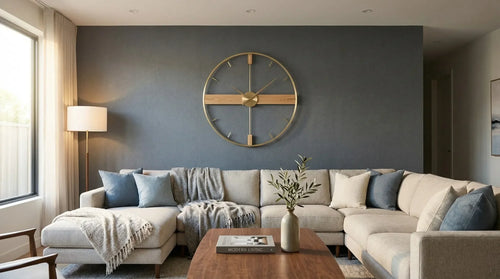
Unique wall clock ideas to transform your space
Wall clocks have evolved beyond mere utility into central design elements that define a room's character. Selecting a statement piece whether featuring industrial moving gears, organic raw materials, or minimalist negative space instantly elevates a living area. This strategic choice turns a functional object into a captivating focal point, provided a silent mechanism preserves the home's tranquility.
-
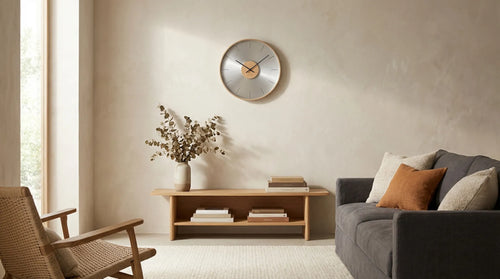
Design around a wall clock: the styling secrets
Designing around a wall clock requires treating it as a focal point. Harmonizing scale, materials, and placement transforms functional timekeeping into a cohesive style statement. Applying the "rule of two-thirds" relative to underlying furniture guarantees visual balance, ensuring the arrangement anchors the room effectively
-

How to choose a modern wall clock for your interior?
A modern wall clock serves as a functional statement piece where design must align with the room's purpose. Harmonizing materials like raw metal or warm wood ensures aesthetic unity, while opting for a silent sweep mechanism preserves the atmosphere. Proportional placement ultimately transforms a simple timekeeper into a cohesive element of interior design
-
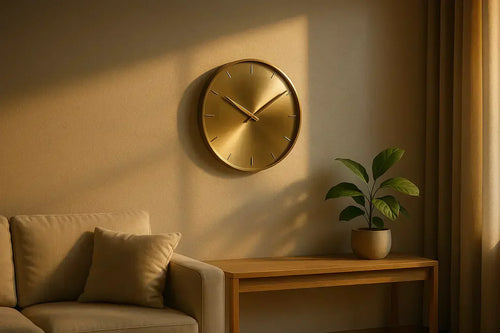
Vastu-compliant west wall clock placement
Placing a clock on the west wall is acceptable in Vastu Shastra, especially when north or east directions are unavailable. Associated with Varun, the god of rain, it fosters stability in life. Using blue enhances calming energy flow, preventing stagnation and ensuring steady progress in both personal and professional spheres for harmonious living.
-
How to decorate around a large wall clock?