Can a wall clock face north? Vastu Shastra insights
Vastu Shastra designates the north wall as ideal for wall clocks, governed by Lord Kubera, the deity of wealth. This placement attracts financial prosperity, career advancement, and positive energy flow while eliminating monetary hurdles. Ensuring the clock is functional and well-maintained maximizes these benefits, aligning tradition with daily life.
Confused about wall clock north placement? Vastu Shastra not only allows but recommends it for attracting wealth and positive energy. Contrary to myth, the focus is on the wall, not the clock face. Governed by Lord Kubera, the god of prosperity, the north direction enhances financial stability, career growth, and removes monetary obstacles. This article covers ideal placements in living rooms and offices, best colors like silver, grey, and green, and key maintenance tips. Learn how this simple adjustment transforms your space’s energy and invites tangible success, turning your home into a prosperity hub.
- The Technical Answer: Does a Wall Clock's Direction Matter?
- Why the north direction is a popular question for wall clocks
- The significance of the north wall in Vastu Shastra
- Clarifying placement: wall direction vs. clock face direction
- Vastu Guide to Wall Clock Directions: The Dos and Don'ts
- More Than Direction: Other Vastu Tips for Your Wall Clock
- A Brief Look at Feng Shui Principles for Clock Placement
The Technical Answer: Does a Wall Clock's Direction Matter?
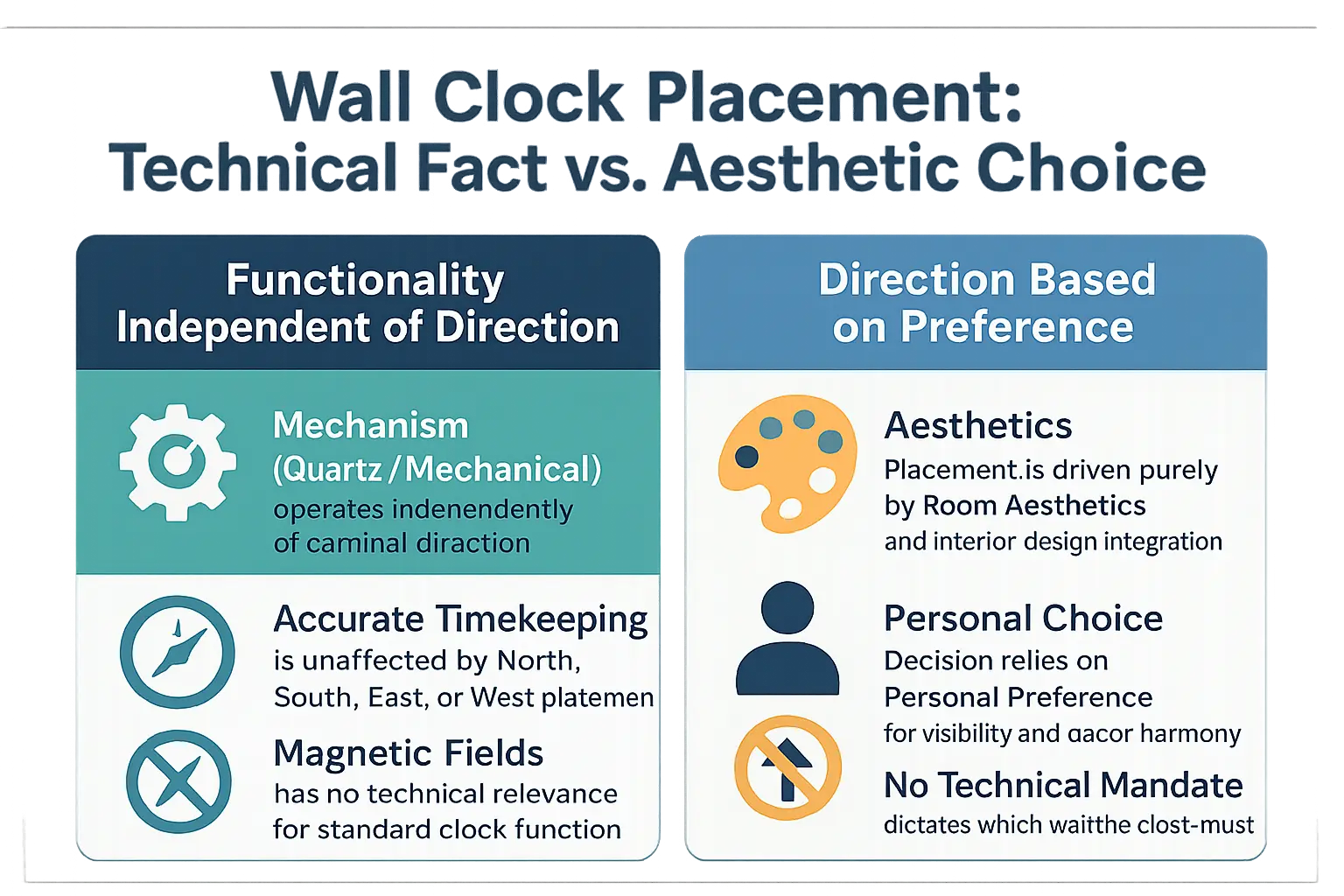
Functionality vs. Orientation
Standard wall clocks function accurately regardless of direction. Magnetic north is irrelevant for functionality. Quartz mechanisms are unaffected by magnetic fields, ensuring reliable timekeeping. Technical specifications ignore orientation—any wall works equally well.
A Matter of Aesthetics and Personal Preference
Placement depends on personal preference and room aesthetics. Cultural traditions like Vastu Shastra suggest north-facing clocks attract prosperity, but this is belief-based, not technical. For optimal visibility, position at eye level (57-60 inches) and ensure it complements your decor without obstructing views. Avoid high-traffic areas where it might get bumped or damaged.
| Cultural Beliefs | Technical Reality |
|---|---|
| North: Wealth & prosperity | No technical requirement |
| East: New opportunities | Function same in all directions |
| West: Stability | No effect on functionality |
Direction has no impact on functionality. Prioritize aesthetics over cardinal directions for your space.
Why the north direction is a popular question for wall clocks

The influence of ancient belief systems
Standard wall clocks function perfectly in any direction. Magnetic north has no impact on their operation. Cultural practices like Vastu Shastra assign significance to placement. This ancient Indian system associates the north with Kubera, the deity of wealth. Placing a clock here is believed to attract prosperity, financial stability, and positive energy. Colors like gold, silver, or green are recommended for north-facing clocks. Feng Shui also considers north acceptable, though east and south are preferred. Yet, these are spiritual guidelines, not technical requirements.
A common concern for homeowners
Many homeowners follow these traditions to enhance their living spaces. As seen in Quora discussions, users often ask about optimal clock placement. For example, this thread explores Vastu Shastra recommendations. However, scientific understanding confirms that wall clocks have no technical need for specific orientation. The choice remains personal preference, influenced by aesthetics or cultural beliefs. Ultimately, the clock's function is unchanged by direction. Experts agree that wall clocks function identically regardless of orientation, making the decision purely subjective.
Standard wall clocks function perfectly regardless of direction. There are no technical requirements for orientation; magnetic north is irrelevant for functionality. Placement is purely based on personal preference or room aesthetics. However, some traditions like Vastu Shastra offer specific recommendations for clock placement based on spiritual beliefs.
The significance of the north wall in Vastu Shastra
The direction of wealth and prosperity
According to Vastu Shastra, the north direction is governed by Lord Kubera, the Hindu deity of wealth and prosperity. Placing a wall clock on the north wall is believed to invite financial abundance and success into the household. This is a cultural and spiritual practice, not a mechanical requirement for the clock's operation. Clocks work the same regardless of direction.
Attracting positive energy and opportunities
Vastu Shastra suggests that a north-facing wall clock attracts positive energy. This is thought to create a stable financial environment and promote career advancement. For home offices or study areas, this placement may be recommended to attract new business opportunities. However, these benefits are based on tradition, not technical specifications. All standard clocks function normally in any direction.
- Attracts wealth and prosperity according to Vastu beliefs.
- Invites positive energy into the home or workspace.
- Promotes financial stability and helps eliminate monetary difficulties as per traditional practices.
- Stimulates career growth and new opportunities based on Vastu teachings.
While Vastu Shastra provides guidance for those following its principles, it's important to remember that wall clocks have no technical need for specific orientation. The choice of direction remains entirely up to personal taste and interior design preferences. Magnetic north is irrelevant for standard clock functionality. Many people choose clock placement based on room layout or visual appeal rather than tradition.
Clarifying placement: wall direction vs. clock face direction
Understanding the Vastu guideline
Standard wall clocks have no technical direction requirements; magnetic north is irrelevant to their function. Orientation depends on personal preference or room aesthetics. Vastu Shastra recommends the north wall for wealth and prosperity (governed by Kubera). Mounted on north wall, the face faces south—acceptable. Key: wall direction, not face orientation. Energy flow depends on mounting position. Vastu is cultural, not technical, providing harmony guidelines. Ensure clocks are functional, clean, and in metallic or white tones for optimal energy flow. Avoid stopped clocks to prevent stagnation. North walls in living rooms enhance family harmony; offices boost career growth. Most clocks function flawlessly in any direction, making them versatile for any home or office. Place clocks at eye level for readability and optimal energy flow.
The case of double-sided clocks
Double-sided vintage clocks present unique placement scenarios. A Quora user questioned hanging such a clock in a north-south direction when east-west wasn't feasible. Vastu focuses on the mounting wall, not the clock's face direction. Mounting on north wall aligns with Vastu principles regardless of dual faces. Energy flow depends on wall position. Functionality isn't hindered by direction; aesthetics guide choice. Many experts agree that wall position is the primary factor in Vastu compliance. For instance, a north wall placement with dual faces still attracts prosperity, aligning with Vastu guidelines. This flexibility allows homeowners to choose placements without compromising cultural harmony.
Vastu Guide to Wall Clock Directions: The Dos and Don'ts
Choosing the Right Wall for Positive Energy
Wall clocks work regardless of direction. Vastu Shastra offers cultural guidelines. See table below.
| Direction | Significance | Deity/Concept | Outcome |
|---|---|---|---|
| North | Highly Recommended | Lord Kubera (Wealth) | Attracts wealth |
| East | Recommended | Lord Indra (Growth) | New opportunities |
| West | Acceptable | Lord Varuna (Stability) | Stability and gains |
| South | Avoid | Yama (Death) | Negativity and stagnation |
| South-West | Avoid | Negative Energy | Delays and misfortune |
| South-East | Avoid | Negative Energy | Financial disputes |
According to Vastu Shastra principles, the north wall is governed by Lord Kubera, the deity of wealth. Placing a wall clock here attracts financial prosperity and abundance. East-facing clocks, associated with Lord Indra, bring new opportunities and personal growth. West placements, linked to Lord Varuna, provide stability but are secondary to north and east. South, southwest, and southeast directions should be avoided to prevent negativity, obstacles, and financial disputes. Magnetic north is irrelevant for standard clocks.
Offices benefit from north or east walls for career growth. Living rooms also favor north walls for family harmony. Bedrooms with south-facing beds use north walls for prosperity. Metallic colors (silver, white) enhance north placements; green shades support east-facing clocks. Avoid south walls to prevent health issues and conflicts.
Personal preference matters—clocks function in any direction. Keep them clean, accurate, and well-maintained for positive energy flow. Use rounded shapes and light colors like white or blue. Avoid dark tones. Place at eye level for optimal harmony and balance.
More Than Direction: Other Vastu Tips for Your Wall Clock
Ideal Rooms for Clock Placement
According to Vastu Shastra, placing a wall clock on the north wall attracts wealth and prosperity, as this direction is governed by Kubera, the deity of abundance. East or northeast walls support new opportunities, such as career advancements or personal growth. In home offices, a north-facing clock enhances decision-making and professional success. For bedrooms, position clocks on the north or east walls—avoid placing them above the bed or facing mirrors, as reflections can create restlessness and disrupt sleep quality. South, southwest, and southeast walls should be avoided entirely due to their association with stagnation and negative energy. Place the clock at eye level for optimal visibility, never in the central Brahmasthan zone. Keep it away from electronic devices like TVs or speakers to prevent electromagnetic interference.
Choosing the Right Color and Shape
For north-facing walls, metallic shades like silver, gold, and grey, along with white and green, promote financial growth and harmony. Green specifically symbolizes renewal and prosperity. Avoid dark colors like black or deep red, which block positive energy. Circular clocks encourage smooth energy flow, while square shapes with rounded edges provide stability. East walls benefit from natural wood finishes in warm browns or greens, symbolizing growth. Northeast walls suit soft pastels like light blue or lavender for mental clarity. A clean, uncluttered clock face ensures clear energy circulation and positive vibrations.
The Importance of a Well-Functioning Clock
A malfunctioning or stopped clock disrupts energy flow, potentially leading to financial setbacks or health concerns. Keep the clock clean, accurate, and set slightly ahead of time to symbolize progress. In bedrooms, opt for gentle chimes or silent mechanisms to ensure restful sleep. Replace broken or cracked clocks immediately to prevent negative influences on well-being. Regular maintenance, such as dusting and battery checks, sustains a harmonious environment and prevents energy stagnation.
- Keep clock clean and functioning properly.
- Set time slightly ahead, never behind.
- Replace broken or stopped clocks immediately.
- Choose soft chimes over harsh ticking sounds.
Following these practices enhances both aesthetics and energy flow for a balanced home.
A Brief Look at Feng Shui Principles for Clock Placement
The North Direction in Feng Shui
Feng Shui links the north sector to career and life path. Some practitioners recommend placing a clock there to enhance professional energy. Others caution that north represents stillness, and a clock might disrupt calm. Standard wall clocks have no technical requirement for direction. Placement is purely a personal or aesthetic choice.
Elements and Colors
The north in Feng Shui relates to the Water element. Black and dark blue are traditional colors. Metal clocks align with this element as metal generates water. Vastu Shastra also associates north with Kubera, the wealth deity. Gold, silver, white, or green clocks are suggested for north walls. Vastu believes this placement attracts prosperity and financial stability. However, these are cultural beliefs. Magnetic north doesn't affect clock function. Choose based on your preference and room aesthetics.
Some Feng Shui schools advise against placing clocks in the north, fearing it disturbs balance. Yet others see it as beneficial for career growth. Some people follow these traditions for harmony, while others prioritize personal style. The choice remains entirely up to you.
Conclusion: A Choice Between Function and Belief
Your Clock, Your Choice
Many people assume their wall clock's direction affects its function. However, standard clocks work perfectly regardless of orientation. Magnetic north has no impact on timekeeping mechanisms. You can hang your clock facing any direction without accuracy issues. The choice depends on room aesthetics and personal style preferences. Ensure the clock is visible and complements your decor. There are no technical constraints dictating its placement.
Embracing Harmony and Tradition
Many incorporate cultural traditions like Vastu Shastra or Feng Shui into home decor. Vastu recommends north wall placement for prosperity under Lord Kubera. Feng Shui links north to career growth with Water element colors like black or blue. These practices are optional but add meaningful intention. Your home, your rules. Ultimately, the direction reflects your personal values and aesthetics.
- Functionally: Clocks operate correctly in any direction. Placement is based solely on visual appeal and personal style preferences, with no technical requirements.
- Vastu Shastra: North wall placement attracts wealth and prosperity governed by Lord Kubera. This is a cultural recommendation, not a technical necessity.
- Feng Shui: North sector corresponds to career and life path; use Water element colors like black or blue for optimal energy flow.
- Key action: Keep your clock clean, accurate, and functioning properly regardless of placement orientation.
From a technical standpoint, wall clock direction has no impact on functionality. However, Vastu Shastra recommends placing it on the north wall for prosperity (Lord Kubera), while Feng Shui ties north to career and the Water element. Your choice should reflect personal preference, but ensure the clock is always clean and working correctly to maintain positive energy.
FAQ
Is the north direction suitable for a wall clock?
Yes, the north direction is highly recommended for wall clocks according to Vastu Shastra. This orientation is governed by Lord Kubera, the deity of wealth and prosperity. Placing a clock here is believed to attract financial abundance, positive energy, and career growth. While the clock's technical functionality remains unaffected by direction, culturally, the north is considered auspicious for enhancing prosperity in your living or workspace.
What is the best direction to face a wall clock?
The north wall is the optimal choice for wall clocks in Vastu Shastra, as it aligns with wealth and prosperity. East is also favorable for new opportunities, while west supports stability. Avoid south, southwest, and southeast walls due to their association with negative energy. Remember, the clock's mechanical operation isn't influenced by direction—these guidelines stem from cultural and spiritual traditions aimed at harmonizing energy flow.
What should be hung on a north wall facing south?
When hanging a clock on a north wall, its face naturally points south. This is perfectly acceptable under Vastu principles, as the guidelines focus on the wall's orientation (north), not the clock's face direction. A clock on the north wall facing south is encouraged for attracting prosperity and positive energy. The key is ensuring the clock itself is functional, clean, and aesthetically pleasing to maximize its beneficial effects.
Can a wall clock be placed on the northeast wall?
Yes, the northeast wall is an acceptable alternative for wall clocks in Vastu Shastra. This direction is linked to knowledge and education, making it ideal for study areas or home offices. While the north wall remains the top choice for wealth, the northeast works well for intellectual growth. Use metallic colors like silver, white, or green to enhance positive energy flow in this space.
Where is the ideal spot to position a clock for good fortune?
The north wall of your living room or home office is the ideal spot for attracting good fortune. Vastu Shastra associates this placement with Lord Kubera, promoting financial stability and career advancement. In bedrooms, position the clock in the northeast corner rather than above the bed. Avoid bathrooms, the center of the house (Brahmasthan), and areas near electrical outlets to maintain harmonious energy and avoid disruptions.
Which locations should be avoided when hanging a clock?
Avoid south, southwest, and southeast walls, as they are linked to negativity and obstacles. Clocks should never be placed in bathrooms, above the main entrance, near electrical outlets, or in the house's center (Brahmasthan). Additionally, avoid hanging clocks above beds, facing mirrors, or in areas with clutter. Broken or non-functional clocks must be replaced immediately to prevent stagnation and negative energy.
Does the direction of a wall clock affect energy flow?
According to Vastu Shastra and Feng Shui, the direction of a wall clock influences energy flow. For example, the north direction enhances wealth and career opportunities, while the south may invite challenges. However, technically, the clock's mechanism functions independently of direction—these effects are rooted in cultural and spiritual beliefs. If you follow these traditions, proper placement can amplify positive energy, but it's not a scientific necessity.
What is the optimal position for a clock?
The optimal position for a clock is the north wall in living areas or workspaces to harness prosperity and career growth. If north isn't feasible, east supports new opportunities, and west offers stability. Ensure the clock is clean, functioning correctly, and has a smooth design without harsh sounds or negative imagery. Balancing practicality with cultural beliefs creates a harmonious environment that aligns with both aesthetic and energetic considerations.
Where is the best place to hang a wall clock?
The best place to hang a wall clock is on the north wall of your living room or study area, as per Vastu Shastra principles. This position attracts wealth and positive energy. For Feng Shui, the north sector supports career development. Avoid bathrooms, bedrooms (except northeast corner), and areas near mirrors or electrical outlets. Always ensure the clock is in perfect working condition to maintain optimal energy flow and harmony in your space.
You May Also Enjoy
-
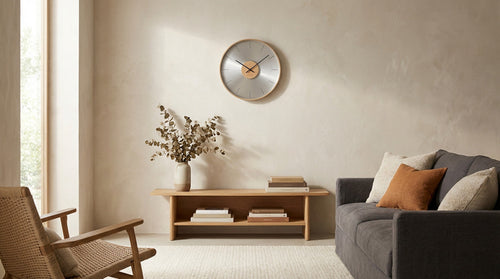
How to choose a modern wall clock for your interior ?
A modern wall clock serves as a functional statement piece where design must align with the room's purpose. Harmonizing materials like raw metal or warm wood ensures aesthetic unity, while opting for a silent sweep mechanism preserves the atmosphere. Proportional placement ultimately transforms a simple timekeeper into a cohesive element of interior design.
-

Wall Clock Facing Main Door: Feng Shui vs Practical
According to Vastu Shastra and Feng Shui, placing a wall clock opposite the main door is discouraged due to symbolic concerns of repelling opportunities and energy flow. However, scientific evidence does not support these beliefs. Your home decor choices should reflect personal preference and practicality for a truly welcoming space.
-
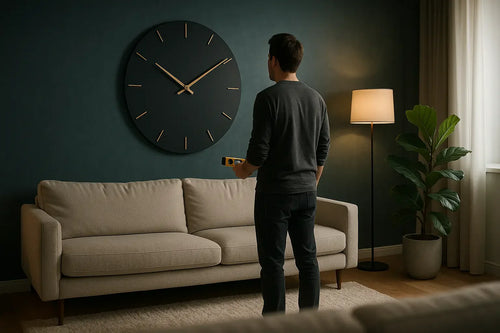
Wall Clock Placement on North Wall: Myths vs Facts
You can place a wall clock on a north wall without issue. Modern decor prioritizes visibility, aesthetics, and functionality over traditional beliefs. For radio-controlled clocks, signal reception may require positioning toward the transmitter source (e.g., Fort Collins, Colorado for US users). Choose what works best for your space.
-
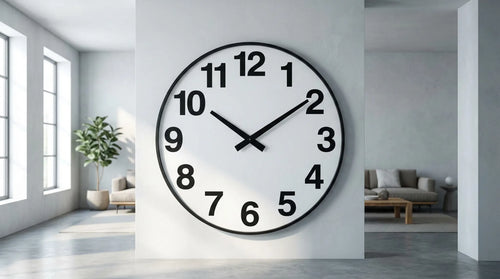
Read wall clock from a distance: size and placement tips
Optimal legibility depends on matching the clock diameter to the viewing distance while prioritizing high contrast between hands and the dial. This balance ensures instant readability without visual clutter or eye strain. For most standard living areas, a 12-to-18-inch diameter typically provides the ideal combination of function and proportion.
-
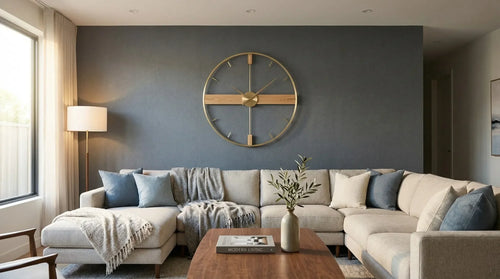
Unique wall clock ideas to transform your space
Wall clocks have evolved beyond mere utility into central design elements that define a room's character. Selecting a statement piece whether featuring industrial moving gears, organic raw materials, or minimalist negative space instantly elevates a living area. This strategic choice turns a functional object into a captivating focal point, provided a silent mechanism preserves the home's tranquility.
-
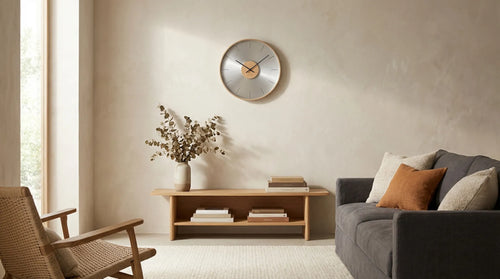
Design around a wall clock: the styling secrets
Designing around a wall clock requires treating it as a focal point. Harmonizing scale, materials, and placement transforms functional timekeeping into a cohesive style statement. Applying the "rule of two-thirds" relative to underlying furniture guarantees visual balance, ensuring the arrangement anchors the room effectively
-

How to choose a modern wall clock for your interior?
A modern wall clock serves as a functional statement piece where design must align with the room's purpose. Harmonizing materials like raw metal or warm wood ensures aesthetic unity, while opting for a silent sweep mechanism preserves the atmosphere. Proportional placement ultimately transforms a simple timekeeper into a cohesive element of interior design
-
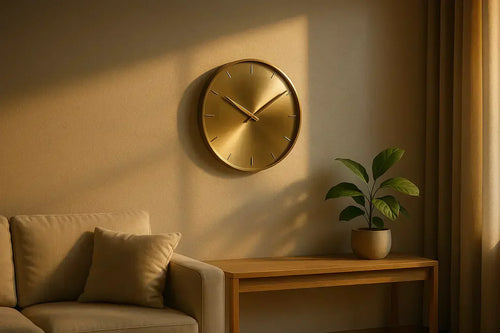
Vastu-compliant west wall clock placement
Placing a clock on the west wall is acceptable in Vastu Shastra, especially when north or east directions are unavailable. Associated with Varun, the god of rain, it fosters stability in life. Using blue enhances calming energy flow, preventing stagnation and ensuring steady progress in both personal and professional spheres for harmonious living.
-
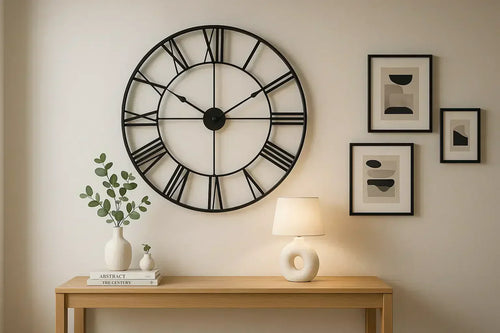
How to decorate around a large wall clock?