How to choose a modern wall clock for your interior?
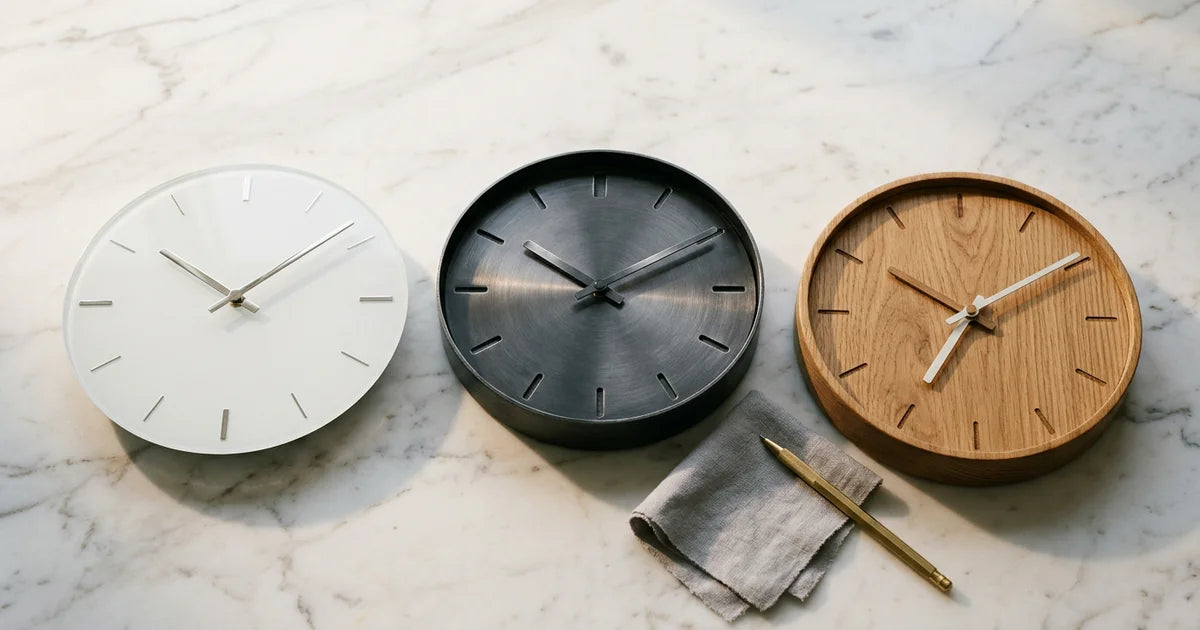
Essential to remember : Choosing a modern wall clock requires focusing on clean lines and minimal design while ensuring the materials like metal, wood, or glass harmonize with your room's aesthetic. The key is selecting proportional sizing and silent mechanisms that transform a functional timepiece into a cohesive design statement. Modern wall clocks should embrace the philosophy of subtraction, rejecting ornate details in favor of sleek, uncluttered forms that complement your contemporary interior.
A modern wall clock serves as a functional statement piece where design must align with the room's purpose. Harmonizing materials like raw metal or warm wood ensures aesthetic unity, while opting for a silent sweep mechanism preserves the atmosphere. Proportional placement ultimately transforms a simple timekeeper into a cohesive element of interior design.
Does your sleek interior suffer from a timepiece that feels outdated or out of place? Mastering how to choose modern wall clock designs transforms a mere utility into a striking statement of your personal style. We reveal the specific material pairings and scale rules that guarantee a flawless integration with your contemporary decor.
- Beyond Time-Telling: Matching a Clock to Your Modern Aesthetic
- The Look and Feel: Materials and Color Choices
- The functional side: what's ticking inside
- Getting It Right: Scale, Proportion, and Placement
Beyond Time-Telling: Matching a Clock to Your Modern Aesthetic

What "Modern" Actually Means for a Wall Clock
Modern isn't just a single look; it acts as a philosophy of subtraction. You want clean lines, uncluttered design, and a sharp focus on form. We reject ornate details for simplicity.
Think about the materials defining this era. We see cool metal, warm wood, and sleek glass dominating the scene.
You need to spot the traits separating a generic timepiece from a true design object. Here is the checklist I use to choose a modern wall clock:
- Simple, geometric forms (circles, squares, clean lines).
- Uncluttered face, often without numbers.
- Use of natural or industrial materials.
- A focus on function dictating the design.
Aligning with Your Specific Interior Style
Your clock must feel like it grew on that wall naturally. It should never fight with your existing decor style.
Context is key. A raw metal clock fits a gritty industrial style loft. Yet, a light wood piece is perfect for a Scandinavian living room.
Consider Mid-Century Modern's organic shapes versus pure minimalism's stark simplicity. You don't want a clash; you want total aesthetic harmony.
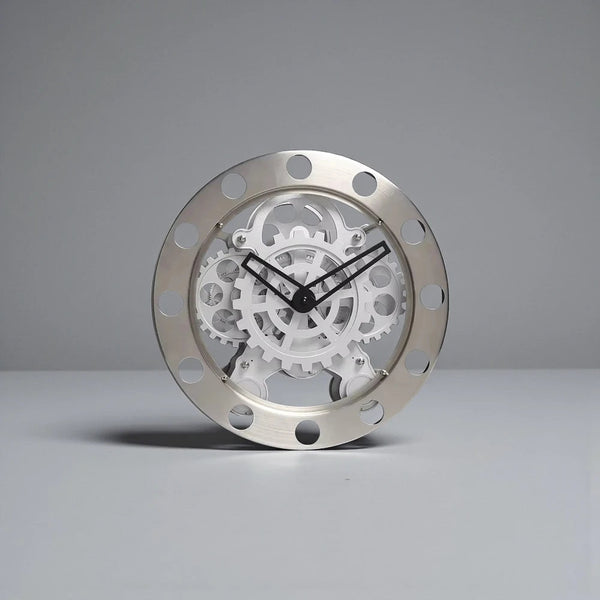
The First Rule: Consider the Room's Purpose
A clock in a busy kitchen has a different job than one in a relaxed living room. Functionality varies by space.
For a kitchen or home office, clear readability is the priority. In a living room, the clock acts as a decorative focal point.
Most homeowners ignore this distinction. Don't make that mistake; ensure the clock serves its specific purpose.

If you are still weighing options, our guide on how to choose a wall clock lays out every criterion in order.
The Look and Feel: Materials and Color Choices

Now that you've thought about the big picture of style and space, it's time to get into the tangible details, the materials and colors that bring a clock to life.
Working with Wood for Warmth and Nature
Wood acts as an organic anchor, instantly injecting warmth into any room. If your space feels too cold, a wooden clock softens those hard edges. Think of it as a touch of nature.
You see this constantly in Scandinavian and Mid-Century Modern designs. These styles don't just use wood; they celebrate natural textures.
Light woods like birch or maple keep things airy. Darker woods like walnut can add a sense of sophisticated drama.
Embracing Metal and Glass for a Sharp Edge
Metal and glass are the go-to for a clean, sharp, and undeniably modern look. These materials reflect light and create a sense of openness.
Black or raw metal is the heart of industrial decor. Polished chrome or brass fits a more glamorous, luxe aesthetic.
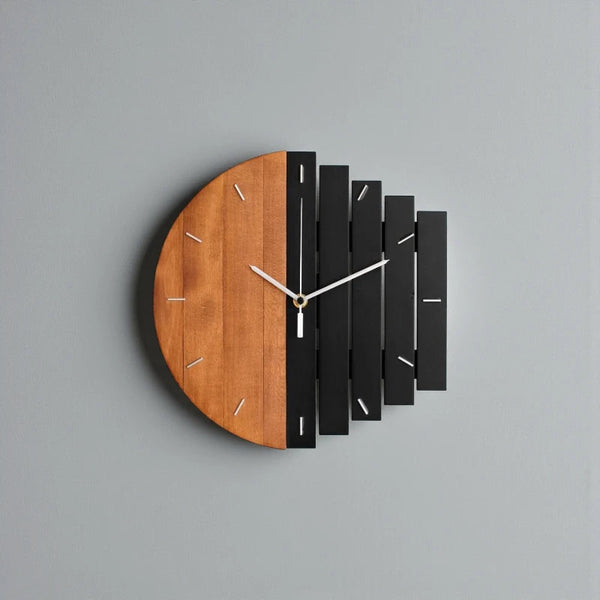
Glass, whether clear or frosted, adds a layer of sleekness. It's often used in minimalist designs where the goal is to be as unobtrusive as possible. These contemporary materials define the modern aesthetic.
Using Color to Contrast or Complement
You have two main strategies for color: blend in or stand out. There's no right or wrong answer, it's a personal choice.
A bold, colorful clock can be the single pop of color in a neutral room. A black clock on a white wall creates a powerful, graphic contrast.
Alternatively, a white clock on a white wall adds texture without overwhelming the space. This monochromatic approach is very common in minimalist interiors.
The functional side: what's ticking inside
A clock's looks are only half the story. The other half is how it actually works, the mechanism, the sound, and how easy it is to read.
The great debate: quartz vs. mechanical movements
You basically have two contenders modern wall clock mechanisms. Quartz is the modern workhorse, battery-powered and scary accurate. Then there's mechanical, the traditional route that needs winding but screams old-school craftsmanship.
For most modern clocks, a quartz movement is the gold standard. It is reliable, demands almost zero maintenance, and is exactly what you will find in the vast majority of trending designs in 2026.
Many of these are high-quality quartz movements designed for absolute precision and longevity.
Silence is golden: the non-ticking advantage
Let's talk about that "tick-tock" sound. For many people, especially in a quiet bedroom or home office, it's a major annoyance. It completely disrupts the calm atmosphere you are trying to build.
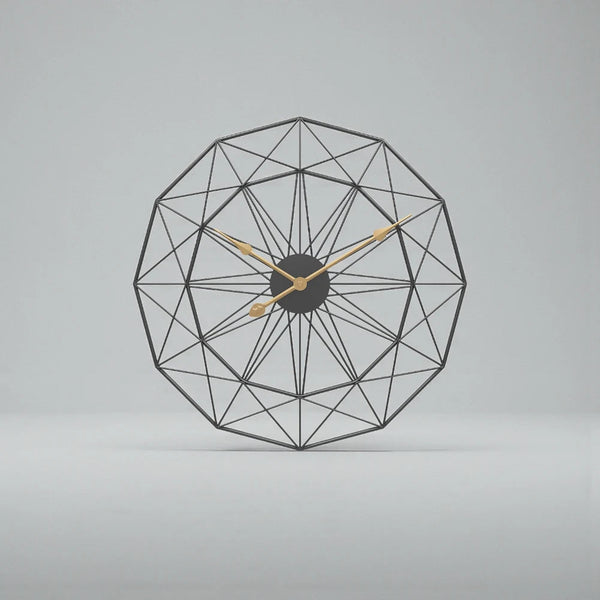
The smart solution is a silent sweep movement. The second hand moves in a continuous, smooth motion instead of ticking.
Reading the time: numerals, markers, or nothing at all?
This decision splits the room between aesthetic appeal and practical functionality. A clock with large, clear Arabic numerals is easy to read at a glance. A clock with no markers at all is purely a design statement.
- Full numerals (Arabic or Roman): Best for high-traffic areas like kitchens.
- Simple markers or dots: A good balance between readability and minimalism.
- No markers at all: The ultimate minimalist choice, where the hands alone tell the time.
Getting It Right: Scale, Proportion, and Placement
You've picked a style. Now for the final step: ensuring the clock fits your space perfectly.
Finding the Right Size for Your Wall
Let's be real about proportions. When you choose a modern wall clock, the diameter must match the wall's scale. A tiny dial on a cavernous wall looks lost, while a massive timepiece in a small room feels overwhelming.
Here is the rule. An oversized wall clock acts as a statement piece. In tighter quarters like hallways, however, stick to a discreet size.
The Art of Placement: Creating a Focal Point
Placement determines if your clock is an accent or a centerpiece. Prime spots include above a fireplace or console. Anchoring it to furniture creates stability, preventing that awkward "floating" effect.
To nail the vibe, match the material to your interior style using this breakdown.
| Style | Recommended Material | Key Characteristic |
| Minimalist | Glass or Matte Metal | Uncluttered, almost invisible |
| Industrial | Raw Metal (Steel, Iron) | Rugged, utilitarian feel |
| Scandinavian | Light Wood (Birch, Oak) | Warm, natural, and cozy |
| Mid-Century Modern | Dark Wood (Walnut) or Brass | Organic shapes, retro vibe |
A Simple Guide to Hanging Your Clock
Height is where most people mess up. Hanging the piece too high is a rookie mistake. Ideally, it should sit at eye level for an average person standing in the room.
To avoid turning your wall into Swiss cheese, follow this three-step protocol used by gallery pros:
- Find the center: Position the clock roughly 57-60 inches (about 1.5 meters) from the floor to its center.
- Consider furniture: If hanging above furniture, leave 4-6 inches between the clock bottom and the item top.
- Use the right hardware: Ensure the hook supports the clock's weight.
Selecting the ideal modern wall clock transforms a room from simple to sophisticated. Whether you prefer the warmth of wood or the sleekness of metal, ensure the size and mechanism fit your lifestyle. Ultimately, the perfect timepiece balances functionality with aesthetics, acting as the finishing touch that defines your interior's personality.
Your questions, answered
What defines the design of a modern wall clock?
How do I choose the right size clock for my wall?
At what height should I hang my wall clock?
Do modern wall clocks make a ticking sound?