How to Read an Analog Clock: A Step-by-Step Guide With Practice Times
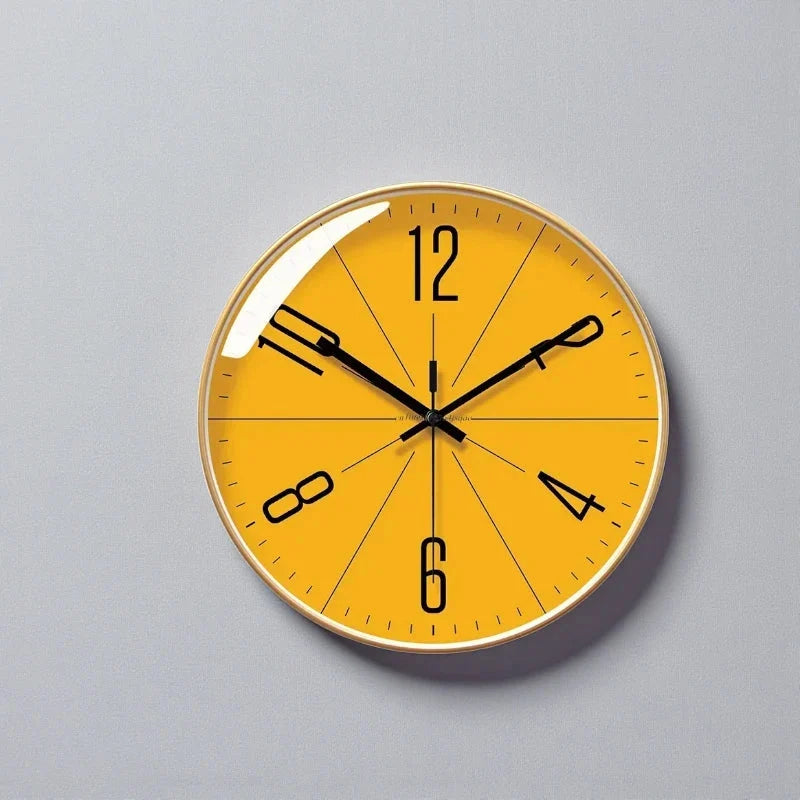
In short. An analog clock shows the time with hands that turn around a dial numbered 1 to 12. The short hand is the hour hand, the long hand is the minute hand, and the thin hand that moves every second is the second hand. To read it, take the hour from the short hand (the last number it has passed), then the minutes from the long hand: each number is 5 minutes and each small mark is 1 minute. Short hand between 3 and 4, long hand on 6: it is 3:30, half past three.
Reading a clock with hands is a skill most of us learned once and never thought about again, until a child asks, or a dial without numbers makes us hesitate. This guide explains what an analog clock is, what each hand means and how to read any time in four steps, with practice examples and tips for teaching children.
What is an analog clock?
An analog clock shows the time with moving hands on a round dial, instead of numbers on a screen. The hands move continuously, so the position on the dial is an "analog" of the time of day: you see at a glance how much of the hour has passed and how much is left. A digital clock, by contrast, shows the time as digits, such as 3:30. Our analog vs digital wall clock guide compares the two in detail.
The parts of a clock face
| Part | What it looks like | What it tells you |
|---|---|---|
| Hour hand | Short and thick | The hour; it goes around the dial twice a day |
| Minute hand | Long | The minutes; it goes around once an hour |
| Second hand | Long and thin, often in color | The seconds; it goes around once a minute |
| Numbers 1 to 12 | Around the edge of the dial | Hours for the short hand, 5-minute steps for the long hand |
| Minute marks | 60 small lines around the edge | Single minutes, between the numbers |
Some dials use Roman numerals, from I to XII, or have no numbers at all; you read them the same way, by position. When there are no numbers, remember that 12 is at the top, 3 on the right, 6 at the bottom and 9 on the left.
How to read an analog clock in 4 steps
- Tell the hands apart. The short hand gives the hour, the long hand the minutes. Ignore the second hand.
- Read the hour. Look at the short hand. If it points exactly at a number, that is the hour. If it sits between two numbers, the hour is the smaller one, the number it has just passed. Between 12 and 1, the hour is 12.
- Read the minutes. Look at the long hand and count 5 minutes for each number, starting from 12: on 1 it is 5 minutes past, on 4 it is 20 minutes past, on 9 it is 45 minutes past. Add 1 minute for each small mark past the last number.
- Say the time. Hour first, then minutes: short hand between 7 and 8, long hand on 4, it is 7:20.
The most common mistake is reading the hour too early. At 2:55, the short hand is almost on 3, but it has not reached it yet: the hour is still 2.
Minutes and how to say them
| Long hand on | Minutes | How to say it |
|---|---|---|
| 12 | :00 | o'clock |
| 1 | :05 | five past |
| 2 | :10 | ten past |
| 3 | :15 | quarter past |
| 4 | :20 | twenty past |
| 5 | :25 | twenty-five past |
| 6 | :30 | half past |
| 7 | :35 | twenty-five to the next hour |
| 8 | :40 | twenty to |
| 9 | :45 | quarter to |
| 10 | :50 | ten to |
| 11 | :55 | five to |
After the half hour, people often count down to the next hour: 4:45 is "quarter to five", because the long hand has a quarter of the dial left before 5 o'clock.
Practice: read these times
- Short hand on 9, long hand on 12: 9:00, nine o'clock.
- Short hand between 6 and 7, long hand on 3: 6:15, quarter past six.
- Short hand between 11 and 12, long hand on 6: 11:30, half past eleven.
- Short hand just before 5, long hand on 9: 4:45, quarter to five.
- Short hand between 2 and 3, long hand two marks past 8: 2:42.
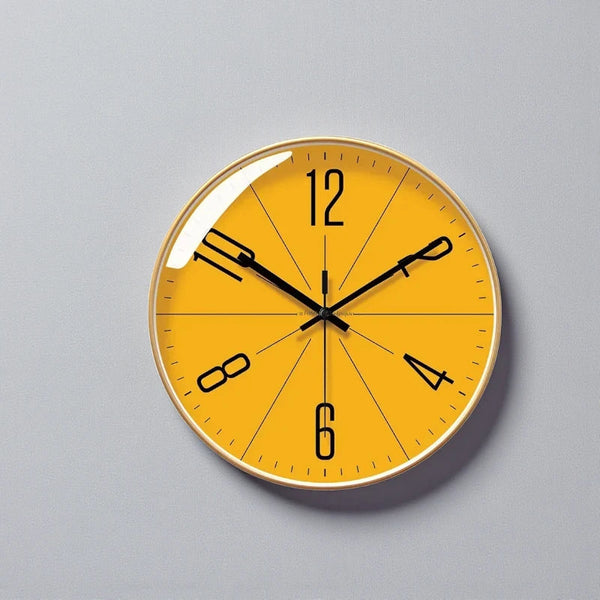
Shop displays often show 10:10, with the hands framing the logo. The reason is explained in why clocks show 10:10.
Morning or afternoon?
An analog clock does not say whether it is morning or afternoon: the hour hand goes around twice a day, once from midnight to noon (a.m.) and once from noon to midnight (p.m.). You tell them apart from the context. When both hands point straight up at 12, it is either noon (12 p.m.) or midnight (12 a.m.).
Teaching children to read a clock
- Start with o'clock: the long hand on 12, the short hand on the hour.
- Add half past: the long hand on 6, the short hand halfway between two numbers.
- Then quarter past and quarter to: the long hand on 3 and on 9.
- Finish with 5-minute steps and single minutes once the quarters are easy.
A real wall clock with clear Arabic numbers and visible minute marks helps more than any worksheet: children see the hands move all day. Hang it at their eye level, in a room where they spend time, and ask them the time at regular moments, such as before dinner. For a large, readable dial, see our guide to reading a wall clock from a distance and our kitchen wall clocks; for every other style, our guide to types of clocks. To pick the right clock for a room, see how to choose a wall clock.
Your questions, answered
Which hand is the hour hand on a clock?
What does the short hand on a clock mean?
How many minutes is each number on a clock?
What is an analog clock?
Is 12 o'clock on an analog clock a.m. or p.m.?
What age can children read an analog clock?