Modern vs vintage wall clocks: finding your perfect match
The choice between modern and vintage clocks fundamentally alters a space's character. Modern designs deliver silent precision and minimalist aesthetics, while vintage models add historic warmth through patina and mechanical ticking. The decision ultimately rests on prioritizing sleek, maintenance-free functionality or the soulful, rhythmic presence of traditional craftsmanship.
Are you torn between the sleek, minimalist appeal of contemporary design and the storied character of an antique when comparing modern vs vintage wall clocks? This decision shapes your room's atmosphere, balancing the desire for high-tech functional precision with the need for warm, nostalgic charm. We highlight the specific material qualities and mechanical differences you must consider to find the perfect timekeeper that fits your unique interior style.
- The Aesthetic Showdown: Clean Lines vs. Storied Character
- It's What's on the Outside That Counts: Materials and Build
- The Machine Inside: Precision Tech vs. Mechanical Heart
- Finding the Right Clock for Your Space and Your Life
The Aesthetic Showdown: Clean Lines vs. Storied Character
What "Modern" Really Means on a Wall
Modern design isn't just new; it's about stripping away the noise. We see clean lines, absolute minimalism, and zero unnecessary fluff. It prioritizes pure form and function above all else.
The goal is blending into the décor or acting as a discrete sculpture. It’s subtle art.
You will mostly find monochromatic palettes or strict neutrals that calm the eye. But sometimes, designers throw in a shock of primary color for a visual punch. This deliberate contrast is the heartbeat of modern design. It demands your attention immediately.
The Soul of "Vintage" and Its Patina
Vintage isn't simply "old junk"; it represents a tangible timeline on your wall. You want that specific patina, the ornate flourishes, and that deep sense of nostalgia. Every scratch or faded spot tells a story that factory-fresh items cannot fake.
We are looking at sweeping Roman numerals, decorative hands, and heavily worked frames. This is the direct opposite of minimalism; it is an unapologetic celebration of the complex detail.
These pieces inject instant warmth and a genuine soul to a room. They create an atmosphere that feels immediately welcoming.
The Quick-Glance Comparison
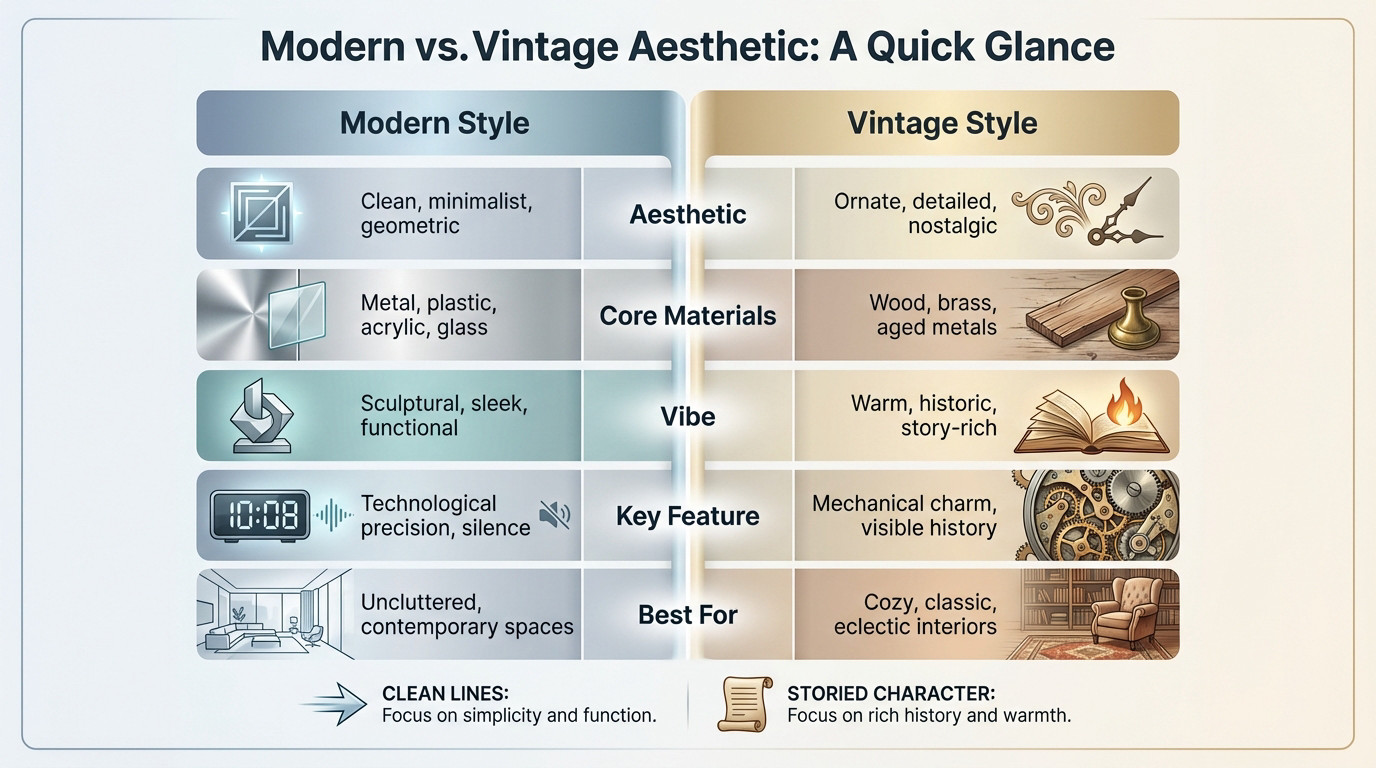
This breakdown exposes the fundamental trade-offs so you can visualize exactly which vibe fits your life. See the differences here.
| Feature | Modern Style | Vintage Style |
|---|---|---|
| Aesthetic | Clean, minimalist, geometric | Ornate, detailed, nostalgic |
| Core Materials | Metal, plastic, acrylic, glass | Wood, brass, aged metals |
| Vibe | Sculptural, sleek, functional | Warm, historic, story-rich |
| Key Feature | Technological precision, silence | Mechanical charm, visible history |
| Best For | Uncluttered, contemporary spaces | Cozy, classic, eclectic interiors |
Don't just pick a clock; decide on the specific energy you want to live with daily. Your choice defines the room's entire rhythm and distinct character.
It's What's on the Outside That Counts: Materials and Build
Now that we’ve covered the general look, let’s dig into what actually gives these styles their physical presence. When weighing up modern vs vintage wall clocks, the real difference often lies right here: in the materials.
The Modern Palette: Metals, Plastics, and New Frontiers
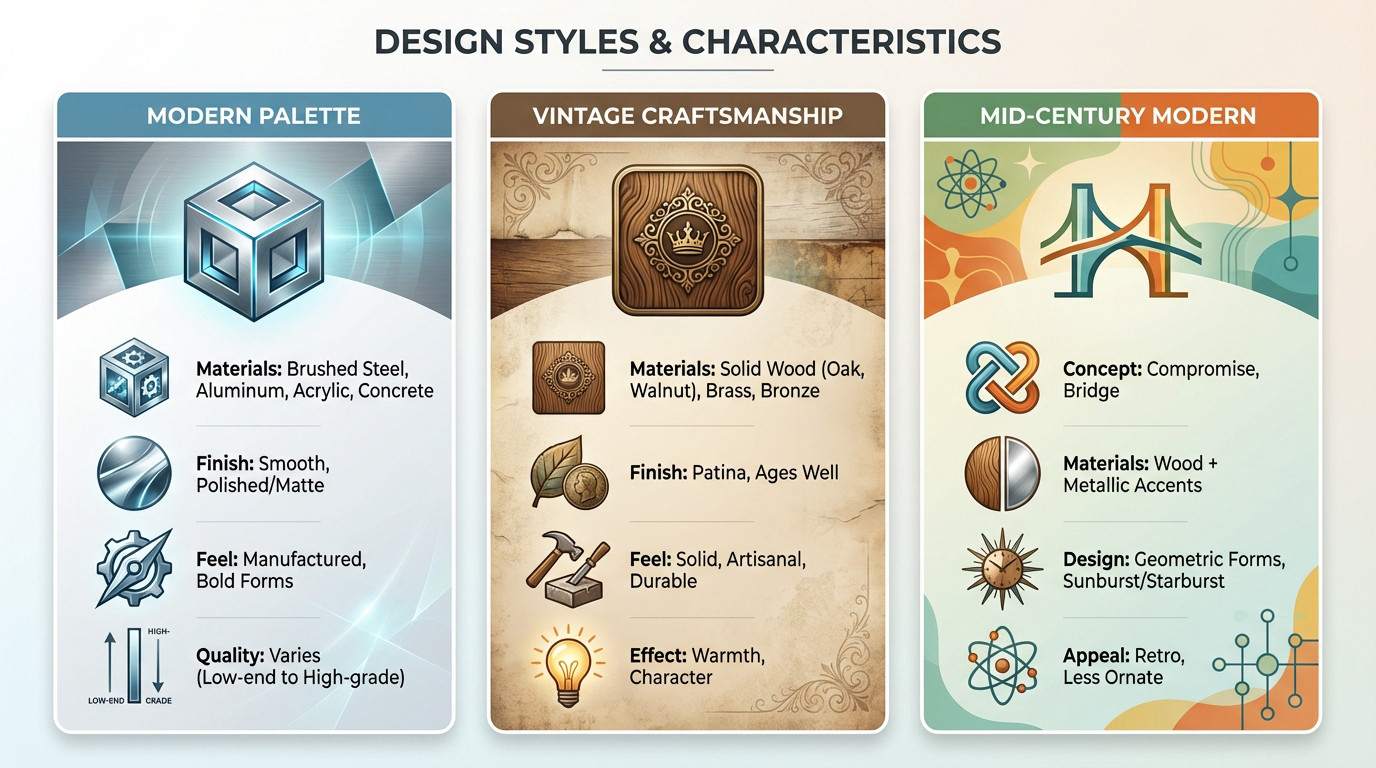
Modern designs often rely on brushed steel, aluminum, or colorful acrylic. You might even see concrete used for a raw industrial look. These surfaces feel smooth, polished, or matte. It’s a ""manufactured" vibe rather than a cultivated one.
These industrial materials allow for bold geometric shapes. You simply cannot achieve these thin profiles with traditional wood carving.
But here is the catch regarding quality. It varies wildly from cheap, flimsy plastic to high-end, durable polymers that will actually last for decades.
Vintage Craftsmanship: The Warmth of Wood and Brass
Vintage pieces prioritize solid wood like oak or walnut alongside heavy metals. You will often find brass or bronze elements here. These materials age beautifully and develop a unique patina.
There is an undeniable sense of artisanal craftsmanship in these builds. You feel the weight and density of the object. It stands as a real physical gage of durability.
These natural materials bring instant warmth to a room. They add a character that cold metal simply cannot match.
The Mid-Century Modern Bridge
The Mid-Century Modern (MCM) style acts as the perfect compromise between eras. It mixes the warmth of woods like teak with bold metallic accents. You get geometric forms that feel both organic and engineered. It bridges the gap perfectly.
Just look at the iconic "sunburst" or "starburst" clocks. They define this specific era with their explosive, radiating spikes.
This is a great option for a retro touch. You get the nostalgia without the heavy ornamentation of classic vintage.
The Machine Inside: Precision Tech vs. Mechanical Heart
Aesthetics matter, but the engine driving the hands is where the real debate lies. When comparing modern vs vintage wall clocks, the mechanical difference creates a massive divide in user experience.
The Silent Precision of Modern Movements
If you prioritize zero maintenance, quartz is the logical path. These battery-operated systems are the definition of "set it and forget it," using a vibrating crystal for consistency that gears cannot match.
For accuracy obsessions, radio-controlled models are the answer. They aren't atomic clocks themselves but automatically sync with the WWVB radio station signal to correct drift. Plus, this tech is now incredibly affordable.
Their biggest selling point? Silence. They eliminate the ticking sound entirely, preserving the absolute quiet of your room.
The Tick-Tock of History: Analog and Mechanical Charm
A mechanical clock offers a distinct sensory experience. That audible tick-tock isn't a defect; it is a heartbeat, a rhythmic presence that makes the house feel alive.
These pieces demand a relationship. You have to wind them and adjust them, creating a physical interaction with the object.
- Sound: The steady rhythm can be surprisingly grounding in a quiet home.
- Learning: Analog faces remain superior for teaching children time concepts.
- Ritual: The weekly act of winding creates a personal connection.
- Aesthetics: The smooth sweep of a mechanical hand has unique elegance.
Choosing this route means investing in traditional engineering. You accept slight timekeeping imperfections in exchange for a machine with genuine character and soul.
Digital Displays: Information at a Glance
Sometimes, you want functionality pure and simple. Digital displays strip away the guesswork, letting you read the exact time instantly without decoding the angle of the hands.
Modern iterations act as home dashboards. They report date, temperature, and humidity, transforming a simple fixture into a vital information hub for the household.
Finding the Right Clock for Your Space and Your Life
Alright, we’ve covered the looks and mechanics. Now comes the real question: how do you pick the one that fits YOU?
Matching the Clock to Your Room's Decor
Start with your furniture. If you have dark woods and leather, a vintage piece is the logical fit. Conversely, interiors built on metal and glass beg for a modern clock.
- For industrial decor: Choose large raw metal, modern or factory-inspired.
- For Scandinavian style: Minimalist modern in light wood works best.
- For country chic: Vintage aged wood or enameled metal is perfect.
- For eclectic looks: Contrast a "sunburst" MCM clock against classic furniture.
However, breaking the codes is often more interesting. A complex, ornamented piece on a raw concrete wall creates a spectacular focal point. It’s about confidence.
Size and Placement: Making a Statement or Adding an Accent
Don't ignore the scale rule. A tiny dial gets lost on a large wall, while an oversized clock becomes the living room's masterpiece.
Placement is key. Try above a fireplace or the main sofa. It must be visible, sure, but it also has to anchor the room's visual balance.
What's Your Priority? A Final Gut Check
Ultimately, this is a gut check between aesthetics and function.
- 1. Do I want flawless precision, or a decor piece with a soul?
- 2. Will I actually wind and adjust it, or do I prefer to set it and forget it?
- 3. What sound do I want: absolute silence or the soft tick-tock of time passing?
Your answers will clarify exactly where you stand in the modern vs vintage wall clocks debate.
Deciding between modern and vintage wall clocks is about more than just telling time; it is about defining your space. Whether you prefer the silent, clean lines of modern design or the warm, ticking soul of a vintage piece, choose the one that truly speaks to you.
FAQ
Are wall clocks still considered stylish for 2025 interiors?
Absolutely. In 2025, wall clocks have transcended their utilitarian purpose to become essential elements of interior design. Whether you opt for the clean lines of a modern aesthetic or the storied character of a vintage piece, a wall clock serves as a focal point that anchors a room. The trend is moving away from generic timepieces toward objects that act as functional art, either blending seamlessly into a minimalist decor or standing out as a sculptural statement.
How can I distinguish between a true vintage clock and a modern reproduction?
To identify a genuine vintage or antique timepiece, look closely at the materials and the mechanism. True vintage clocks often feature solid wood (like oak or walnut), heavy brass, and a natural patina that tells a history of use, whereas reproductions often rely on plastics or lighter metals to mimic this look. Furthermore, a "mechanical heart"—a movement that requires winding and produces a rhythmic tick-tock—is a hallmark of authentic older clocks, contrasting sharply with the battery-operated quartz movements found in most modern reproductions.
What are the current design trends for modern wall clocks?
Modern wall clock trends are defined by minimalism and material innovation. We are seeing a surge in monochromatic palettes, brushed steel, and the use of unexpected materials like concrete or acrylic to create sleek, geometric profiles. Functionally, the demand is high for "silent" precision; homeowners increasingly prefer quartz or radio-controlled movements that eliminate the ticking sound, ensuring the clock contributes to a serene, uncluttered atmosphere.
Which wall clock shape and size is best for my home?
The "best" shape depends entirely on the scale of your wall and the style of your room. For a Mid-Century Modern look, the iconic "sunburst" or "starburst" shape is a perfect bridge between vintage charm and geometric boldness. regarding size, scale is key: an oversized clock can serve as a dramatic centerpiece on a large, empty wall, while a smaller, more discreet clock works best as an accent in a room that already features heavy furniture or complex textures.
What key features should I look for when choosing between modern and vintage?
When choosing a clock, you are essentially choosing between two different experiences. If you value precision and silence, a modern clock with a quartz movement is the ideal "set it and forget it" solution. However, if you are looking for warmth and a connection to the object, a vintage mechanical clock offers a rich aesthetic and a daily ritual of winding, provided you appreciate the audible "heartbeat" of the ticking mechanism.
You May Also Enjoy
-
Minimalist wall clock: the beauty of less is more
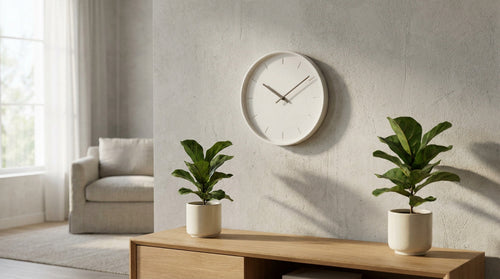
Minimalist wall clocks, exemplified by Muji and Arne Jacobsen designs, prioritize clarity and clean lines to merge utility with decor. This approach transforms a simple time-telling tool into functional wall art that reduces visual noise, creating a calmer and more mindful interior environment.
-
Wall clock trends 2026: the new statement pieces
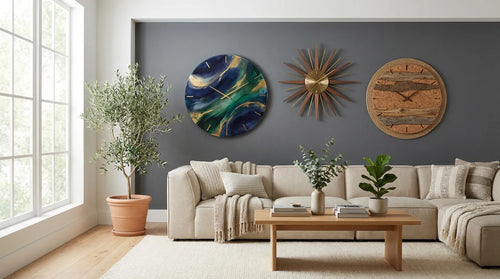
In 2026, wall clocks evolve from mere tools into oversized, artistic statement pieces that anchor a room's design. Dominated by Mid-Century Modern and Sophisticated Minimalist aesthetics, this trend emphasizes sustainable materials like natural wood and brushed metal, marking a definitive shift toward functional sculpture over simple timekeeping.
-
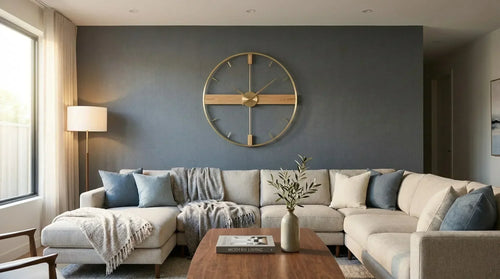
Choosing a wall clock for your living room: 2026 edition
A living room clock serves as a major focal point, so selecting a scale that fills roughly two-thirds of the wall space is crucial for visual balance. Beyond aesthetics, prioritizing a silent quartz mechanism ensures the room remains a peaceful sanctuary, perfectly blending bold design with practical function.
-
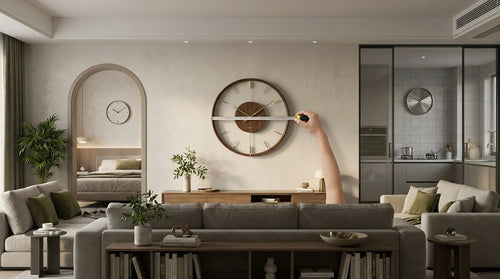
Wall clock size: choose the perfect fit for every room
Choosing the right wall clock depends on proportion rather than standard sizing, with the ideal diameter covering roughly two-thirds of the available wall or furniture width. This balance prevents the piece from overwhelming the room while ensuring readability. For maximum visual harmony, the center of the clock should align with eye level, approximately 1.60 meters from the floor.
-
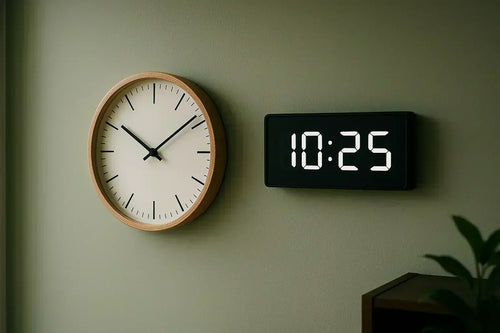
Is a wall clock analog or digital?
Looking to choose between analog and digital wall clocks? The essential takeaway: Analog clocks offer timeless design and educational value, while digital clocks provide instant readability and advanced features like temperature display. Hybrid models merge both, offering precise timekeeping with aesthetic versatility. Both can achieve atomic-level accuracy, ensuring your space balances style, functionality, and precision.
-
Which wall clock is good as per vastu?
-
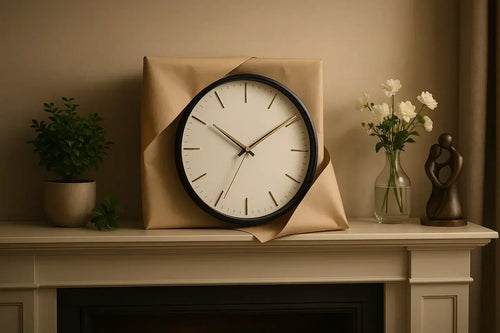
Why a wall clock is the perfect gift for any occasion
A well-chosen wall clock transcends mere functionality, becoming a meaningful gift that blends aesthetics with practicality. It enhances home decor while serving as a daily reminder of connection. Perfect for housewarmings, weddings, or anniversaries, personalized touches transform it into a cherished symbol of shared moments and thoughtful gestures.