Choosing a wall clock for your living room: 2026 edition
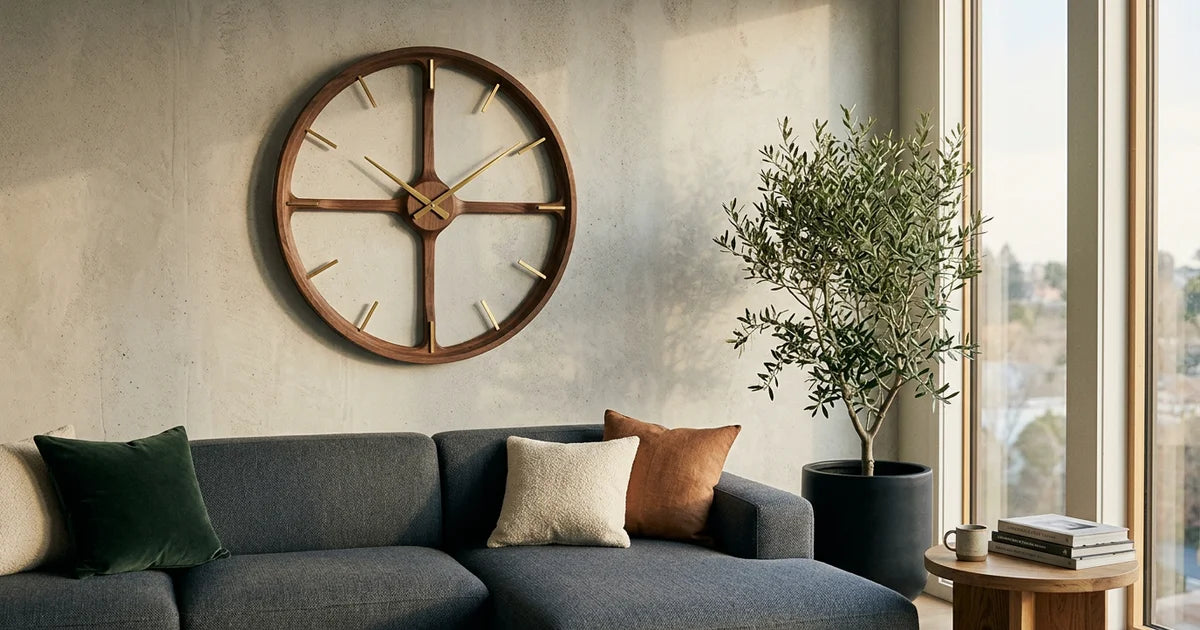
Essential to remember : When selecting a living room wall clock, choose one that fills two-thirds of the wall space to create proper visual balance and serve as an effective focal point. Prioritize a silent quartz mechanism to maintain a peaceful atmosphere while ensuring the clock's width doesn't exceed the furniture beneath it. The right wall clock transforms from a simple timekeeper into a unifying statement piece that anchors your entire room's design.
A living room clock serves as a major focal point, so selecting a scale that fills roughly two-thirds of the wall space is crucial for visual balance. Beyond aesthetics, prioritizing a silent quartz mechanism ensures the room remains a peaceful sanctuary, perfectly blending bold design with practical function.
Do you constantly struggle with a living area that feels disjointed or strangely empty, leaving you frustrated that your interior design lacks a true center of gravity? The strategic process of choosing wall clock living room decor effectively solves this dilemma by transforming a blank wall into a sophisticated and unifying visual anchor. You will discover the professional secrets regarding scale, material selection, and positioning that ensure your timepiece becomes a stunning highlight that perfectly completes your home's unique aesthetic and brings the entire room together.
- Nailing the Basics: Size and Placement First
- Matching the Vibe: Style and Design Deep Dive
- Getting Tactile: Materials and Color Palette
- Beyond the Basics: Shapes and Future Trends
- The Mechanics of Time: Functionality and Features
For real examples, our aesthetic wall clocks collection is the natural next stop.
Nailing the Basics: Size and Placement First

Stop Guessing: The Right Scale for Your Wall
Most people unknowingly pick a timepiece that is simply too small. A clock isn't just a tracker; it is a statement piece. Its size must remain proportional to the wall.
Here is a rule for choosing wall clock living room decor. Ideally, the clock should occupy two-thirds to three-quarters of the wall space. On a massive wall, a large-scale clock isn't an option. It is a necessity to avoid looking lost.
Consider the relationship with your furniture layout. If hanging above a sofa or console, the clock shouldn't be wider than the furniture beneath it.
Finding the Focal Point: Where to Hang Your Clock
A wall clock can either forge a new focal point or complement an existing one, like a fireplace. It has one job: to draw the eye naturally. You want instant visual impact.
Common spots include above the main sofa, over the mantelpiece, or on a prominent empty wall facing the entrance. The goal is visual balance, not just filling a gap. Don't force it into a corner; make it deliberate.
Hang the center of the clock at eye level. This sits roughly 57-60 inches (145-152 cm) from the floor.

The Gallery Wall Question
Thinking about integrating a clock into a gallery wall? The clock can act as the central anchor. Its frame and style must match the other pieces.
But here is a thought: sometimes, a clock competes with art. If your gallery wall is already busy, give the clock its own space to breathe.
Matching the Vibe: Style and Design Deep Dive

Now that you've figured out the 'where' and 'how big', let's get to the fun part: finding a clock that actually fits your room's personality.
Your Living Room's Personality on the Wall
When choosing wall clock living room pieces, the design must complement the existing decor, not fight it. A mismatched clock is a constant, ticking eyesore you can't ignore. Look closely at your current furniture, textiles, and overall color scheme.
The clock should feel like a natural extension of your style. Whether it's modern minimalism, cozy rustic, or industrial chic, the clock is a final, defining touch.
A Quick Guide to Popular Living Room Clock Styles
Different styles achieve totally different moods in a space. This is where you decide the character of your clock.
| Style | Key Characteristics | Best For... |
| Modern/Minimalist | Clean lines, no numerals, simple materials (metal, glass) | Uncluttered, contemporary spaces. |
| Rustic/Farmhouse | Natural wood, distressed finishes, large roman numerals | Warm, cozy, and traditional interiors. |
| Industrial | Raw metal, exposed gears, dark colors (black, grey) | Lofts, urban-style rooms with brick or concrete. |
| Vintage/Mid-Century | Sunburst designs, bold colors, unique shapes | Retro-themed or eclectic living rooms. |
Decorative vs. Purely Functional
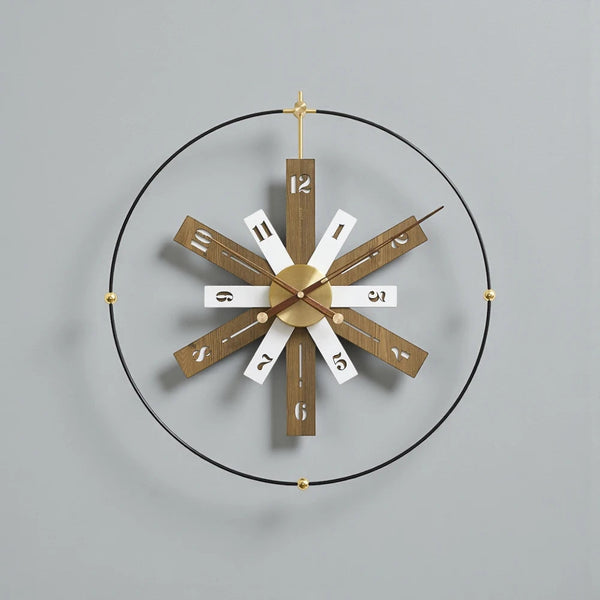
Let's discuss the balance. Every clock tells time, but some are designed primarily as wall art. An oversized, gear-filled clock is more about aesthetics than a quick time check. It serves as a visual anchor.
Conversely, a simple, clear-faced clock prioritizes legibility. You have to decide your priority: is this a functional tool or a decorative centerpiece?
The best choice, of course, does both beautifully.
Getting Tactile: Materials and Color Palette
Style is one thing, but the actual substance of the clock, what it's made of, is just as important.
The Feel of Time: Wood, Metal, or Glass?
When choosing a wall clock for your living room, realize that materials dictate the object's texture, weight, and overall presence. This choice isn't just cosmetic; it has a huge impact on the atmosphere.
- Wood clocks: Bring warmth and a natural, organic feel. Perfect for rustic, Scandinavian, or traditional decor schemes.
- Metal clocks: Offer a sleek, cool, and modern or industrial edge. Think stainless steel for modern, or wrought iron for industrial vibes.
- Glass or acrylic clocks: Create a sense of lightness and sophistication. They can feel almost invisible or be a glossy, bold statement piece.
Playing with Color and Contrast
Two main strategies exist: blend or pop. A clock that matches the wall color creates a subtle, textural effect. This approach works exceptionally well for minimalist interiors where you don't want distractions cluttering the view.
The other option is high contrast. A black clock on a white wall, or a brightly colored clock in a neutral room, becomes an instant focal point. It's a confident choice that demands attention.
Don't Forget the Finish
You must also consider that the finish matters immensely. A matte black metal clock feels very different from a shiny, polished chrome one; one absorbs light, the other reflects it.
Consider the other finishes in your room. Match your clock's metallic finish, like brass or nickel, to your light fixtures or cabinet hardware for a cohesive, designed look that ties the room together.
Beyond the Basics: Shapes and Future Trends
Alright, you've got the practicals down. Now let's talk about the details that separate a good choice from a truly great one.
Round vs. Square: The Psychology of Shape
Shape isn't just an aesthetic whim; it actively shifts the room's energy. It's a subtle design lever that many overlook when choosing a wall clock for their living room.
- Round clocks: The classic standard. They feel softer, more traditional, and promote a sense of community and flow.
- Square/Rectangular clocks: These feel structured, modern, and formal. They align sharply with the straight lines of furniture and architecture.
- Abstract/Asymmetrical clocks: These are pure statements. They act as sculpture and are best for eclectic or avant-garde spaces.
What's Next: Clock Trends for 2026 and Beyond
Looking ahead, designers are ditching fast decor for sustainable and recycled materials. We are seeing concrete composites and reclaimed plastics take center stage. Simultaneously, expect a rise in ultra-minimalist digital clocks. They look less like gadgets and more like art installations.
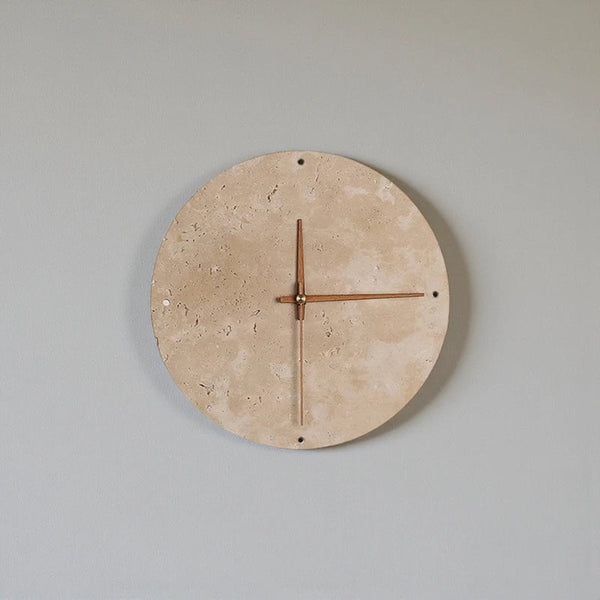
Another major shift is the aggressive return of texture and natural elements. You will see faces made of concrete, raw wood, or woven details. It is about dragging an authentic, tactile quality back into our increasingly digital homes.
The Timeless Appeal of Roman Numerals
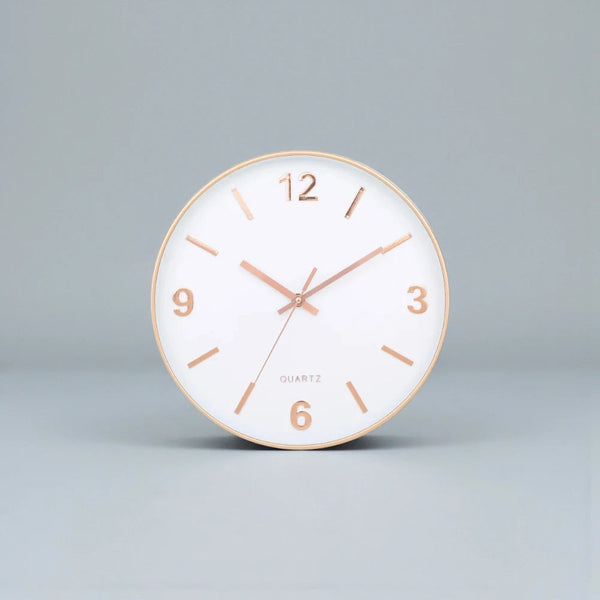
There is a reason designers keep returning to Roman numerals. They instantly inject a sense of history and timeless elegance into a room. It anchors the space with immediate formality.
But, be careful. In a sleek, hyper-modern space, they often look disjointed and out of place. You risk clashing styles, so they work best in traditional, transitional, or grand-feeling living rooms.
The Mechanics of Time: Functionality and Features
Finally, let's look under the hood. A clock is a machine, after all, and how it works can make a big difference.
The Sound of Silence: Choosing a Mechanism
When choosing a wall clock for your living room, a silent or non-ticking model is almost always the best choice. That constant, rhythmic ticking can become incredibly annoying when you are trying to relax.
- Quartz mechanism: The standard. Reliable and affordable. Look for "sweep" or "silent" quartz movements that don't tick.
- Ticking mechanism: Some people find the sound comforting or nostalgic. It's a personal choice, risky one for a shared living space.
- Digital display: Offers a modern look, often with extra features like date or temperature, but can feel less decorative.
Set It and Forget It: The Case for Radio-Controlled Clocks
Think of radio-controlled clocks as a high-tech, low-hassle option. These clocks automatically sync to an atomic clock signal, meaning they are always perfectly accurate. You can stop worrying about manual adjustments for daylight saving time.
While these were once niche gadgets, they are now widely available and affordable, as noted by sources like the National Institute of Standards and Technology (NIST). They use their own quartz oscillators between daily syncs for reliability.
Placement for Perfect Precision
Even smart clocks have their needs. Signal reception is key for radio-controlled models to function correctly without frustration.
For a strong signal, stick them near a window or on a wall facing the signal's source. Keep them away from interference sources like computer monitors, as official guidance suggests placing them at least a meter or two away.
Choosing the right wall clock is about more than just telling time. By considering size, style, and mechanics, you transform a simple tool into a stunning focal point. Whether you prefer a silent minimalist design or a bold vintage statement, the perfect clock elevates your living room's atmosphere instantly.
Keep i mind that an oversized wall clock makes a statement in large living rooms.
Your questions, answered
Can a wall clock be placed on the west wall according to Vastu Shastra?
What is the best direction for a wall clock according to Vastu?
What is the optimal direction for wall clocks in Vastu Shastra?
What items are recommended for the west wall in Vastu Shastra?