Kitchen wall clocks: choosing the right one for a working room
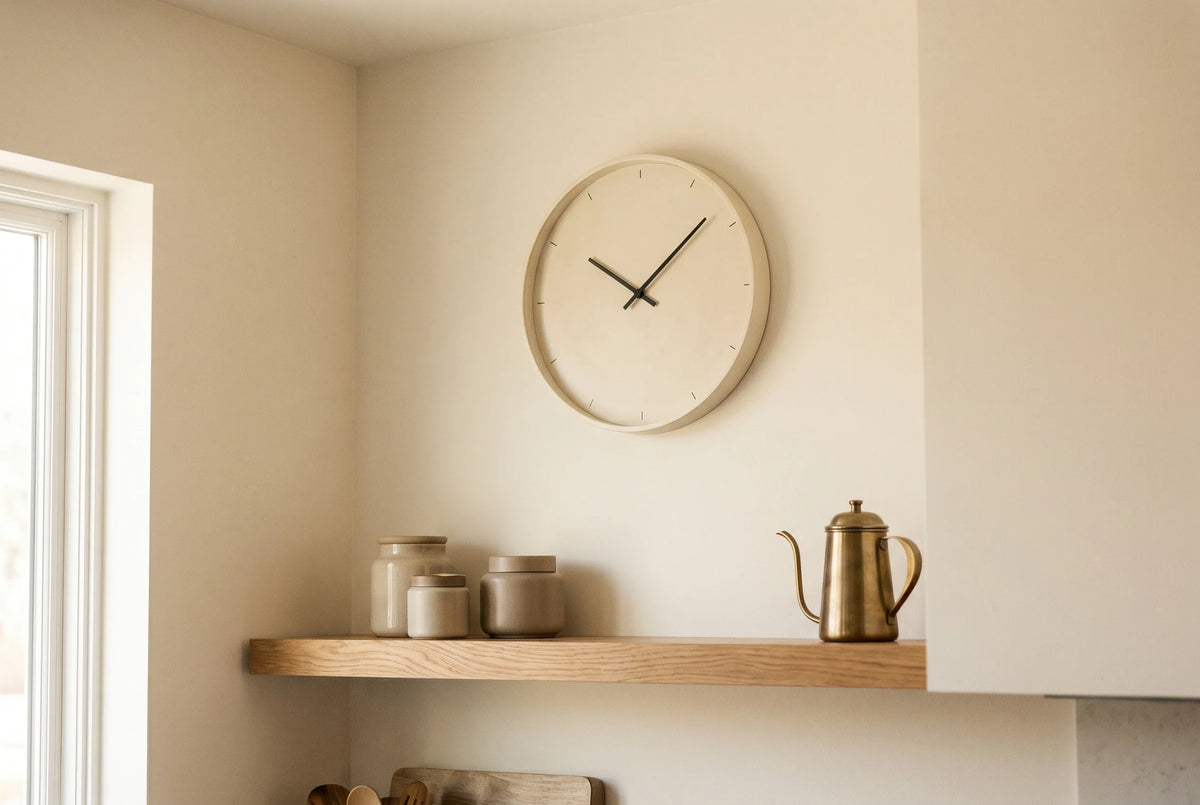
A kitchen wall clock works harder than any other timepiece in the home. It is read at a glance, often from a distance, under variable light, sometimes through cooking steam. Getting it right is part legibility, part material choice, part design, and this guide walks through each.
Legibility first
In every other room, a clock can lean toward sculpture. In the kitchen, it has to be read in two seconds while you check the oven timer. That means: large numerals (Arabic or clearly differentiated Roman), high contrast between hands and dial, and a face large enough to be visible from across the room.
Aim for a minimum diameter of 30 cm (12 inches) for a galley or compact kitchen, and 40 cm or more for an open-plan kitchen. For very large open spaces, our oversized wall clocks become a natural fit.
These ideas extend to the whole home; our wall clock decor guide pulls them together room by room.
Materials that survive a kitchen
, Stainless steel or coated metal. Resists steam, wipes clean, ages well.
, Sealed wood. Solid wood with a marine-grade finish handles humidity. Untreated wood will warp within a season above a stovetop.
, Glass face. Easier to clean than open dials, where grease accumulates in the numerals.
, Avoid. Untreated paper dials, exposed fabric, and unsealed MDF cases all fail quickly in a working kitchen.
Placement and viewing angles
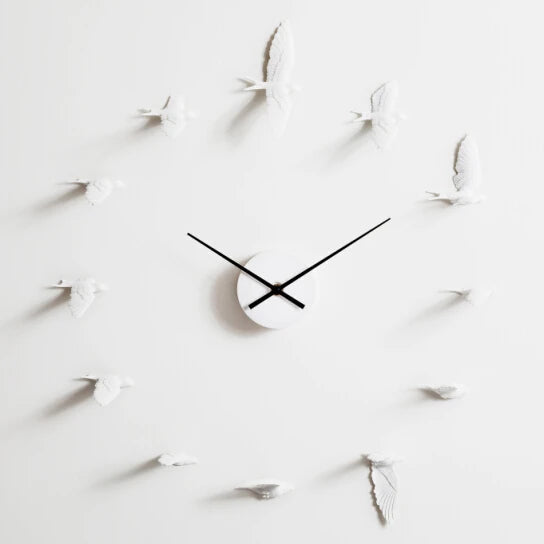
The clock should be visible from the main cooking and prep zones, not behind you when you stand at the stove. The standard mounting height, center of clock at 1.5 to 1.7 meters from the floor, works for most kitchens. In an open-plan space where the kitchen flows into a dining area, mount the clock so it serves both zones at once.
Avoid placing the clock directly above a stovetop or kettle: rising steam and grease will shorten its life regardless of finish.
Styles that work in kitchens
Three style families dominate kitchen wall clocks in 2026:
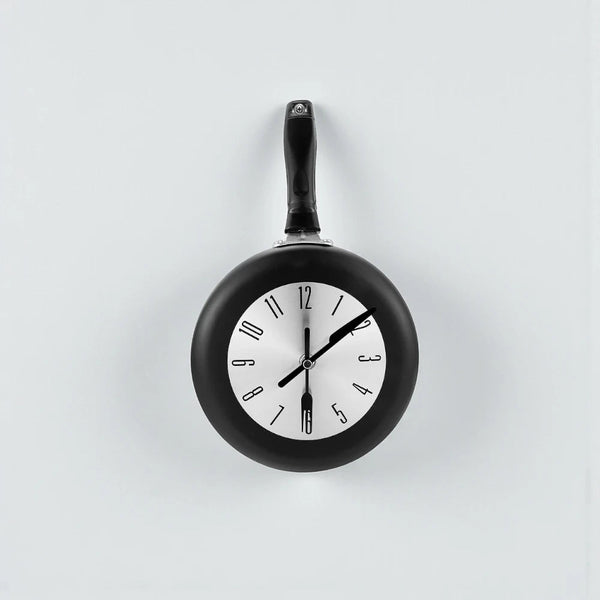
Minimalist. A clean dial with thin hands and no extra ornament reads well in modern kitchens with quartz worktops and flat-front cabinets. Our minimalist wall clocks collection covers this register.
Industrial / station-style. The black bezel, white face, bold numerals format reads instantly and pairs well with stainless steel appliances and exposed brick. See our modern wall clocks for current examples.
Wood-framed analog. For warmer kitchens, country, farmhouse, Scandinavian, a sealed wood frame softens the room. Browse our wooden wall clocks for the available shapes.
Silent movement matters more here
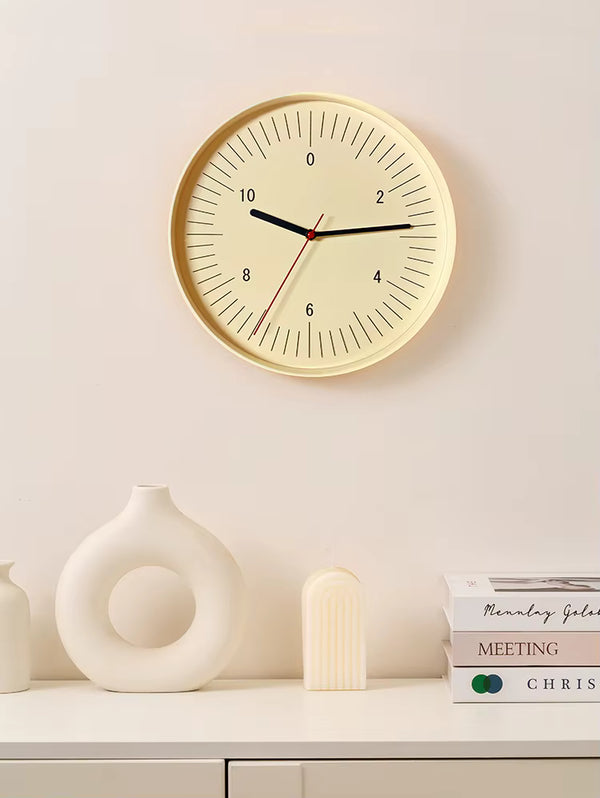
Kitchens are quiet rooms much of the day. A loud ticking second hand becomes noticeable fast. Look for clocks specified as silent sweep or silent quartz, these use a continuous-motion second hand rather than a stepping mechanism. The difference is felt immediately and is non-negotiable for a kitchen that opens onto a dining or living space.
Adjacent rooms, adjacent clocks
If your kitchen opens onto a dining or living room, a coherent clock language across both spaces reads better than mismatched pieces. Pair a kitchen clock with a complementary piece from our decorative wall clocks collection for the adjoining room. For homes with covered outdoor kitchens or terraces, our outdoor wall clocks are built for the additional exposure.
A short checklist before you buy
, Diameter ≥ 30 cm for compact kitchens, ≥ 40 cm for open-plan.
, Silent sweep movement.
, Sealed or wipe-clean materials.
, High contrast dial and hands.
, Not directly above stove or kettle.
, Visible from the prep area, not behind you.
For broader guidance on clock placement and sizing across the home, see our wall clock size guide. For a curated selection built around the criteria above, browse our kitchen wall clocks collection.