How Nixie Clocks Work: The Retro Glow Behind Magic Numbers

Essential to remember : Nixie clocks create their distinctive orange glow through high-voltage gas discharge at 170-180V, where ionized neon-argon gas illuminates stacked cathodes shaped as numbers. This vintage technology produces a unique 3D floating digit effect that modern displays cannot replicate, making nixie clocks highly sought-after for their retro electronic artistry and warm visual appeal.
Nixie clocks generate their iconic orange glow through a 170-180V cold cathode discharge in neon-argon gas. Stacked cathodes create a striking 3D effect where each digit appears on a distinct plane. This vintage technology provides unmatched visual warmth and historical charm, offering a tangible connection to electronic history unlike any modern display.
Have you ever been captivated by the mesmerizing, warm glow of a Nixie clock, watching digits float in perfect orange precision while wondering how this vintage technology actually functions? This article demystifies the nixie clock mechanism, diving deep into the cold cathode gas discharge process and high-voltage physics (170-180V DC) that power these iconic displays. You'll discover how a neon-argon gas mixture ionizes into plasma within a sealed glass tube, lighting up stacked cathodes shaped as numbers to create a unique 3D effect, proving why this retro tech remains irreplaceable in the world of electronic artistry.
- What is the magic behind a nixie clock's retro glow?
- Longevity, Aging, and How to Preserve the Glow
- The Electronic Brain: Driving The Nixie Tube
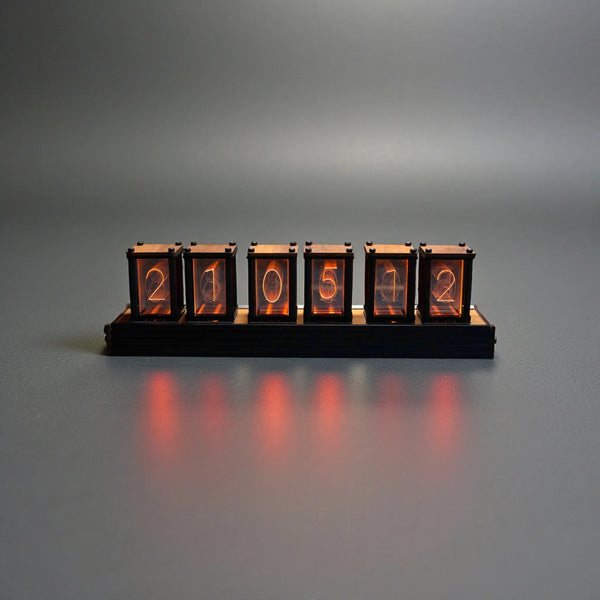
More on the Nixie Tube Clock Kit - Brentnor →
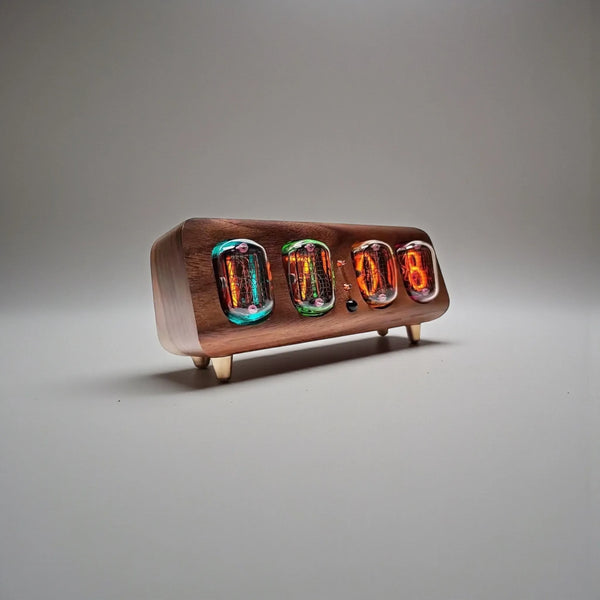
More on the Retro Nixie Tube Clock - Nixton →
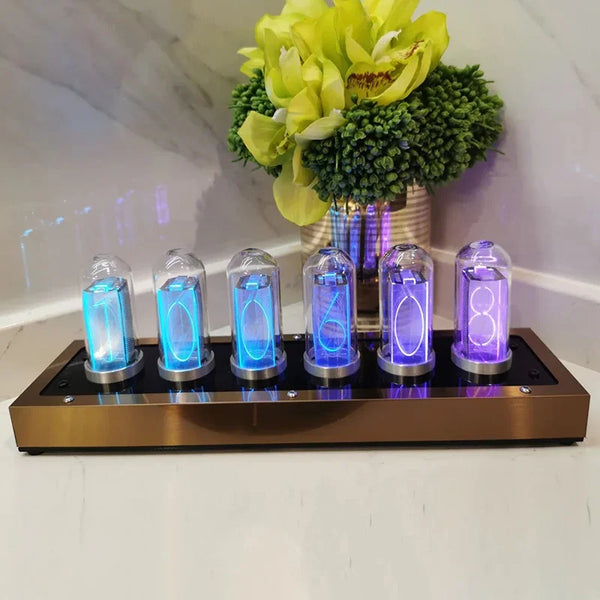
More on the LED Nixie Tube Clock - Tolliver →
To see the style in real pieces, browse our nixie tube clocks collection.
How High Voltage Brings the Numbers to Life
The Principle of Cold Cathode Gas Discharge
Nixie tubes use cold cathode gas discharge, avoiding heated filaments. Instead, 170-180V DC ionizes gas to create light-emitting plasma without cathode heat. This design ensures longevity. The neon-argon Penning mixture lowers striking voltage and enhances efficiency, minimizing sputtering for stable operation.
As IEEE Spectrum notes, the high operating voltage enables ionization without thermal elements, essential for the glow. Unlike LEDs, it produces no cathode heat, preserving longevity.
Creating Plasma to Form a Glowing Digit

Applying voltage ionizes neon gas into plasma. Positive ions strike the cathode, releasing photons to form the visible digit instantly. Near the cathode, a thin Aston dark space forms where electrons lack energy to excite gas, creating a boundary between dark and luminous zones.
Each digit-shaped cathode lights up independently. The plasma matches its shape, creating a clear display. High voltage activates only one cathode at a time, ensuring focused glow. Stacked cathodes add depth, making digits appear three-dimensional.
The Science Behind the Signature Orange Glow
- A high voltage potential is created between the anode and a single chosen cathode.
- The voltage ionizes the low-pressure neon gas, turning it into plasma.
- Positive gas ions strike the negatively charged cathode.
- This collision causes the cathode to emit photons, creating a visible glow that envelops the digit.
Neon emits warm orange-red light via atomic excitation. Electrons jump energy levels and release photons when returning to ground state. Specific wavelengths around 585-640 nanometers dominate, giving the characteristic warm glow.
Beyond color, the retro aesthetic stems from the three-dimensional glow. Each digit stacked at varying depths creates a layered effect modern LEDs can't replicate. This depth and soft light evoke vintage tech, making Nixie clocks sought for nostalgic charm.
New to these glowing tubes? Our nixie tube clock buying guide explains what they are and what to check before you buy.
The Electronic Brain: Driving The Nixie Tube
The Role Of The High-Voltage Driver Circuit
Modern microcontrollers operate at 5V, but Nixie tubes need 170-180V. A dedicated driver circuit bridges this gap. It converts low-voltage control signals into the high voltage required for illumination. Without this component, the clock cannot function.
Specialized ICs like the 74141 or K155ID1 handle this task. They decode binary inputs and switch high voltage to the correct cathode. These drivers ensure precise digit selection while protecting the microcontroller from dangerous voltages.
Transistors or Darlington arrays may also be used. Each cathode requires a high-voltage switch. This setup allows safe control of the tube's glow without damaging the clock's logic circuitry. Current-limiting resistors prevent overcurrent, ensuring tube longevity.
High-voltage driver circuits often include safety features like current-limiting resistors. These resistors protect the tube from excessive current, which could shorten its lifespan. Proper resistor selection is critical for stable operation at 170-180V.
From Binary Code To Glowing Numbers
The clock's logic sends binary-coded decimal (BCD) signals to the driver. Each digit's cathode corresponds to a specific BCD value. When activated, high voltage ionizes the neon-argon gas around that cathode.
The gas turns into plasma, emitting photons that create a warm orange glow. This process occurs only around the selected cathode, forming distinct, deep-set digits. Other cathodes remain inactive, ensuring clear numbers.
Unlike modern LEDs, Nixie tubes produce a soft, three-dimensional glow. This nostalgic aesthetic captivates collectors. The unique visual charm keeps evolution from contemporary nixie designs popular despite newer technologies. Each digit appears to float in space, enhancing the retro appeal.
The cathodes are stacked at different depths, creating a sense of dimensionality. This depth effect, combined with the vibrant neon light, makes Nixie displays visually striking. Their warm, inviting glow evokes a bygone era of technology.
Longevity, Aging, and How to Preserve the Glow
The Problem of Cathode Poisoning
Dark spots on Nixie digits signal cathode poisoning. Active cathodes sputter metal ions that settle on inactive ones, forming a resistive layer blocking illumination. This occurs during glow discharge in Nixie tubes.
Cathode poisoning appears after 10k+ hours. Thicker deposits cause permanent dark spots. Inactive cathodes accumulate metal, acting as an insulator. Older non-mercury tubes are more prone. Without maintenance, digits may fail completely. Proper restoration is possible with careful intervention.
Maximizing the Lifespan of Vintage Tubes
Modern clocks cycle all digits hourly to prevent stagnation. Mercury-doped IN-14 tubes last 200k+ hours (40x neon-only) due to reduced sputtering. Experts briefly increase current (e.g., 50-60mA for CD47) to clean deposits. Staying within 170-180V and current specs prevents wear. PWM dimming preserves brightness while reducing average current. Smart cycling ensures even wear across digits, preserving the retro glow. High-end models auto-adjust cycling based on usage patterns.
| Issue | Description | Common Solution |
| Cathode Poisoning | Dark spots or failure on rarely used digits. | Implement periodic digit cycling. |
| Digit Fading | Overall brightness diminishes over time. | Operate within specs; some fading is inevitable. |
| Blue/Purple Dots | Small floating blue or purple lights. | Caused by gas impurities or high current. Usually harmless. |
Blue/purple dots indicate gas issues or high current. While typically harmless, persistent dots may signal problems. Proper cycling and voltage control ensure decades of reliable operation for vintage Nixie displays.
The enduring charm of a bygone technology
More than just numbers: the appeal of visual depth
Nixie tubes operate via cold cathode discharge. A sealed glass envelope contains a precise neon-argon gas mixture at low pressure, sometimes with trace mercury to extend lifespan and stabilize the glow.
When 170-180 volts is applied between anode and cathode, gas ionizes into plasma. Positive ions strike the cathode, releasing electrons that collide with gas atoms, exciting them to emit photons.
This process forms the iconic orange glow. The cathode remains cool unlike incandescent bulbs, producing a warm, vintage atmosphere that captivates viewers with its soft, diffused light.
Modern displays lack this physical dimension. Their flat surfaces cannot replicate the organic, layered glow of Nixie technology, where each digit seems to float in space.
The nixie revival and its timeless appeal
Artisans like Dalibor Farny's Czech workshop restore vintage manufacturing techniques, meticulously handcrafting each tube from raw materials. ensuring the technology's survival.
These makers blend historical craftsmanship with modern design. Each clock is a fusion of engineering and artistry. Their work keeps analog magic alive in a digital age, appealing to both collectors and design enthusiasts.
- The warm, organic glow of neon gas.
- The unique 3D depth from stacked cathodes.
- The satisfying visual transition between numbers.
- A tangible connection to a past era of electronics.
Owners cherish Nixie clocks for their emotional resonance. They're not just timepieces, they're conversation pieces bridging generations, with their warm glow creating a nostalgic ambiance in any room, perfect for retro-themed interiors and tech enthusiasts alike.
Nixie clocks transcend time with their warm, 3D glow and nostalgic charm. Once obsolete, these vintage displays now captivate enthusiasts through their organic light and tangible link to electronic history. A perfect blend of science and art, they remind us that true beauty lies in the details of bygone technology.
Now that you've uncovered the secret behind the retro glow of nixie tubes, click here to see how modern nixie clocks blend that vintage magic with sleek contemporary design for your home.
Your questions, answered
How does a Nixie clock create its magical glow?
How long do Nixie tubes typically last?
When did Nixie tube production cease?
What causes Nixie tube poisoning?