From labs to living rooms: why Nixie clocks captivate us ?
Nixie clocks merge vintage charm with modern technology, offering a warm, nostalgic glow that stands apart from digital screens. More than timekeepers, they are artistic relics of mid-century engineering, reconnecting us to tangible history in a digital age. Some models achieve 60-nanosecond precision, preserving authenticity with cutting-edge accuracy while maintaining the essence of craftsmanship.
Amidst the sterile glow of modern digital screens, the enduring nixie clocks popularity captivates with its warm, nostalgic luminescence and tangible craftsmanship, transforming once-laboratory instruments into cherished living room icons that defy fleeting technology trends. Discover how these vintage timepieces, born in scientific labs, now grace homes through a blend of retro-futuristic design, cutting-edge innovations like GPS synchronization, and sustainable materials, becoming symbols of artistry and individuality. Uncover the secrets behind their resurgence—from DIY projects empowering hobbyists to build unique pieces to high-end designs featuring rare Russian olive burl wood—proving that true innovation never fades but evolves into timeless elegance.
- The Warm Glow of a Bygone Era: What Are Nixie Clocks?
- The journey from industrial tools to design icons
- The anatomy of an obsession: decoding the appeal
- Living With A Piece Of History: Durability And The Art Of Preservation
The Warm Glow of a Bygone Era: What Are Nixie Clocks?
A warm orange glow radiates from glass tubes, where numerals float in a soft, inviting light. Nixie clocks embody retro-futuristic charm. The gentle neon-like illumination creates a calming presence, perfect for living rooms and offices seeking a touch of vintage elegance.
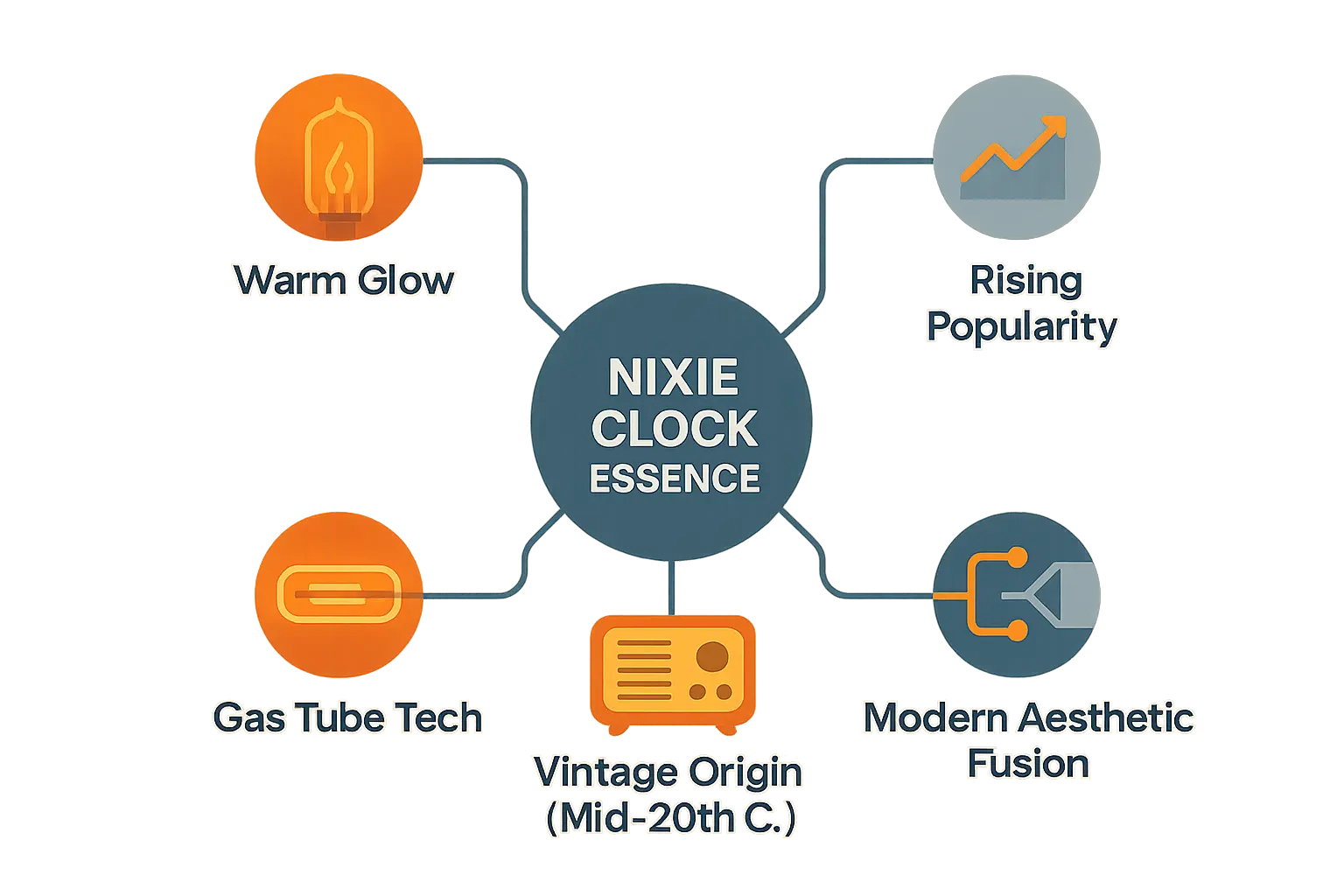
Born in the 1950s, these timepieces use gas-discharge technology to illuminate numbers. Their handmade construction and precise engineering reflect mid-century innovation. The name 'Nixie' originated from Burroughs Corporation's 'NIX1' project in 1955.
Today, they're cherished as art pieces, merging historical craftsmanship with modern decor. Hundreds of designers and hobbyists worldwide integrate Nixie clocks into their homes. Enthusiasts appreciate the DIY projects that celebrate this legacy, from assembling tubes to designing custom housings.
Authentic models, such as those using Soviet-era IN-14 tubes, offer replaceable digits and precise mechanisms. Their nostalgic appeal resonates deeply, offering a tangible connection to the past in an increasingly digital world. This blend of vintage charm and modern functionality makes Nixie clocks a distinctive alternative to conventional timepieces.
The journey from industrial tools to design icons
From scientific labs to mission control
Developed in the mid-20th century, Nixie tubes became essential components in scientific and industrial equipment. Burroughs Corp commercialized them in 1955, making them standard in voltmeters, counters, and measurement devices. They were the preferred choice for digital displays before LEDs and LCDs emerged.
Their clear readability and reliability made them indispensable for precise data display in critical applications. During Apollo missions, NASA's Mission Control Center (MCC) used Nixie tubes for real-time displays of mission elapsed time and vital metrics. Though spacecraft used LED displays, ground support relied on them extensively.
Discover their historical role in Mission Control Center (MCC) and why they were popular in the 1950s.
The aesthetic shift to a living room centerpiece
As LED and LCD screens replaced Nixie technology, designers rediscovered their retro-futuristic charm. Today, these clocks blend historical craftsmanship with contemporary decor. Each piece serves as functional art, adding unique character to homes and offices.
The warm orange glow of Nixie tubes evokes nostalgia. Unlike modern digital displays, they provide a soft, atmospheric light. This distinctive aesthetic makes them conversation starters and focal points in any space.
DIY enthusiasts build custom Nixie clocks using authentic Soviet IN-14 tubes, some over 35 years old. Features include dynamic digit transitions, alarms, temperature sensors, and battery backup. They offer 12/24-hour formats, night mode with auto dimming, and mechanisms to prolong tube life. These handmade timepieces honor engineering history while ensuring modern precision. Collectors highly value them due to the scarcity of original tubes and meticulous craftsmanship.
The anatomy of an obsession: decoding the appeal
Developed for industrial and scientific use in the 1950s-60s, Nixie clocks once filled labs and military equipment. Now, they grace home decor as handcrafted relics. Their warm glow and layered digits showcase unique craftsmanship—distinct from mass-produced gadgets.
Owners cherish their historical significance and craftsmanship. This tangible connection evokes nostalgia, offering sensory experiences unlike digital screens. Each glowing digit is a window to an era when technology was built to last with artistry and soul.
Each clock transforms timekeeping into an immersive, contemplative experience. The soft orange glow creates a calming atmosphere, turning timekeeping into a mindful ritual. Their physical presence invites deeper appreciation.
The artistry of light, glass, and craftsmanship
Nixie tubes produce captivating orange glow through gas ionization. Digits formed within glass create depth and dimension. This warm, atmospheric light creates a soothing visual experience unlike modern screens.
Artisans craft housings from rare Russian olive burl wood. Other premium materials like reclaimed oak or polished brass are also used, each case reflecting meticulous attention to detail. Explore how materials enhance Nixie clocks.
Aluminum, brass, and steel form durable elegant cases. Every component is hand-assembled for precision. These materials ensure longevity while maintaining a luxurious aesthetic.
Light and glass interplay creates stunning displays. Vintage tech blends with contemporary luxury seamlessly. The interplay creates a three-dimensional effect, making each number appear to float within the tube.
Key drivers of their enduring popularity
- Unique Aesthetic: Warm orange glow and layered digits create mesmerizing visuals unmatched by modern displays.
- Nostalgic Value: Tangible link to mid-20th-century electromechanical engineering, evoking memories of innovative, functional design.
- Statement of Individuality: Curated art pieces reflecting personal taste beyond mere functionality.
- DIY Appeal: Enthusiasts build custom clocks, fostering a community passionate about preserving this technology.
- Cultural Significance: They represent a bridge between historical craftsmanship and modern design trends.
The Modern Nixie Clock: A Blend of Vintage Soul and New-Age Tech
The Rise of the DIY and Maker Community
The DIY community has revitalized Nixie clocks, turning them from obsolete tech into cherished projects. Enthusiasts build and customize these timepieces, gaining hands-on experience with mid-20th-century engineering. Kits include Soviet IN-14 tubes, PCBs, and wooden cases, costing around $150. Building a Nixie clock connects hobbyists to historical craftsmanship. Projects like the achieve time accuracy in the 60-nanosecond range using GPS modules. Online communities like Reddit’s r/NixieClocks (10k+ members) share builds and troubleshooting tips. Assembling teaches electronics skills for a warm glow digital screens can’t match. This trend highlights appreciation for analog warmth in a digital world. It preserves technological history through hands-on creation.
New Features For A New Generation
Modern Nixie clocks blend vintage aesthetics with contemporary features. Soviet NOS IN-14 tubes ensure authentic warm glow. Dynamic digit transitions, adjustable LED backlighting, and battery backups prevent time loss during outages. USB charging and GPS sync ensure precision. Premium models feature replaceable tubes, walnut or acrylic materials, and temperature displays. GRA & AFCH's IN-18 Divergence Meter starts at $769 with GPS sync and a 1-year warranty. High-end models feature handcrafted walnut or brushed aluminum. Automatic night dimming protects tubes; Wi-Fi syncs time. These clocks merge nostalgia with functionality, creating distinctive ambiance for retro-inspired interiors.
Comparing The Modern Nixie Clock Landscape
Choosing the right Nixie clock depends on budget and skill level. From DIY kits starting at $150 to ultra-luxury pieces like the Urwerk SpaceTime Blade, there's a perfect option for every enthusiast.
| Feature | Authentic Vintage Clocks | DIY Kits | Modern High-End Designs |
| Tube Source | Original, often Soviet NOS (e.g., IN-14) | Varies (NOS or new reproductions) | Primarily rare and large NOS tubes |
| Key Features | Basic time-telling, authentic historical feel | Customizable features, learning experience | Advanced features, premium materials, artistic design |
| Price Point | Moderate to High | Low to Moderate | Very High (can reach thousands of dollars) |
| Target Audience | History buffs and collectors | Hobbyists, makers, and tech enthusiasts | Design aficionados and luxury collectors |
Living With A Piece Of History: Durability And The Art Of Preservation
The Challenge Of Cathode Poisoning And Tube Lifespan
When a Nixie tube's cathode remains inactive for extended periods, deposits build up. This 'cathode poisoning' prevents proper illumination of that digit. The problem occurs as sputtered material coats inactive cathodes over time.
For example, a CD47 tube's '6' may darken or glow weakly. Such issues typically emerge after thousands of operating hours. Each tube type varies in vulnerability to this phenomenon. Older Soviet IN-14 tubes often face this challenge after decades.
However, proper maintenance can delay this effect significantly. Understanding this challenge is key to preserving these timeless pieces. Cathode poisoning is a natural part of Nixie technology's aging process.
It reflects their historical craftsmanship and the materials used in mid-20th century engineering. This inherent trait adds to their nostalgic appeal among collectors.
Modern Solutions For Extending Longevity
Current manufacturers integrate 'slot machine' cycling. All digits rotate periodically to avoid cathode buildup. This routine prevents deposits from forming on unused cathodes. It's a simple yet effective solution.
Night mode automatically powers down tubes during sleep hours. This smart feature greatly extends operational life. It reduces unnecessary wear on the tubes, preserving their glow for years.
Modern alternatives, like Lixie displays, replicate Nixie aesthetics safely. They use low-voltage LEDs instead of high-voltage tubes. This makes them much easier to handle and safer for home use.
These innovations make Nixie-style clocks more accessible today. Lixie's design avoids dangerous high-voltage components entirely. Enthusiasts appreciate how these solutions honor the original technology while improving reliability.
More Than Just Time: The Enduring Legacy of Nixie Clocks
Nixie clocks transcend ordinary timekeeping. They merge art, history, and vintage engineering into glowing masterpieces. Each digit's warm orange glow evokes nostalgia and elevates modern interiors. Handcrafted in wood or aluminum, they stand apart in a digital age. Their lustrous light transforms spaces into timeless elegance. Each piece tells a story of innovation and artistry, serving as functional art and conversation starters.
Enthusiasts cherish Nixie clocks for their retro-futuristic aesthetic and meticulous build. Authentic Soviet-era tubes, sourced from New Old Stock, create smooth transitions and precise operation with a warm orange glow. Their distinctive design and reliable performance make them a standout choice. Features like alarms, battery backup, and night mode enhance utility. Global voltage compatibility ensures worldwide use. Choosing a Nixie clock is a conscious choice against disposable tech—a timeless tribute to innovation that captivates decades later. Hand-built in Ukraine, they embody analog artistry and are cherished by collectors worldwide.
Nixie clocks transcend mere timekeeping, merging art, history, and technology into a mesmerizing glow. Their retro-futuristic charm and tangible craftsmanship offer a deliberate escape from disposable digital screens. More than an object, they are timeless legends—proving that true innovation never fades, only evolves into enduring beauty.
FAQ
When did Nixie tubes first gain widespread popularity?
Nixie tubes surged in popularity during the 1950s through the 1970s, becoming a staple in industrial and scientific equipment. They were featured in NASA's Mission Control for Apollo missions and Soviet space program displays, prized for their clear, luminous digits.
Though largely replaced by LEDs by the late 1970s, their nostalgic glow has since made a comeback as a design icon.
Are traditional wall clocks becoming obsolete in 2025?
While digital displays dominate modern timekeeping, wall clocks—especially vintage-inspired designs like Nixie—remain highly relevant. They transcend mere functionality, serving as artistic statements that blend history with contemporary decor.
In 2025, Nixie clocks continue to captivate as conversation pieces, proving that timeless craftsmanship never truly goes out of style.
What is the typical lifespan of a Nixie tube?
Nixie tubes typically last between 5,000 and 200,000 hours, depending on the model and usage. Modern iterations incorporate features like "roulette mode," which cycles through digits to prevent cathode poisoning, significantly extending their longevity.
With proper care, a well-maintained Nixie clock can remain a luminous centerpiece for decades.
What clock type is most commonly used today?
Digital clocks and smart displays are the most prevalent today due to their affordability and integration with technology. However, Nixie clocks carve out a niche for enthusiasts seeking aesthetic depth.
They're not the most common but are cherished for their unique blend of retro charm and artisanal craftsmanship in interior design.
Are Nixie tubes still being manufactured today?
While mass production ceased decades ago, skilled artisans and small workshops now handcraft Nixie tubes, ensuring their legacy endures. Companies like NixieFab France produce limited-edition tubes using historical techniques, with lifespans of up to 20 years.
These modern recreations cater to collectors and DIY enthusiasts who value authenticity and craftsmanship.
Can you explain what Nixie tube poisoning is?
Nixie tube poisoning occurs when a cathode—typically a digit—remains unused for extended periods, causing a buildup of metallic deposits that dull its glow. This phenomenon, common in vintage tubes, can be mitigated by modern clocks that cycle through digits regularly ("roulette mode") or activate "night mode" to preserve tube health.
Proper maintenance ensures the tube's luminous character remains vibrant for years.
What is the 3-5-7 decorating rule?
The 3-5-7 rule suggests arranging decorative items in odd-numbered groups—typically three, five, or seven—for visual harmony. This principle creates balanced, dynamic displays that feel intentional and natural, avoiding the rigidity of even-numbered arrangements.
It’s a timeless guideline for styling shelves, mantels, or tabletops with Nixie clocks and other accent pieces.
What design trends are replacing shiplap in 2025?
Shiplap’s popularity is giving way to textured materials like rattan, woven panels, and 3D wall tiles. In 2025, sustainability drives trends such as reclaimed wood slats, concrete finishes, and minimalist plaster textures.
These alternatives offer richer depth and eco-conscious appeal, moving beyond the flat, uniform look of shiplap.
Which brands are considered top choices for wall clocks?
For Nixie clocks, NixieFab France and specialized DIY kit providers like NixieDreamShop are top choices, offering premium craftsmanship and authentic vintage tubes. General wall clock brands like Seiko or Howard Miller dominate the market, but Nixie enthusiasts often seek out artisanal makers for bespoke, art-focused designs that blend history with modern innovation.
These brands prioritize both technical precision and aesthetic storytelling, making them ideal for those who value timepieces as art.
You May Also Enjoy
-
How Wall Clock Mechanisms Convert Stored Energy into Time
The essential takeaway: Mechanical clocks convert stored energy from weights or springs into precise timekeeping via the escapement and gear train. The escapement’s regulated "tick-tock" controls energy release, while a 12:1 gear ratio synchronizes hour and minute hands. This understanding aids maintenance and reveals the timeless engineering behind every tick.