Clock Falls Off Wall: What Happens?
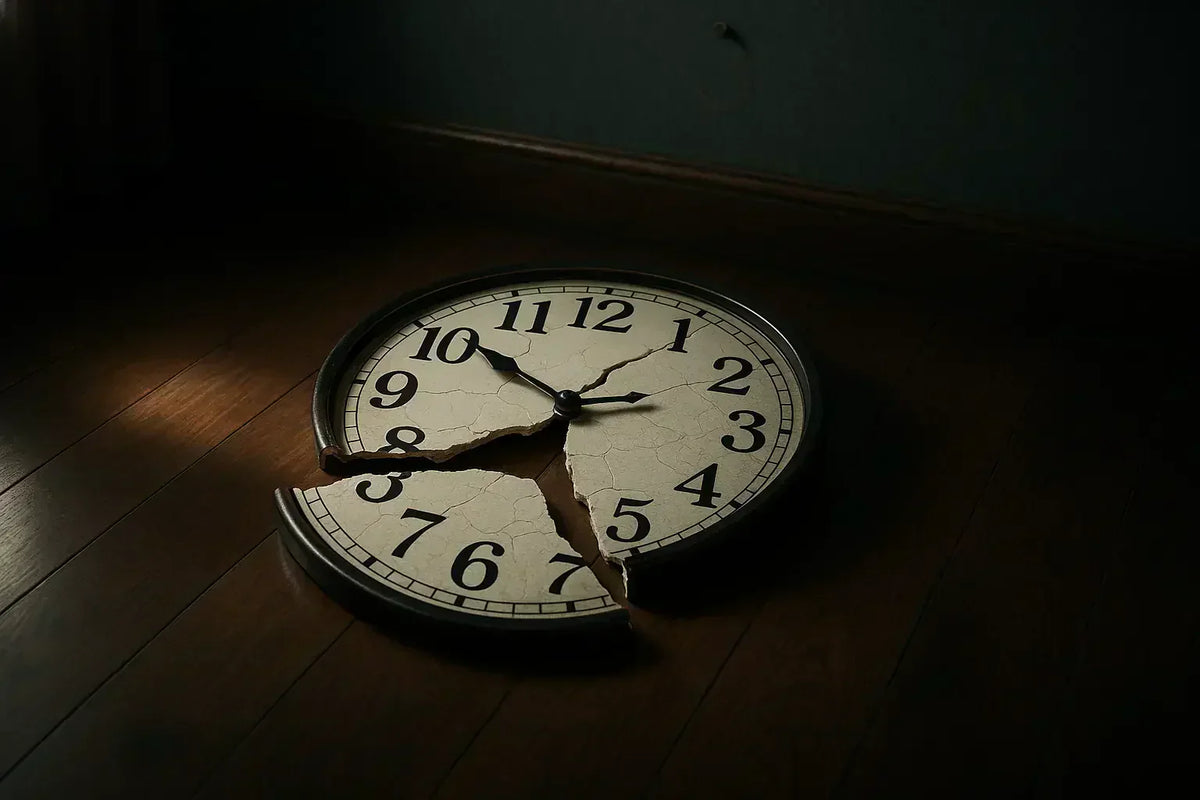
Essential to remember : When a clock falls off the wall, it often represents more than just an accident-many interpret it as a symbol of life transitions that calls for introspection and embracing change. This disruption can signify everything from divine messages to psychological prompts about neglected priorities, with cultural interpretations spanning Western omens to Feng Shui principles. Rather than dismissing it as mere physics, consider whether this time-related disruption might be urging you to rebalance your life and act on important but overlooked aspects of your journey.
A falling clock isn’t random, it symbolizes life transitions, urging introspection. Whether seen as a divine nudge or a psychological prompt, it challenges you to embrace change and act on neglected priorities. Notably, in a viral math puzzle, broken clock pieces sum to 26 each, mirroring the balance needed in life’s disruptions.
When a clock falls off wall meaning feels unsettlingly personal, you’re not alone, this sudden disruption masks profound symbolism rooted in time’s fragility. Discover how a shattered timepiece might signal life-altering shifts, divine urgency, or cultural superstitions across eras, from Western omens to Feng Shui principles. Could it mark a motivational shift, a message from a departed loved one, or spiritual presences? From intuitive insights to mathematical mysteries like the broken clock riddle, where numbers align in precise patterns, your fallen clock might redefine how you perceive time’s relentless flow, offering practical guidance to decode its message and your role within it.
- Unpacking the mystery: what it means when a clock falls off the wall
- The core symbolic meanings of a falling clock
- Interpreting The Source Of The Message
- How context changes the meaning
- Cultural and Psychological Perspectives on a Falling Clock
- What to Do After a Clock Falls: A Practical Spiritual Guide
- The curious case of the broken clock riddle
- Finding Your Own Meaning In The Fallen Clock

Unpacking the mystery: what it means when a clock falls off the wall
The sudden crash of a clock hitting the floor often triggers more than a startled reaction. While physics might explain the mechanics, many people instinctively wonder: is this a sign? A broken timepiece doesn't just disrupt routines - it evokes deeper contemplation.
The "Broken Clock" puzzle shows a fallen clock fracturing into three equal-numbered segments (each totaling 26). This mathematical symmetry mirrors humanity's search for hidden patterns in chaos. Could an accidental fall hint at unseen forces rebalancing life? The question lingers like a stopped pendulum's echo.
Studies show time-related disruptions - like daylight saving changes - disturb circadian rhythms and mood. A fallen clock might amplify these anxieties, prompting primal searches for meaning in time disturbances. Some see warnings about missed opportunities, others view it as nudges toward change.
Without cultural consensus, interpretations remain personal. The act a stationary object violently losing its place mirrors life's upheavals. Whether cosmic whispers or neurological pattern-seeking, the event compels us to pause and reassess. What does your inner clock need recalibrating?
This fix belongs to a larger habit: the wall clock maintenance guide covers everything your clock needs year round.
The core symbolic meanings of a falling clock
A powerful signal for major life changes
When a clock falls from the wall, many interpret it as a literal and metaphorical disruption of time's continuity. This event symbolizes the end of a significant phase, whether in career, relationships, or personal identity, and acts as a catalyst for transition. The broken object becomes a visual cue to adapt to new circumstances, creating space for evolution rather than stagnation. For example, losing a job might push someone toward an unexplored passion, while ending a relationship could open pathways for self-discovery. Even shifts in core values, like redefining priorities after a crisis, highlight how this symbol encourages growth.
- The end of a significant relationship or a long-held job
- The beginning of a new chapter, like a move or a new personal project
- A fundamental shift in your personal identity or core beliefs
A divine message about time and urgency
The sudden fall of a clock serves as a visceral reminder of time's impermanence. This event emphasizes the need to act on unresolved matters, turning the broken mechanism into a metaphor for life's fleeting nature. In traditions like Japanese "mono no aware" (the pathos of things), sudden disruptions sharpen awareness of transience, urging urgency without anxiety. The event becomes a prompt to prioritize meaningful actions over trivial distractions.
A potential warning of misfortune
In various superstitions, a clock's fall carries ominous connotations. While modern interpretations avoid fatalism, this event often signals heightened awareness, encouraging caution in personal and professional decisions. Russian folklore links broken clocks to family conflicts, while Victorian-era Western beliefs tied stopped clocks to unresolved grief at deathbeds. These cultural variations reveal how societies project anxieties onto ordinary objects, transforming mundane accidents into symbolic warnings.
A call for a motivational shift
From a psychological perspective, a falling clock represents a necessary disruption to routine. The unexpected event breaks daily monotony, creating space for renewed focus. Cognitive dissonance theory supports this, when reality contradicts expectations (like a clock falling), the mind seeks resolution through behavioral change. By fracturing complacency, the incident can reignite a dormant hobby, clarify career goals, or inspire intentional living. The shattered object becomes a metaphor for breaking free from unfulfilling patterns.

Interpreting The Source Of The Message
Across global traditions, unexpected object movements like falling clocks carry symbolic weight. While physics might explain gravitational forces, many cultures view these moments as spiritual "check-ins" - moments when unseen forces attempt communication through tangible reality. This duality creates cognitive tension between rational explanations and metaphysical possibilities.
A Message From Your Guardian Angel Or Divine Guides
Spiritual practitioners often decode these events through three lenses:
- Priority recalibration - A clock falling during work stress might signal neglecting family time
- Decision urgency - A broken clock showing 3:33 (angel number associated with growth) could mean "act now"
- Path validation - If you've been questioning life choices, a clock stopping at 11:11 might confirm you're on the right track
Interpreting these signs requires contextual awareness. The clock's position post-fall (face-up, broken glass) and time displayed (if functional) add interpretative layers.
Communication From A Departed Loved One
Grief counselors note recurring patterns in post-loss experiences:
- Anniversary synchronicity - Clocks falling on dates tied to their life/death (birthdays, anniversary dates)
- Emotional resonance - Events often occur during decision-making crossroads or emotional lows
- Time-specific signs - Certain numbers like 4:44 (angelic protection) or 2:22 (new beginnings) carry meaning
One common example: A grandmother's antique clock falling exactly at her usual 7AM wake-up time, creating personal significance beyond physical explanation.
A Sign Of Spiritual Presences Or Energy Shifts
Energetic specialists identify environmental patterns:
- Positive energy - Clocks falling during meditation, accompanied by sudden clarity or warmth
- Disruptive forces - Multiple objects falling in sequence, creating palpable tension
- Historic sites - Old clocks moving in locations with documented historical events or tragedies
While scientific minds might attribute these to environmental factors, believers assess their emotional response. Warmth and calm suggest positive connections, while anxiety might warrant space purification rituals like smudging with sage or sound cleansing with singing bowls.

How context changes the meaning
When the clock falls ‘by itself’
When a clock detaches from the wall without visible cause, interpretations shift from physical explanation to spiritual communication. This scenario amplifies symbolic weight, suggesting an intentional message from unseen forces. Unlike accidental falls linked to faulty hardware, unexplained incidents often trigger beliefs about life transitions or urgent warnings. In European folklore and modern metaphysical circles, such events are seen as ancestral signals or "time recalibration" calls to release outdated routines.
Many cultures view spontaneous clock falls as significant omens. Western traditions associate them with impending change requiring attention, while Eastern perspectives see cosmic prompts to reevaluate priorities. Jungian analysts link these moments to synchronicity, meaningingful coincidences tied to inner psychological shifts. Psychological interpretations frame it as subconscious manifestation of internal transitions.
When the clock falls and breaks
Shattered clocks intensify symbolic meaning, transforming ordinary events into irreversible turning points. The broken mechanism becomes a metaphor for fractured timelines and existential conclusions. In Romani and Feng Shui traditions, broken clocks demand life audits or ritual cleansings to reset temporal energies.
- A complete and definitive end to a specific cycle in your life
- The shattering of old beliefs, illusions, or unhealthy patterns
- A powerful release from time-related pressures and anxieties
Broken clocks often trigger reassessments of personal timelines. Psychological frameworks suggest this mirrors mental liberation from rigid time constraints. Cultural variations emerge: some see bad fortune, others view shattered glass as symbolic cleansing. Modern behavioral psychology links such superstitions to humanity’s pattern-seeking instincts, where object-related events become personal growth anchors.

Cultural and Psychological Perspectives on a Falling Clock
Symbolism and Superstitions Across Cultures
When a clock falls from a wall, interpretations vary dramatically across cultures. In Western superstition, a stopped clock often symbolizes death or major misfortune within a household. This belief stems from historical practices where clocks were halted during funerals to mark the cessation of life.
In Chinese Feng Shui, clocks represent the flow of life energy (Chi). A broken clock signifies stagnant energy, potentially causing fatigue or agitation in residents. Spiritual traditions view falling clocks as cosmic signals, urging mindfulness of the present moment.
| Culture/Belief System | General Symbolism of Clocks | Interpretation of a Falling/Stopping Clock |
| Western Superstition | Order, routine, life's progression | Omen of death or major misfortune in the household |
| Chinese (Feng Shui) | Order, precision, flow of life (Chi) | Stagnation, blocked energy, requires immediate repair/removal |
| General Spiritualism | Connection to time and life cycles | Message to focus on the present moment |
The Psychology Behind Object-Related Superstitions
Human brains are wired to seek patterns through apophenia - the tendency to perceive meaningful connections in random events. A falling clock triggers this instinct, transforming a mundane accident into a perceived omen.
This cognitive bias helps explain why people associate broken clocks with personal misfortunes. When confronted with unexpected events, our minds subconsciously link them to current stressors or unresolved questions, creating narrative coherence amid chaos.
Psychologically, attributing significance to falling clocks serves as a coping mechanism. It provides illusory control during uncertainty, transforming mechanical failures into symbolic warnings or guidance. This pattern-seeking behavior, while evolutionarily advantageous, can lead to irrational decision-making when misapplied.
Studies show correlations between apophenia and openness to experience - a Big Five personality trait. While this fosters creativity, it also increases susceptibility to superstitions and conspiracy thinking. Understanding this cognitive tendency helps contextualize human reactions to symbolic object failures.
What to Do After a Clock Falls: A Practical Spiritual Guide

How to Interpret the Message for Your Personal Situation
When a clock falls, treat it as a prompt for introspection. Ask: What pivotal decision am I avoiding? Did this happen during a life transition? Reflect on stalled projects or unspoken tensions. Was your reaction fear, curiosity, or relief? These emotions often mirror unresolved aspects of your life. For example, fear might highlight a suppressed truth. Consider: What habits align with this event? Document insights daily to trace patterns.
Actionable Steps for Spiritual Clarity and Response
Turn uncertainty into direction with these steps:
- Pause and Reflect: Sit silently for 5 minutes. Observe emotions, fear may signal resistance; curiosity, readiness for change.
- Journal Your Thoughts: Record challenges or buried desires. Example: “I’ve delayed a career shift, could this event relate?”
- Meditate or Pray: Ask: “What lesson does this hold?” Use breathwork or scripture (Proverbs 16:9) to access inner wisdom.
- Cleanse Your Space: Burn sage or open windows to reset energy. For deeper cleansing, follow Ayurvedic rituals like salt-burning.
- Take One Small Action: If relationships surfaced, send a reconnecting message. If career doubts arose, draft a resume update. Act within 24 hours to honor the event’s energy.
By engaging with the event as a growth catalyst, you reclaim your narrative. Whether viewed through Christian teachings (Romans 8:28) or universal energy shifts, the response remains the same: transform disruption into direction. Clarity often comes retroactively. As Parker J. Palmer wrote, “The life we’ve lived and the life we’re living now are threads in a tapestry we’ll someday see clearly.” Trust this moment’s purpose, even if its full meaning unfolds later.
The curious case of the broken clock riddle
When the question "what happens when a clock falls off the wall?" appears online, it often surfaces as a clever math puzzle rather than a literal event. This riddle challenges solvers to visualize an analog clock face breaking into three fragments with a unique numerical condition. The scenario specifically references traditional 12-hour clocks, where numbers are arranged in a circular pattern.
The scenario involves an old wall clock shattering into three pieces. What makes this situation unusual? Each piece must display numbers that add up to the same total. Since clock faces are numbered 1 through 12, the first step reveals the base logic: 1 + 2 + ... + 12 equals 78. Dividing this by the three fragments means each must sum to 26. This division principle becomes the key to unlocking the puzzle.
Solving this requires strategic grouping. The only valid combinations are:
- {1, 2, 11, 12} (1+2+11+12 = 26)
- {3, 4, 9, 10} (3+4+9+10 = 26)
- {5, 6, 7, 8} (5+6+7+8 = 26)

This mathematical curiosity gains traction in puzzle communities, offering a playful counterpoint to more mystical interpretations of falling clocks. While some cultures might see omens in such events, this riddle provides a satisfying exercise in numerical patterns and logical deduction. The puzzle’s design demonstrates how mathematical constraints can create elegant solutions, making it a favorite among enthusiasts seeking both challenge and clarity.
Finding Your Own Meaning In The Fallen Clock
When a clock falls, it mirrors your inner world. This event symbolizes time’s passage, change, or unseen messages. Cultural and psychological perspectives offer frameworks, but your personal truth matters most. Did you sense unease beforehand? Clarity after? Trust these reactions over universal rules.
Clocks anchor routines. Their disruption awakens subconscious tensions, prompting reevaluation. Some see it as shedding old habits; others as spiritual alignment. Your intuition holds answers. How did your body react? What thoughts emerged? These are clues.
Use this moment to deepen self-awareness. Let it spark growth, not fear. Journal. Meditate. Notice patterns in “coincidences.” The clock’s fall isn’t an omen, it’s a question: What does your inner compass need to see?

Ultimately, meaning isn’t imposed, it’s discovered. Whether you see the fall as a cosmic sign or accident, let it inspire curiosity over fear. The universe speaks in symbols; listen, then act with purpose. What will you do differently now?
When a clock falls, it bears meanings: change, urgency, spiritual or cultural echoes. The true meaning lies within you. Reflect: what needs shifting? Trust your intuition. Whether a universe nudge or inner mirror, see it as growth, embracing life’s profound language.
Ensure your decorative wall clocks are securely mounted to prevent accidents.
Your questions, answered
What happens when a wall clock unexpectedly falls?
What does a broken clock represent beyond its mechanics?
What deeper meanings do clocks hold in spiritual contexts?
Why do wall clocks carry symbolic weight in homes?