
Nixie Clocks: From Forgotten Tech to Modern Design Icons
Nixie clocks blend vintage cold-cathode technology with contemporary design, creating a warm, tangible glow distinct from digital displays. These functional art pieces preserve tech history with lifespans up to 200,000 hours, enhanced by anti-poisoning routines for enduring elegance in any space. Each piece is a unique fusion of past and present craftsmanship.
Tired of cold, soulless digital clocks? Nixie clocks breathe life back into timekeeping with their warm, orange-hued glow and vintage charm, featuring delicate glass tubes that illuminate numbers with a soft, ethereal light. These captivating devices, once forgotten relics of the Cold War era, have transformed into iconic design pieces that merge retro aesthetics with modern craftsmanship. Discover how Nixie clocks evolved from obsolete technology to coveted collectibles, diving into their fascinating history, safety considerations, and the artistry behind each handmade timepiece crafted from New Old Stock tubes. Uncover why they're the ultimate statement for tech and design lovers seeking a tangible piece of history in an increasingly digital world.
- What Is a Nixie Clock? A Look Inside the Forgotten Tech
- From cold war relics to coveted collectibles: the history of nixie tubes
- The Resurgence: Why Nixie Clocks Are the Ultimate Design Statement
- The art of the modern nixie clock: craftsmanship and creation
- Owning a piece of history: lifespan, maintenance, and modern solutions
- Safety, sustainability, and what you need to know
- Finding Your Perfect Nixie Clock: A Buyer's Guide
The Captivating Glow of a Modern Icon
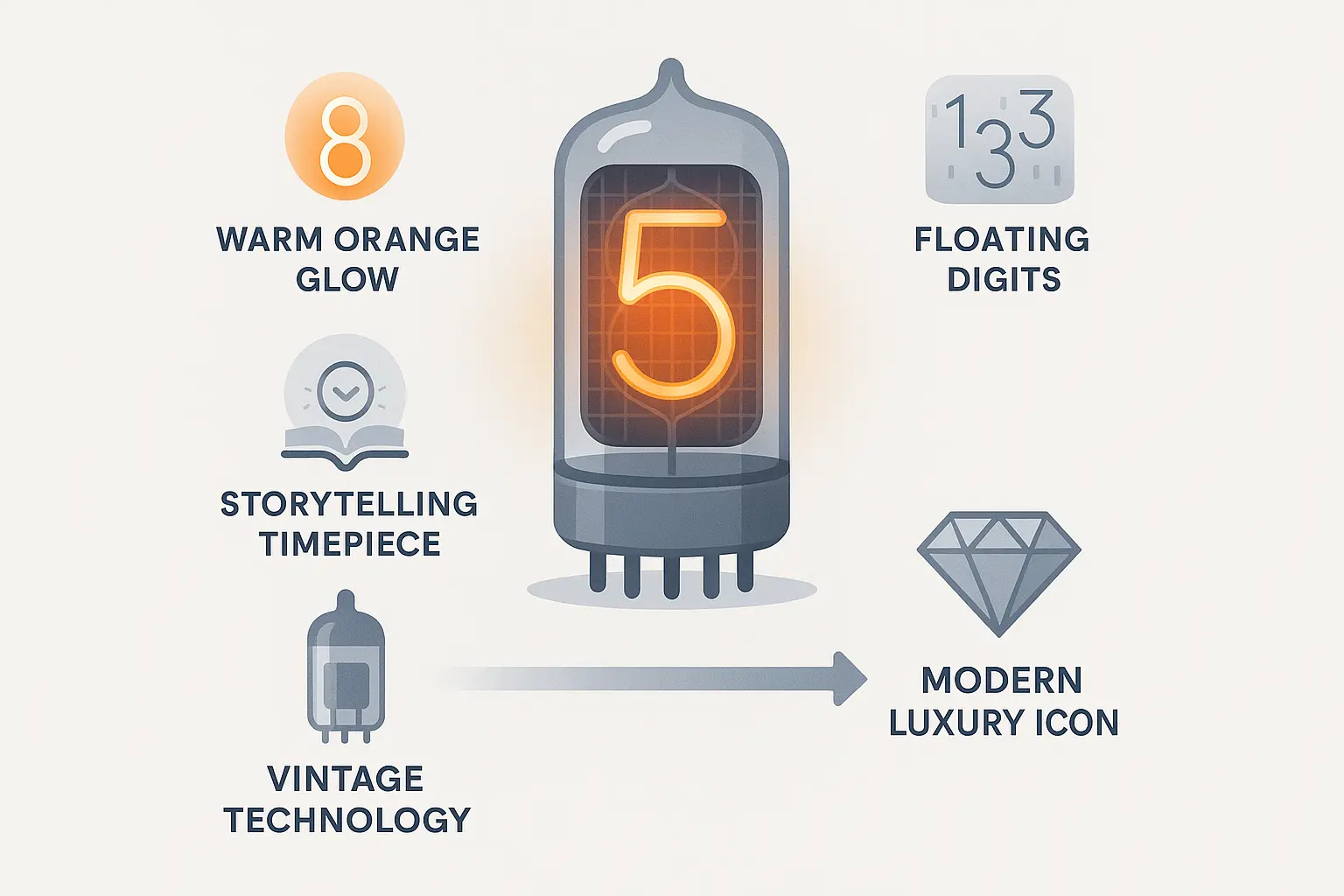
The warm orange glow of Nixie tubes captivates onlookers, with digits floating in glass like forgotten magic. These clocks merge mid-20th century tech with modern luxury, turning timekeeping into art.
Once obsolete, Nixie technology has transformed into a coveted design icon. Adatte Design's Time Zone 2—limited to 100 Swiss-made pieces—uses authentic vintage tubes, hand-assembled brass, and anodized aluminum. Weighing 4.5 kg, it embodies timeless elegance. Rare vintage tubes make each clock a unique collectible.
Designers Frank Buchwald and Dalibor Farny merge retro aesthetics with Wi-Fi. Their Nixie Machines series, including I, II, III, and NT163, feature hand-polished stainless steel and precise timekeeping. Limited editions like TM1 are sold in art galleries, cherished for rarity and craftsmanship.
These clocks transcend functionality. Vintage charm meets cutting-edge precision, creating luxury art pieces. Nixie clocks fuse nostalgia with innovation, becoming conversation-starting treasures in any space. Each is a testament to reimagining vintage tech for today's world.
What Is a Nixie Clock? A Look Inside the Forgotten Tech
The Magic of Cold Cathode Tubes
Why do Nixie clocks captivate modern design lovers? The answer lies in their unique glow. These cold-cathode devices contain neon-argon gas mixtures. High voltage (170-200V) ionizes the gas around shaped cathodes. Each digit glows physically, not via projection. Source: a gas-discharge phenomenon similar to neon signs.
Nixie tubes were first introduced by Burroughs in 1954. They powered early digital instruments like voltmeters. The gas mixture often includes mercury for longevity. Cathodes shaped as numerals. When powered, the gas emits a soft orange hue.
Operating at high voltages, Nixie tubes need careful handling. A current-limiting resistor protects the circuit. Despite this, they consume minimal power. Their glow remains consistent over time. Early: 5k hours; modern: 200k+.
Unlike LEDs, Nixies don't flicker or produce harsh light. Their glow is steady and inviting. This analog warmth creates a nostalgic atmosphere. It's why they're favored in home decor. The tubes' physical digits add depth to any space.
Not Your Typical Digital Display
Unlike segmented LEDs or VFDs, Nixies display complete characters. LEDs use sharp, blocky segments. VFDs emit blue-green light. Nixies' smooth numerals create a vintage appeal. As one expert noted:
Unlike modern segmented displays, a Nixie tube contains fully formed characters, giving the numbers a uniquely smooth and complete shape that is impossible to replicate with pixels.
LEDs caused decline in the 1970s. But their aesthetic charm sparked a resurgence. Modern makers improve safety. Each clock is a blend of history and innovation. Enthusiasts value them as functional art pieces.
Artisans prioritize safety and aesthetics today. High-voltage circuits shielded. Tubes tested for reliability. Hand-assembled components ensure authenticity. Stunning functional art bridges past and present.
From cold war relics to coveted collectibles: the history of nixie tubes
Nixie tubes originated from 1930s patents by Hans P. Boswau but gained prominence after Burroughs Corporation acquired Haydu Brothers in 1954. These neon-filled glass displays became essential in Cold War military and scientific equipment, glowing with a warm orange light that defined digital instrumentation of the era. Their distinctive glow made them iconic in 1950s-60s electronics from oscilloscopes to digital watches.
The golden age (1955-1960) saw production across 24+ countries worldwide. Roger Wolfe's mercury vapor extended lifespan to 200k hours. 'Nixie' derived from 'NIX1', chosen for 'X' sound. Burroughs set global standards with 24+ manufacturers, including IN-14 clocks.
Explore this history in the IEEE Spectrum article.
The Decline and the Rise of the LED
LEDs invented in 1962 replaced Nixie tubes in the 1970s. Early LEDs were dim but improved quickly. Lower cost, efficiency, and compact size made LEDs ideal. Nixie's 200V+ vs. LEDs' 2-3V simplified circuits. LCDs and VFDs offered better readability. Solid-state tech made Nixie obsolete. By mid-1970s, LEDs surpassed Nixie, prompting Radio Shack to switch to VFDs in 1973.
- Lower manufacturing costs
- Higher energy efficiency
- Smaller size and durability
- Simpler driving electronics
Western production stopped in the 70s; USSR until 90s. NOS tubes fuel retro clock resurgence via artisans like Dalibor Farny. Modern clocks blend vintage aesthetics with safe high-voltage tech. Brands like Nixie Clocks and RetroSDX craft collectibles, preserving craftsmanship with modern safety for home decor.
The Resurgence: Why Nixie Clocks Are the Ultimate Design Statement
A Fusion of Vintage Aesthetic and Modern Engineering
Nixie clocks merge mid-century nostalgia with modern craftsmanship. Robin Sterling's walnut models feature smooth, undulating contours that complement the tubes' neon glow. Hêtre brûlé bases are meticulously sanded and polished to reveal deep, rich grains. Each piece integrates precision-engineered electronics with sculptural woodwork, creating timeless design statements.
Their warm, organic light stands apart from today's flat screens. This tactile quality sparks conversations, making them standout pieces in any space. They embody retro-futurist design, marrying historical charm with contemporary aesthetics. The resurgence stems from a desire for meaningful, tangible objects in a digital world.
More Than a Clock, a Piece of Art
In a world of disposable tech, Nixie clocks offer tangible artistry. Their inviting glow feels human, unlike sterile LEDs. Collectors value them as functional sculptures, not mere timekeepers. They represent a conscious choice for meaningful design.
In an age of disposable tech and intangible data, the Nixie clock stands out as a tangible, beautifully crafted object that celebrates both history and mechanical artistry.
Brands like Robin Sterling integrate vintage Dalibor Farny tubes with custom circuitry. The IV-3 kit showcases exposed electronics and printed circuit board artistry, using vintage VFD tubes. Some modern versions, such as the Atomic Voyage IPS, replicate the glow with 40+ dial styles and advanced customization.
Each Nixie clock transforms walls into art galleries. From hand-finished oak to exposed circuitry, these pieces tell stories of innovation and craftsmanship. They're not just clocks—they're design icons for the modern era, cherished by enthusiasts worldwide for their unique blend of history and artistry.
The art of the modern nixie clock: craftsmanship and creation
From NOS tubes to modern manufacturing
Soviet-era NOS Nixie tubes power modern clocks. Sourced globally from eBay, labels vary in authenticity. Buyers seek IN-18 (large, warm glow) and IN-14 (0-9 digits), with rare IN-17 variants commanding higher prices. IN-18 tubes, originally used in military equipment, are prized for their vivid orange glow. IN-14 models, common in vintage calculators, remain popular for clear digit display. IN-17’s compact size suits modern minimalist designs.
Dalibor Farny’s Czech workshop revives glassblowing. Each tube requires vacuum sealing, gas filling, and annealing. High-voltage sparklers test vacuum; custom furnaces anneal glass. The team crafts tubes using neon-argon mixtures. Precision ensures longevity, with a glassblower and engineers meeting rising demand. Since 2011, Dalibor’s team has grown from a solo effort to specialized artisans, freeing him for R&D. Their Zen clock (2016–2021) pioneered the modern revival, while the current Omnixie model continues this legacy.
NOS stocks are vanishing, making authentic clocks coveted collectibles. Designers prize their blend of history and artistry. Scarcity drives premium prices as 1960s–80s tubes become rarer. IN-18 tubes now cost $65–$85 each, up from $20 in the early 2000s. This scarcity has created a niche market where each clock is a unique piece of history.
The body of the clock: a showcase for craftsmanship
The clock body showcases true craftsmanship. Hardwood cases like oil-finished ash offer timeless warmth. Hand-sanded to highlight natural grain, ash and walnut provide a classic aesthetic. Polished concrete delivers brutalist industrial appeal, often cast in custom molds and treated for durability. The Saturn-C concrete Nixie clock, featured in Wired, exemplifies this trend with its minimalist design and robust construction. Repurposed Apple TV enclosures transform obsolete tech into elegant furniture.
- Hardwoods like ash, oak, and walnut for a warm, classic look.
- Polished concrete for a brutalist, industrial aesthetic.
- Recycled or upcycled materials, like the case of an old Apple TV.
Wired highlights concrete casings. Medium details ash wood’s retro appeal. These materials transform clocks into heirlooms. Walnut offers elegance; concrete, ruggedness. Apple TV conversions reduce e-waste while preserving vintage aesthetics. Each choice reflects a commitment to sustainability and timeless design.
These designs bridge past and present, turning obsolete tech into luxury icons. Handmade pieces celebrate craftsmanship. Dalibor Farny’s Omnixie in Graphite Gray combines hand-blown tubes with engineering, appealing to tech enthusiasts and design lovers. Limited editions ensure each clock is a unique work of art, merging historical significance with modern innovation. This fusion cements Nixie clocks as modern design icons.
Owning a piece of history: lifespan, maintenance, and modern solutions
How long do nixie tubes last?
Nixie tubes are not fragile relics. With proper care, they last 20,000–50,000 hours—decades of reliable operation. Developed in the 1950s, they powered early digital displays before LEDs took over. Widely used in calculators, oscilloscopes, and industrial equipment, these tubes became iconic in mid-century electronics. Well-maintained units remain popular for their warm glow and retro charm. Their historical significance as pioneers of digital display technology adds to their enduring appeal among collectors and designers.
Cathode poisoning occurs when inactive segments accumulate deposits, causing dimming. Regular digit cycling and high brightness prevent buildup. For example, IN-14 tubes deteriorate after 10,000 hours of static display on one digit. Original tubes from the 1950s required careful usage to avoid this problem, but today's designs integrate automatic routines for maintenance.
Modern features for extending longevity
Regenerating poisoned cathodes requires precise current adjustments. Many modern clocks automate anti-poisoning cycles. The 'slot machine' routine cycles digits rapidly every five minutes, preventing deposits. Nightly high-brightness cycles maintain cathode health. Brands like Kremenchuk and RetroShop include these features as standard in their designs. These systems monitor and apply targeted cleaning automatically.
Modular designs allow easy tube replacement. Brands like NixieDreamShop use socketed tubes for simple repairs. Companies like RetroShop and Kremenchuk emphasize craftsmanship, using high-quality glass and precise manufacturing to ensure longevity. This fusion of vintage aesthetics and modern engineering creates stunning, reliable timepieces for collectors, blending nostalgia with contemporary utility.
| Feature | Authentic Nixie Tubes | Modern Nixie Replicas | LED/OLED Imitations |
|---|---|---|---|
| Aesthetic | warm glow, deep characters | near-authentic glow, handcrafted | segmented or simulated glow, flat display |
| Lifespan | limited (depends on use) | potentially longer, new production | very long (50,000+ hours) |
| Authenticity | 100% vintage technology | handcrafted glass, new components | modern electronics, no gas discharge |
| Voltage | high (170V+) | high (170V+) | low (5V) |
| Cost | high (due to rarity) | very high (craftsmanship) | low to medium |
Safety, sustainability, and what you need to know
Are nixie clocks safe? understanding the risks
Nixie clocks operate at high voltages (around 170V DC), which can be lethal. Professional units have fully insulated enclosures, making them safe for everyday use. DIY kits should only be attempted by experienced electronics hobbyists; otherwise, choose professionally assembled models. Learn more about complex high-voltage switching circuits.
Safety is paramount. Always disconnect power before handling. Verify with a multimeter. Keep one hand in your pocket during tests. Discharge capacitors thoroughly using an insulated resistor. Even small mistakes can cause severe injury. Following these steps ensures safe operation.
Never assume power is off; check and recheck. For mains connections, unplug and confirm with a meter. Gloves offer limited protection; act as if unprotected. Plan all actions before powering on. High voltage traces extend beyond test points, requiring extreme caution. Beginners should never test high voltages on live circuits. Always use insulated tools for high-voltage work. Professional units include built-in safety interlocks.
DC shocks cause painful muscle contractions. This prevents releasing the conductor, increasing danger. Heart conditions increase fatality risk. Always prioritize safety over speed. Even minor errors can be fatal.
The question of mercury and environmental impact
Some vintage Nixie tubes contain trace mercury to extend lifespan. This mercury is sealed within the glass tube, posing no risk unless broken. In case of breakage, ventilate the area immediately. The mercury is present in minimal, non-hazardous quantities when intact.
Many Soviet-era tubes lack mercury. Reputable manufacturers provide mercury content details upon request. Modern reproductions often omit mercury entirely to comply with global environmental standards, ensuring safer usage. The mercury reduces cathode poisoning and sputtering, improving longevity significantly.
Finding Your Perfect Nixie Clock: A Buyer's Guide
What to Look for in a Quality Clock
Nixie clocks come in 4-tube (HH:MM) or 6-tube (HH:MM:SS) formats. Modern versions include Wi-Fi sync via NTP, temperature sensors, and alarms. The Nick2 clock uses ESP32 for automatic time updates with custom time zones and DST adjustments.
Real Nixie tubes offer authentic warm glow and collectible value. LED alternatives mimic the look at lower cost but lack vintage charm, making them less ideal for purists.
Enclosure quality matters. Solid wood (walnut, oak) or acrylic with precise craftsmanship ensures longevity and premium aesthetics; poor builds may warp.
Ensure tubes are socketed for easy replacement. Spare tubes are wise due to scarcity. Cathode rotation extends lifespan via even usage.
Night mode and auto-brightness adjust light levels, preserving tubes while maintaining visibility in dark rooms.
High-voltage circuits need proper insulation; reputable brands include CE/UL certifications for safe operation.
DIY kits need advanced skills; pre-assembled models are safer.
Where to Buy Nixie Clocks
Buy from Ukrainian brands like NixieClocks or Mille-Clous via official sites. Specialized stores like NixieShop and Millclock offer quality products. Check eBay/Etsy for unique designs, verifying reviews and warranties.
Ukrainian makers source Soviet-era tubes. Using CNC and SMT assembly, units undergo rigorous testing. Lifetime electronics warranties and 24-month tube guarantees.
Customer reviews praise reliability, beauty, and craftsmanship.
- Tube count and type (IN-12, IN-14)
- Enclosure material quality
- Modern features like Wi-Fi sync
- Socketed tubes for replacement
- Seller reputation and reviews
In a world of fleeting digital displays, Nixie clocks stand as timeless art. Their warm, vintage glow merges historical craftsmanship with modern design, transforming timekeeping into a statement of elegance and nostalgia. More than a clock, they're a celebration of mechanical beauty—proving that true innovation endures.
FAQ
How long do Nixie clocks last?
Nixie tubes themselves can last 200,000+ hours (over 23 years of continuous use) when properly maintained. Modern clocks incorporate anti-poisoning routines that cycle all digits regularly to prevent cathode degradation. However, New Old Stock (NOS) tubes from the 1980s–1990s are increasingly scarce, so longevity depends heavily on the clock’s circuit design and usage patterns. With careful maintenance, a well-built Nixie clock can remain functional for decades.
How much do Nixie tube clocks cost?
Prices range from $200 for basic DIY kits to over $1,000 for artisanal models. High-end pieces—featuring handcrafted wooden cases, CNC-milled aluminum frames, or bespoke designs from makers like Dalibor Farny—command premium prices due to limited NOS tube availability and meticulous craftsmanship. Features like Wi-Fi sync, RGB lighting, and premium materials further influence cost, making Nixie clocks a blend of functional art and collectible technology.
Who still makes Nixie tubes?
Original Nixie tube production ceased decades ago, but Czech engineer Dalibor Farny and his team at NixieDreamShop now lead modern revival efforts, handcrafting new tubes using traditional techniques. Most contemporary clocks rely on New Old Stock (NOS) tubes from Soviet-era factories (e.g., Russian IN-12 or IN-14 models), which are now rare and highly sought after. Farny’s work bridges vintage aesthetics with contemporary engineering, ensuring the legacy of Nixie technology continues.
Why are Nixie tubes so expensive?
Nixie tubes are costly due to extreme scarcity of New Old Stock units (last manufactured in the 1980s–1990s), combined with the labor-intensive process of hand-assembling new tubes. Each tube requires precise glasswork, gas filling, and meticulous quality control—processes that demand specialized skills and equipment. Additionally, high-voltage circuitry and niche demand from design enthusiasts and collectors further inflate prices, making them a premium choice for retro-futuristic decor.
What is Nixie tube poisoning?
Cathode poisoning occurs when unused digits develop a chemical deposit that blocks illumination, causing incomplete or dim numbers. This happens because certain gas molecules settle on inactive cathodes over time. Modern clocks combat this with "slot machine" routines that briefly cycle all digits every minute, ensuring even wear and preventing buildup. Proper current regulation and tube selection also minimize this issue, extending the lifespan of the display.
Are wall clocks out of style in 2025?
Far from it—Nixie clocks are thriving as modern design icons. Their warm, analog glow offers a tactile contrast to cold digital screens, making them cherished conversation pieces in homes and offices. As sustainability and craftsmanship gain prominence, these timepieces symbolize a return to meaningful, physical objects in a digital age. By 2025, they’ll likely remain popular among designers, tech collectors, and anyone seeking art that tells a story beyond mere timekeeping.
Do Nixie clocks get hot?
Nixie tubes operate at high voltage (170V+) but generate minimal heat due to their gas-discharge mechanism. The orange glow comes from ionized neon gas, not resistive heating, so the tubes themselves stay cool to the touch. Any warmth typically originates from the power supply circuitry, which well-designed clocks isolate behind insulating materials. Unlike LED displays, Nixie clocks pose no burn risk and remain safe for everyday use.
How much does the 10,000-year clock cost?
The "10,000-Year Clock" is a separate project by The Long Now Foundation, not a Nixie clock. This mechanical marvel, designed to run for millennia, cost approximately $40 million to build its prototype. It’s a monumental engineering feat housed in a mountain in Texas, with no relation to Nixie technology. Nixie clocks—affordable decorative pieces ranging from $200–$1,000+—are distinct from this ultra-long-term timekeeping project.
What is the most reliable atomic clock?
The most precise atomic clocks, like NIST-F2 in the U.S. or optical lattice clocks, lose just 1 second every 300 million years. However, most Nixie clocks don’t contain atomic components—they sync with atomic time via Wi-Fi or NTP servers, using internet-connected precision without needing internal atomic technology. This makes them both accurate and accessible, blending vintage charm with modern reliability.