
Copy of Can wall clocks use alkaline batteries? Definitive answer - Dec 30, 16:43:06
Wall clocks function best with alkaline AA or AAA batteries, which maintain stable voltage for precise timekeeping. Trusted brands like Duracell ensure reliability, and replacing them annually prevents corrosive leaks that damage the mechanism. This simple habit guarantees years of accurate operation without costly repairs.
Struggling with a wall clock that stops unexpectedly or runs inaccurately, causing frustration and uncertainty about the cause? The solution often lies in using the correct wall clock alkaline battery—standard AA or AAA types designed specifically for low-drain quartz movements. Discover why alkaline batteries outperform alternatives with stable voltage output, extended lifespan, and reduced risk of corrosive leaks. Learn expert brand recommendations, common pitfalls to avoid, and a simple annual replacement routine to prevent damage. With the right alkaline battery choice, your clock will stay precise, reliable, and trouble-free for years without costly repairs.
- Can You Use an Alkaline Battery in a Wall Clock? The Definitive Answer
- Choosing the right alkaline battery: brand and quality matter
- The biggest risk: preventing damage from battery leakage
- Battery Guide For Different Types Of Wall Clocks
- Your Final Checklist for a Happy and Healthy Clock
Can You Use an Alkaline Battery in a Wall Clock? The Definitive Answer
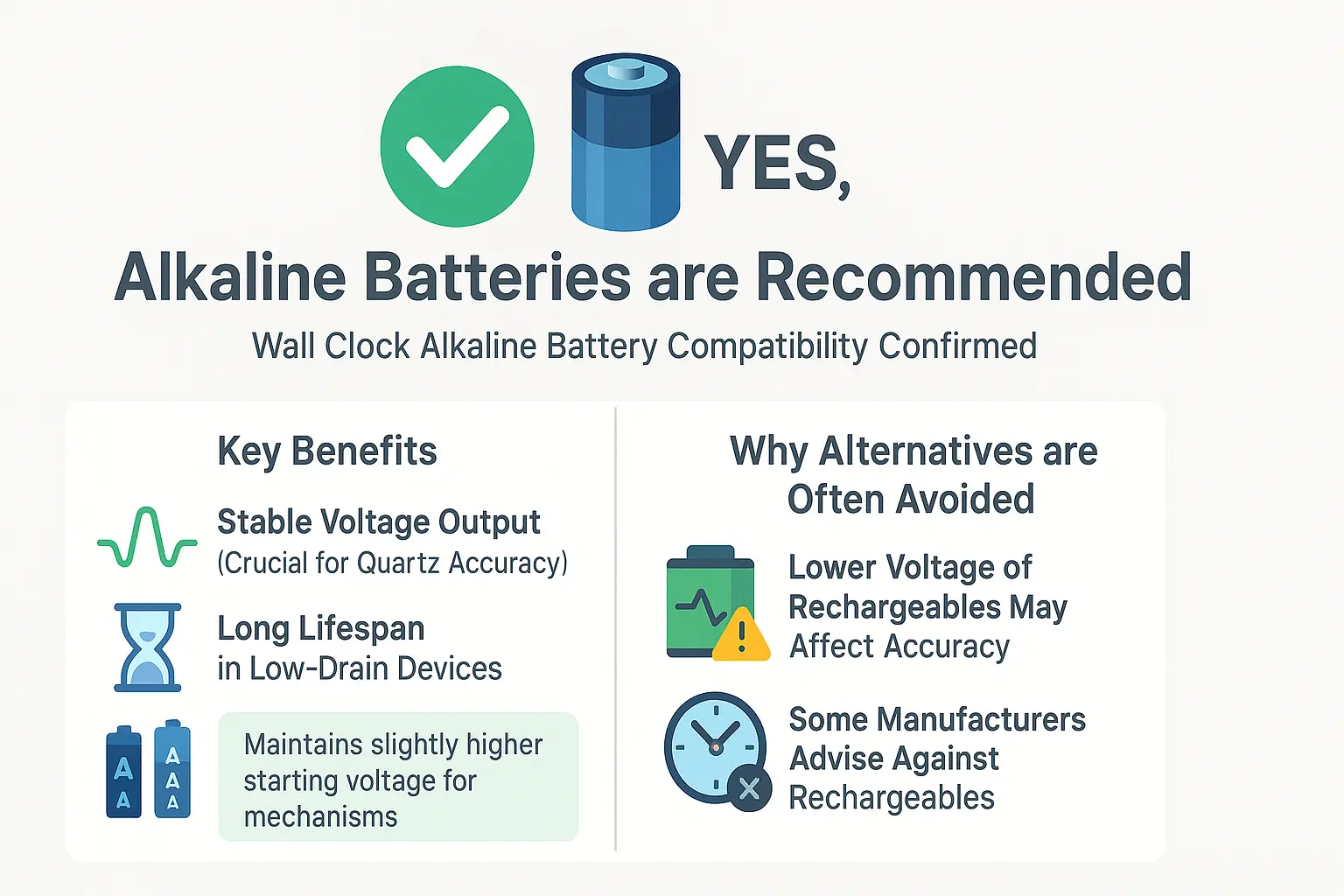
The Short Answer Is Yes: Why Alkaline Is a Great Fit
Yes, alkaline batteries are perfectly suitable for wall clocks. They are designed for low-drain devices like clocks, providing stable voltage and extended lifespan. Common sizes such as AA or AAA are easily accessible. This makes them the top recommendation for reliable timekeeping, as confirmed by industry experts.
Key Benefits of Using Alkaline Batteries for Your Clock
Alkaline batteries provide stable voltage output, which is critical for accurate clock operation. They maintain consistent power without fluctuations, ensuring your timepiece stays precise. Constant low-drain devices benefit from this stability.
With a long lifespan, alkaline batteries typically last 1-2 years in wall clocks. Standard AA or AAA sizes are widely available globally, making replacements simple and affordable.
These batteries start with a slightly higher voltage than rechargeables, which is ideal for quartz movements. This ensures smooth and reliable operation without interruptions, as noted in industry guidelines.
Why Other Batteries Are Often Not Recommended
Rechargeable batteries often deliver lower voltage, causing wall clocks to run inaccurately or stop entirely. Most manufacturers specifically advise against their use for this reason.
Using non-recommended batteries risks poor performance and potential damage. Always follow the clock's manual and choose alkaline for best results, ensuring years of accurate timekeeping.
Choosing the right alkaline battery: brand and quality matter
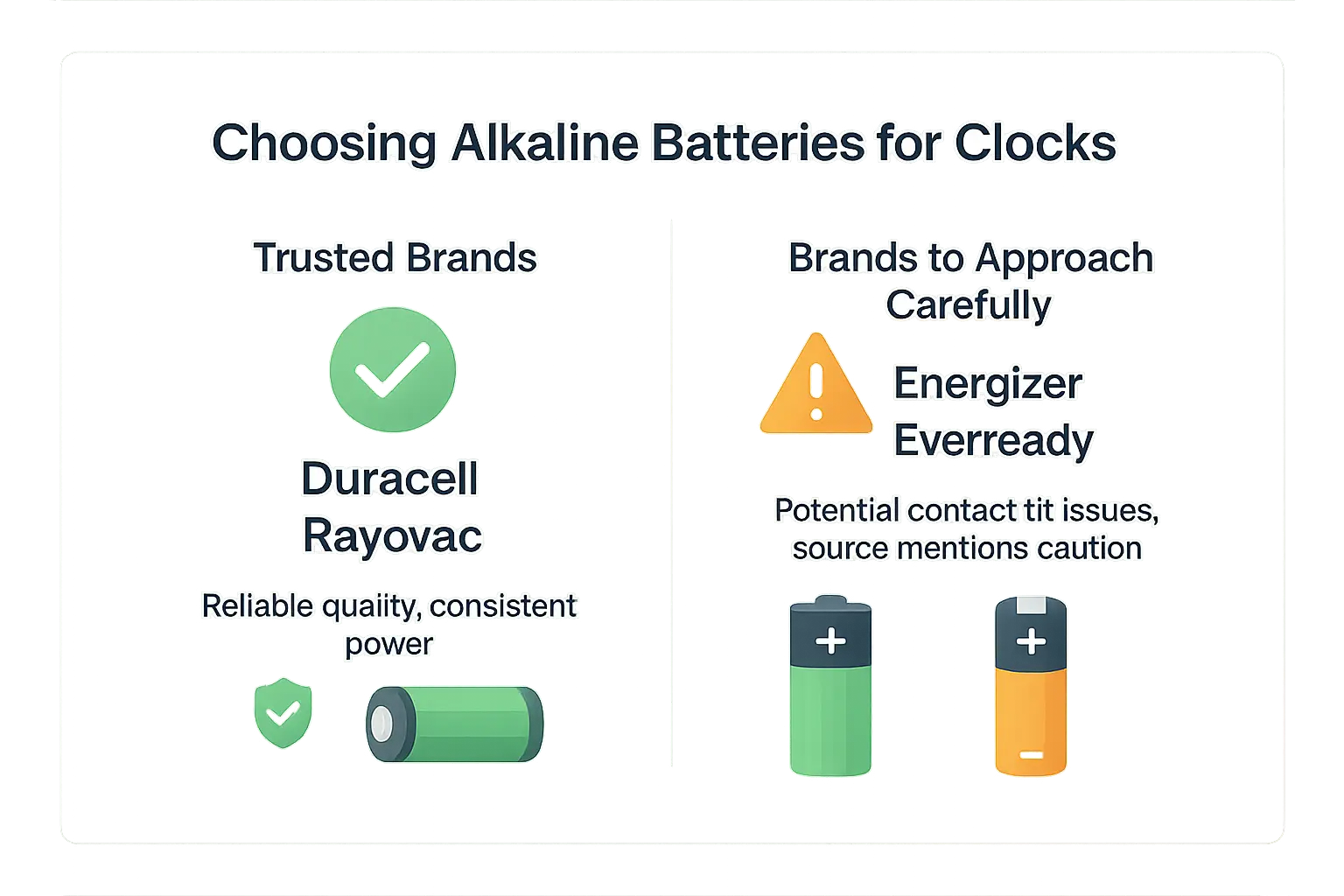
Expert recommendations on alkaline battery brands
When selecting alkaline batteries for wall clocks, trusted brands like Duracell and Rayovac are top choices. They offer stable voltage and long lifespan. Common sizes include AA or AAA, which fit most wall clock models. Always verify expiration dates for peak performance.
For optimal performance and to prevent unexpected failures, horology experts often suggest sticking to trusted battery brands known for their consistent quality and power delivery.
These brands undergo strict quality control to prevent leakage and ensure consistent power delivery. Their reliable performance minimizes malfunctions and extends battery life.
Alkaline batteries from reputable manufacturers maintain steady voltage levels. This stability is critical for precise timekeeping. Inconsistent power can cause erratic behavior or complete failure in wall clocks.
Duracell's standard AA batteries are particularly reliable for wall clocks. They deliver consistent power without the risk of leakage common in cheaper alternatives.
Brands to use with caution and why
Certain brands like Everready may cause contact issues in wall clocks. Energizer models with coated bases can disrupt electrical connections. This leads to irregular timekeeping or chime errors.
Learn more about clock seller advice on Quora.
For specific movements such as Hermle Quartz Dual Chime, Duracell standard batteries are recommended. Their fully conductive base ensures proper contact with spring clips. Avoid Procell versions for these models.
Budget brands like Action and Lidl offer excellent value. They provide sufficient capacity at low cost. These are ideal for low-consumption devices like wall clocks.
Proper battery installation is essential. Always check polarity and clean contacts regularly. This simple step prevents common clock issues and extends battery life.
The biggest risk: preventing damage from battery leakage
Understanding corrosion and its impact on your clock's movement
Battery leakage is a silent threat to your wall clock. Corrosive acid from old alkaline batteries can seep into the clock's movement. This damage often irreversibly harms internal components. Ignoring this risk may lead to costly repairs or complete replacement. Preventing leakage is simpler than fixing the damage later.
Many homeowners face expensive repairs due to battery leakage. Ignoring regular maintenance leads to irreversible damage. Even high-quality alkaline batteries can leak after prolonged use. This is why changing them annually is essential. Preventing leaks is simpler than fixing the damage later.
A simple routine for battery replacement
Replacing batteries once a year prevents leaks and maintains accuracy. Experts recommend doing this during daylight saving time changes. Use fresh alkaline batteries from sealed packages. Prefer trusted brands like Duracell or Rayovac. Avoid Energizer due to plastic coating issues. Generic batteries often lack sufficient power for consistent operation.
Always check the battery compartment for signs of old leakage before inserting new batteries. Ensure correct terminal alignment. Set the time and verify movement before hanging. These simple steps save time and money in the long run. Consistent maintenance ensures your clock remains reliable for years.
- Inspect the battery compartment for old leakage signs before inserting new batteries.
- Use a fresh, sealed alkaline battery for optimal performance.
- Ensure correct alignment of positive and negative terminals.
- Set the time and verify movement before hanging the clock.
Battery Guide For Different Types Of Wall Clocks
Standard Quartz Clocks Vs. Atomic Or Radio-Controlled Clocks
Did you know unstable batteries can make atomic clocks lose time? Alkaline batteries deliver consistent voltage for reliable operation. Standard quartz clocks need minimal power, while atomic models require steady energy for signal synchronization.
| Clock Type | Recommended Battery Type | Key Consideration |
|---|---|---|
| Standard Quartz Clock | Standard Alkaline (e.g., Duracell) | Reliable, long-lasting power for low-drain movements. |
| Atomic / Radio-Controlled Clock | High-Quality Alkaline Or As Per Manufacturer | Stable voltage is critical for signal reception. Always check the user manual. |
Alkaline batteries like AA or AAA provide long-lasting power. They prevent voltage drops and common malfunctions. Proper maintenance ensures years of accurate timekeeping.
Always Check The Manufacturer's Recommendation
While alkaline batteries are a safe bet for most wall clocks, the manufacturer's manual is the ultimate source of truth for your specific model's power requirements.
Avoid rechargeable batteries unless specified. They often cause unstable voltage and inconsistent timekeeping. Stick to standard alkaline for best results.
Following manufacturer guidelines prevents unnecessary repairs. Always check polarity and clean contacts during battery replacement. This simple step maintains optimal performance.
Your Final Checklist for a Happy and Healthy Clock
Recap: Dos and Don'ts for Your Wall Clock Battery
- Use high-quality alkaline AA or AAA batteries for stable voltage and extended lifespan. These maintain consistent power, prevent timekeeping errors, and last up to 10 years when stored properly. They are ideal for wall clocks due to reliability.
- Replace batteries annually, even if the clock still works. Old batteries can leak corrosive electrolytes, damaging internal components and causing irreversible harm to the mechanism.
- Choose trusted brands like Duracell or Energizer for superior quality control and reduced leakage risks. Generic alternatives often compromise safety and performance.
- Always check the manual for specific requirements. Atomic clocks or specialized models may need particular battery types for proper synchronization and longevity.
The Key Takeaway
Alkaline batteries provide stable voltage and long life for wall clocks. Using trusted brands and replacing them yearly prevents corrosion and ensures accurate timekeeping. Following the manufacturer’s guidelines guarantees compatibility and avoids damage. This simple routine keeps your clock running reliably for years, saving you from unexpected failures and costly repairs.
Alkaline AA batteries are ideal for wall clocks. Choose trusted brands like Duracell for consistent power. Replace them annually to prevent leaks and damage. Always refer to the manufacturer’s guidelines for specific models. With simple, regular maintenance, your clock will stay precise and reliable for years to come.
FAQ
Are alkaline batteries safe for wall clocks?
Yes, alkaline batteries are not only safe but widely recommended for wall clocks. They deliver stable voltage output essential for quartz movements and are designed for low-drain devices like clocks. Their long lifespan ensures reliable operation without frequent replacements, making them the go-to choice for most manufacturers.
What battery type is typically used in wall clocks?
Most wall clocks require standard AA or AAA alkaline batteries. These sizes balance power and compactness for clock mechanisms. Always verify your clock’s manual or battery compartment for exact specifications, as some models may have unique requirements.
What happens if you use alkaline batteries instead of lithium?
This question stems from a common misunderstanding. Alkaline batteries are the standard for most wall clocks, while lithium batteries are typically reserved for extreme environments (e.g., cold garages or outdoor spaces). For typical indoor use, alkaline batteries perform better due to their cost-effectiveness and sufficient power for low-drain devices. Lithium isn’t usually necessary unless specified by the clock’s manufacturer.
Do wall clocks commonly use AA batteries?
Absolutely. AA batteries are the most prevalent size for wall clocks due to their reliable power output and widespread availability. Some smaller or slimmer models may use AAA batteries, but AA remains the default for the majority of standard clocks. Always confirm the required size in your device’s documentation to ensure compatibility.
Why would alkaline batteries not be recommended for wall clocks?
Alkaline batteries are generally the top recommendation for wall clocks. Misconceptions often arise from confusing them with rechargeable batteries (like NiMH), which have lower voltage and can cause timing inaccuracies. Alkalines provide stable voltage and longevity for low-drain devices like clocks. If a manufacturer advises against alkalines, it’s likely due to a specific model’s unique design—always refer to the manual for clarity.
Is Duracell or Energizer better for wall clocks?
Duracell is frequently preferred by experts for its consistent performance and reliability in wall clocks. While Energizer is a reputable alkaline brand, some clock mechanics note that certain Energizer models may have coating or sizing issues that lead to poor contact in battery compartments. For optimal results, Duracell or Rayovac are safer choices to avoid unexpected failures.
Why does my wall clock stop working with a new battery?
If a new battery doesn’t resolve the issue, check for corroded contacts, incorrect polarity installation, or internal damage from prior battery leakage. Clean the compartment thoroughly and ensure terminals align properly. Persistent problems may indicate a faulty clock movement requiring professional servicing.
How can I determine the right battery for my clock?
Consult your clock’s user manual or inspect the battery compartment for size and type labels. If details are missing, check the clock’s body for markings or contact the manufacturer. For most standard models, AA or AAA alkaline batteries are standard, but verification prevents compatibility issues.
Which AA battery brand lasts the longest?
High-quality alkaline brands like Duracell and Rayovac typically offer the longest lifespan due to superior construction and consistent power delivery. Avoid generic or budget brands, as they may drain faster or leak, risking damage to your clock. Investing in trusted brands ensures reliability for your timepiece.