Adjusting a clock pendulum for precise timekeeping
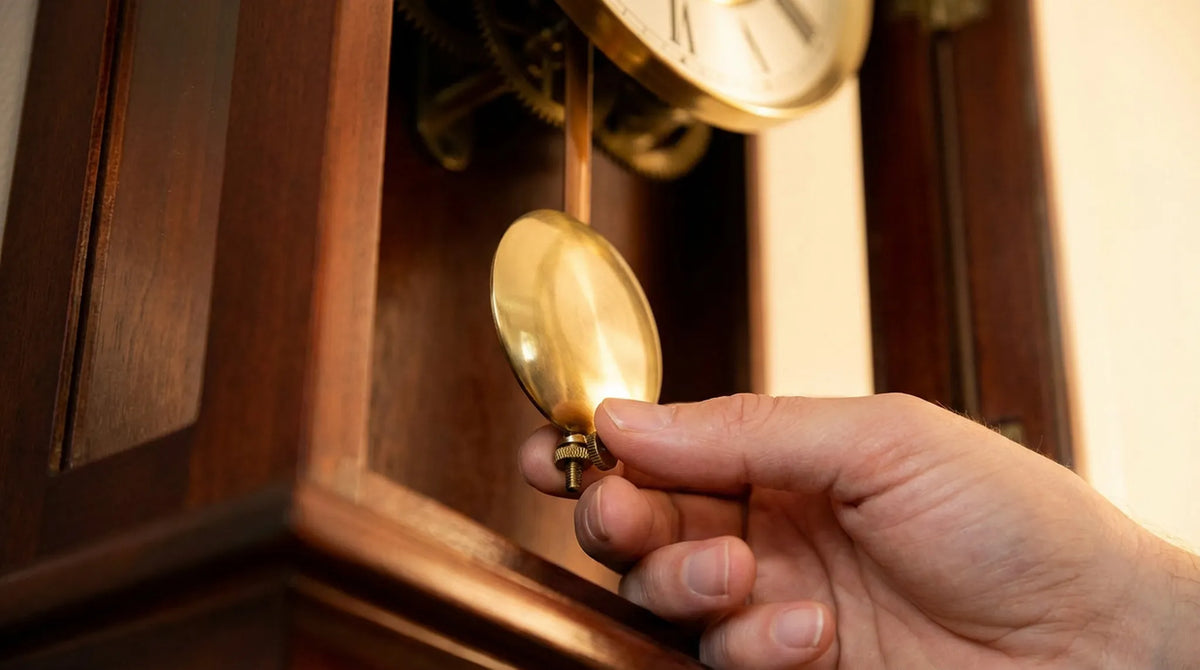
Essential to remember : A pendulum clock's accuracy depends on its effective length, not weight, and can be adjusted by turning the nut at the pendulum bob's base to raise or lower it. Before making any speed adjustments, ensure your clock has an even rhythm or is "in beat" - if you hear an uneven "tick-TOCK" pattern instead of steady ticking, the escapement mechanism needs fixing first. Once properly leveled and in beat, you can achieve precise timekeeping by systematically adjusting the pendulum length without professional help.
Is the erratic ticking of your heirloom driving you to distraction, or does the constant need for adjusting a clock pendulum feel like a losing battle against time itself? We strip away the mystery surrounding the escapement mechanism to show you exactly how the physics of effective length determines accuracy and why leveling the case is the first step most owners overlook. By mastering the adjustment nut and calculating your specific rate of error, you will transform that frustration into precision timekeeping without needing a professional horologist.
- First things first: is your clock 'in beat'?
- The Physics of the Swing: Why Length Is Everything
- The Practical Guide to Regulating Your Clock
- From Guesswork to Precision: Finding Your Clock's Rate
First things first: is your clock 'in beat'?
What an even 'tick-tock' actually tells you
Before you start adjusting a clock pendulum for speed, the clock must have an even rhythm. We call this being "in beat". It is the audible signature of a healthy escapement mechanism doing its job correctly.
If you hear a limping "tick-TOCK... tick-TOCK" instead of a steady "tick-tock-tick-tock," you have a problem. This uneven sound means the escapement isn't delivering power evenly, and no speed adjustment will fix a clock that's fundamentally out of balance.
If the beat is off, you have to fix that first. Period. No shortcuts.
How to diagnose an out-of-beat clock by ear
Find a dead quiet time in your house to do this right. Get right up close to the clock case and simply listen. You aren't checking the time; you are training your ear to the specific rhythm.

Close your eyes to focus solely on the sound profile. Ask yourself: is the silence between the 'tick' and the 'tock' identical to the silence between the 'tock' and the next 'tick'?
Here is exactly what you are listening for during this diagnostic check:
- An even beat: "tick - tock - tick - tock" (like a metronome).
- An uneven beat: "TICK-tock ... TICK-tock ..." (a limping or galloping sound).
- The importance of a stable and level surface for the clock case itself, as this is often the root cause.
The simple fix: adjusting the crutch
The fix is usually straightforward, believe it or not. It involves gently bending the "crutch", the thin wire that connects the escapement directly to the pendulum rod. Stop the clock before you try this to protect the suspension spring.
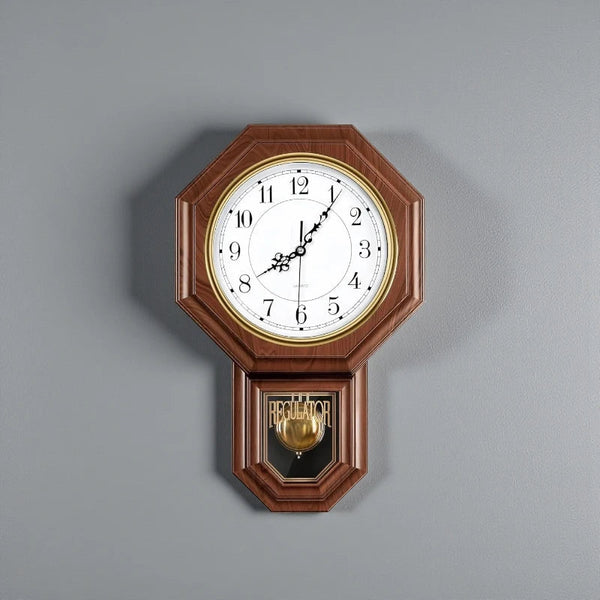
Here is the move: bend the crutch very slightly in the direction opposite to the shorter pause. A tiny, almost invisible movement is all that is needed to shift the balance.
Restart the pendulum and listen again. Repeat the micro-adjustment until the beat is perfectly even.
The Physics of the Swing: Why Length Is Everything

Now that your clock has a steady pulse, we can get into the real business of making it keep accurate time. It all comes down to one simple principle.
It's Not About Weight, It's About Length
Many folks think adding weight changes the speed. That is dead wrong. The only factor that dictates the swing time, or period, is the effective length of the pendulum. Physics does not care how heavy the bob is.
Effective length is the distance from the pivot point down to the bob's center of mass. A shorter stick swings rapidly. A longer one takes its time.
The period of a pendulum's swing is determined by its length alone. Gravity does the rest.
Meet the Adjustment Nut: Your Control Center
Look at the bottom of your pendulum assembly. You will spot a small adjustment nut sitting right under the main disc, or "bob". That little piece is vital.
Twisting this nut slides the bob up or down the rod. This action changes the effective length we just discussed. It is the exact mechanism you use for adjusting a clock pendulum to correct the time.
The Golden Rule: To Speed Up, Go Up
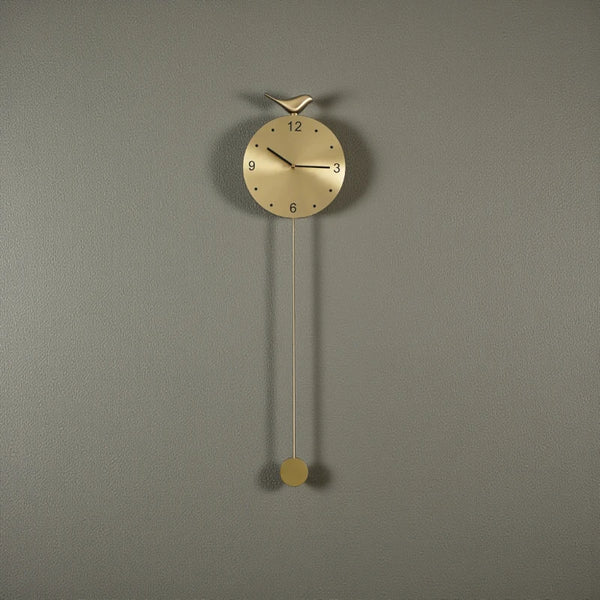
If your clock drags behind, you must shorten the pendulum. Raising the mass makes the beat quicker. Think of a figure skater pulling in their arms.
Conversely, if it runs ahead, you need to lengthen the rod. Lowering the bob slows the rhythm down. It is pure logic once you grasp it.
The Practical Guide to Regulating Your Clock
Understanding the theory is one thing, but putting it into practice requires a bit of patience and a clear method. Let's walk through it.

Step 1: Establish a Baseline
Most people skip this step, and it ruins their results. Grab your smartphone, it is the most reliable reference we have today. Synchronize your pendulum clock's hands to the exact minute displayed on your screen.
Write down the precise start time on a notepad. Now, walk away. You need to let the mechanism run undisturbed for a full 24 hours to get honest data.
When the day is up, check the drift against your phone and note the exact difference.
Step 2: Make Your First Adjustment
Ideally, you now know the error margin. It is time to tweak that little rating nut at the bottom.
Stop the pendulum completely before touching anything. Forcing the bob while it swings is a great way to snap the suspension spring.
Here is the golden rule for adjusting a clock pendulum:
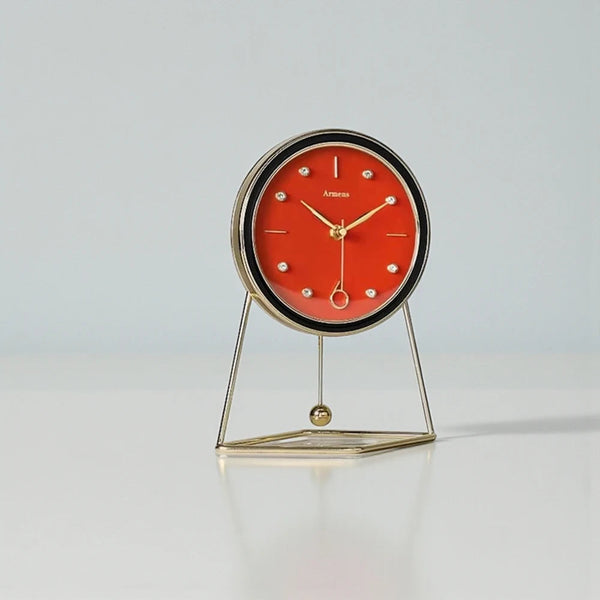
- Clock is slow: Turn the nut clockwise (viewed from below) to raise the bob.
- Clock is fast: Turn the nut counter-clockwise to lower the bob.
- Start with exactly one full rotation. This is a good starting point for the first adjustment.
Step 3: The Waiting Game and the Follow-up
Give the pendulum a gentle push to restart the heartbeat. Reset the hands to match your digital reference perfectly again.
This is where amateurs fail: they tweak it again too soon. You must wait another full 24 hours. We aren't fixing it instantly; we are calculating how much effect your one-turn adjustment had.
Check the time. You should be significantly closer to accuracy. If not, repeat the math.
From Guesswork to Precision: Finding Your Clock's Rate
Getting it close is good, but if you're like me, you want it to be perfect. This is where we move beyond general rules and find your clock's unique personality.
Calculating Your Clock's "Personal Equation"
Most manuals claim one full turn equals a set minute change, but that's rarely accurate. Every mechanical movement behaves differently. You need to calculate your specific rate of change.
After your initial twenty-four-hour test, look at the numbers. If one complete rotation shifted the time by exactly ninety seconds, you have it. That is your clock's unique "personal equation."
| Date | Initial Error (sec/24h) | Adjustment Made | New Error (sec/24h) | Calculated Change per Turn |
| 2026-01-08 | -120 sec | +1 turn | +30 sec | 150 sec/turn |
Making Precision Adjustments
Now that you know your rate is 150 seconds per turn, the math becomes simple. If the time is off by 75 seconds, you need exactly half a turn. It removes the guesswork.
I mark the rating nut with a tiny dot of paint or a pencil scratch. This visual aid lets you track partial turns with absolute accuracy. You see exactly where you started. That is how you dial it in to near-perfect timekeeping.
What If Adjustments Aren't Working?
Sometimes, the clock has other ideas. If adjusting a clock pendulum seems to have no effect or the clock stops, do not panic. There are a few usual suspects to check.
- Pendulum hitting the case: Is it swinging freely without touching the weights or the glass door?
- Dried oil and debris: Old oil gets sticky. The mechanism might just need a professional cleaning and fresh clock oil.
- Tangled chains or weights: Make sure the weights can move freely without any snags.
Regulating a pendulum clock is a blend of simple physics and patience. By listening for that steady beat and making precise adjustments to the pendulum's length, you restore its mechanical life. Take your time finding your clock's unique rhythm, and enjoy the satisfaction of perfect timekeeping.
Your questions, answered
What is the purpose of the nut at the bottom of the pendulum?
How do I ensure my clock is properly balanced?
How can I fix a clock that is 'out of beat'?
Why does my pendulum keep stopping?