What Happens When Clocks Stop ticking?
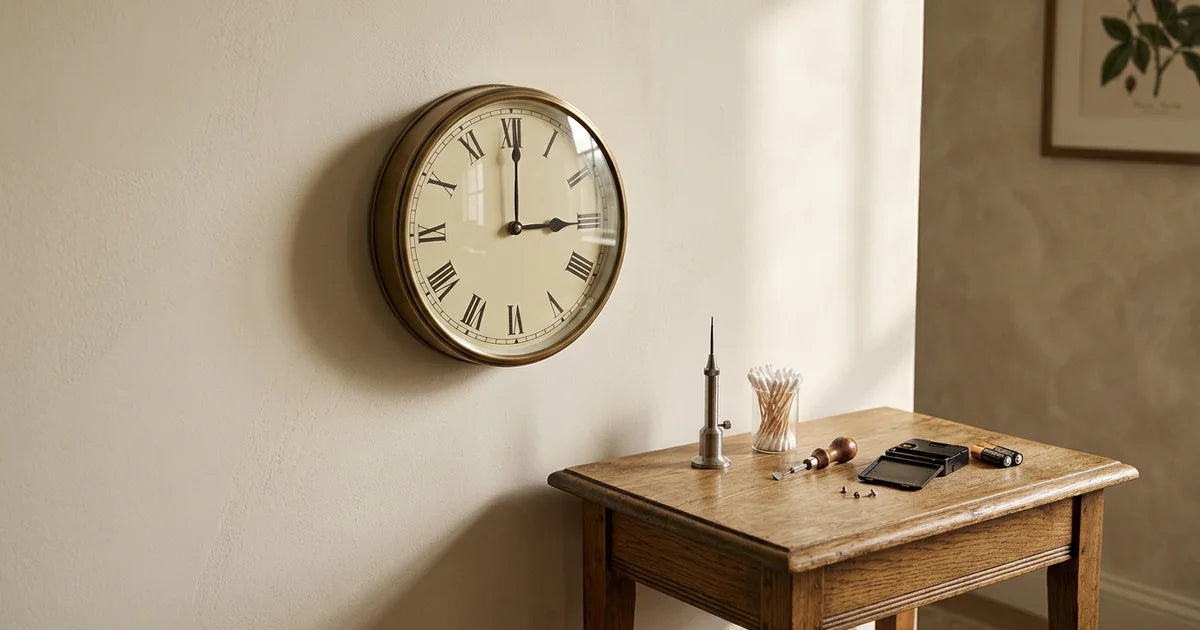
Essential to remember : When a wall clock stops ticking, it typically indicates a simple fixable issue like a dead battery in quartz clocks or mechanical problems such as jammed gears in analog models. While a stopped clock is technically correct twice daily, it serves as a reminder that immediate attention is needed for the remaining 1,438 minutes. Most clock stoppages can be resolved through basic troubleshooting like battery replacement, component adjustment, or cleaning dust from the mechanism.
A stopped wall clock freezes at the last displayed hour, losing its core function: measuring time. Identifying its type (quartz/mechanical) unlocks fixes, like battery swaps or mechanical tuning. Crucially, while a halted clock is technically "right" twice daily, it highlights a problem needing attention for 1,438 minutes every day.
Ever stared at a wall clock stops ticking and wondered if it's broken, or just playing a cosmic joke? When timekeeping turns silent, frustration kicks in: is it a dead battery, a jammed gear, or something deeper? This article decodes the mystery behind the halt, blending humor with practical fixes for both quartz and mechanical clocks. Discover why your clock might be "just hanging around," how mechanical issues freeze its rhythm, and why even a silent clock is "right twice a day." Learn quick resets, winding tricks, and when to call in a pro, no horologist required.
- What happens the moment a wall clock stops ticking
- First Step To A Fix: Is Your Clock Quartz Or Mechanical?
- Solving the silence: troubleshooting quartz wall clocks
- Reviving the Rhythm: Troubleshooting Mechanical Wall Clocks
- Advanced care and when to call a professional
- Getting Your Clock Back on Track
What happens the moment a wall clock stops ticking

The literal and the logical answer
When a wall clock stops ticking, the first answer is a playful riddle: it "hangs around", a pun on the dual meaning of "hangs" (to remain suspended or to stay idle). But beyond the wordplay, the reality is straightforward: the clock ceases to function. Its hands freeze in place, displaying the last recorded time until the issue is resolved. This is a common occurrence, often fixable with minimal effort.
The primary causes are typically a dead battery (for battery-powered clocks) or mechanical issues (like jammed gears in analog models). Environmental factors, such as humidity or temperature fluctuations, can also contribute. However, these problems are rarely permanent. Replacing the battery, adjusting misaligned components, or cleaning dust from the mechanism often restores functionality. A frozen clock isn't a catastrophe, it's a solvable hiccup in timekeeping.
First Step To A Fix: Is Your Clock Quartz Or Mechanical?
Why Identifying Your Clock Matters

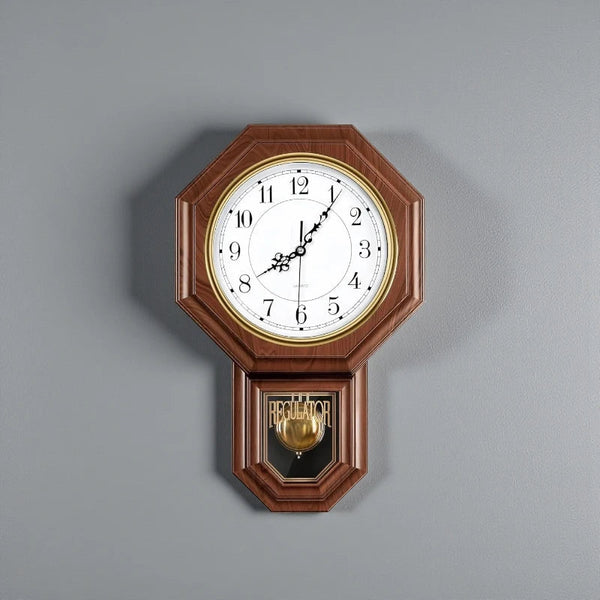
When a wall clock stops ticking, its behavior and required fixes depend entirely on its internal mechanism. Quartz clocks rely on a battery-powered system using a quartz crystal to regulate timekeeping. These clocks stop abruptly when the battery dies. Mechanical clocks operate through springs, weights, and gears requiring manual winding or pendulum motion. Their issues often stem from misalignment, dust, or lubrication problems.
Understanding these differences is critical: replacing a quartz clock's battery takes minutes, while fixing a mechanical clock might require professional servicing. Misidentifying the type can lead to wasted effort or damage. This clarity ensures efficient troubleshooting.
| Feature | Quartz Clock | Mechanical Clock |
| Power Source | Battery | Winding a spring or lifting weights |
| Mechanism | Electronic circuit and quartz crystal | Interconnected gears, springs, and levers |
| Common Issues | Dead battery, corroded contacts | Needs winding, off-level, lubrication issues |
| Maintenance | Low (battery change) | High (regular winding, professional servicing) |
Quartz clocks freeze at the last displayed time when they stop, requiring only battery replacement. Mechanical clocks may show gradual slowdowns, signaling the need for winding or lubrication. For quartz models, clean corroded contacts with alcohol. Mechanical clocks demand leveling, winding, or professional adjustments if needed. This distinction saves time and ensures swift resolution.
Solving the silence: troubleshooting quartz wall clocks
Basic quartz clock fixes for everyone
When a quartz wall clock stops ticking, the solution is often simpler than expected. Start with the most common fix: replacing the battery. Use a brand new alkaline battery to avoid premature power loss.

- Replace the battery: Begin with the easiest fix. Use a fresh, high-quality alkaline battery to ensure longevity.
- Check the polarity: Confirm the battery's positive and negative ends match the compartment's markings. Incorrect placement is a frequent culprit.
- Clean the battery contacts: Corrosion (white, crusty residue) can block power flow. Gently scrub contacts with a pencil eraser or cotton swab dipped in vinegar.
- Reset the hands: Remove the battery, manually align the hands to 12:00, then reinsert the battery. This often resets the mechanism.
These steps resolve most issues. If problems persist, the quartz movement might be faulty. Replacing the entire movement is typically more cost-effective than repairs, as quartz components are affordable and widely available.
A special case: radio-controlled clocks
Radio-controlled clocks rely on signals like WWVB (60 kHz) to auto-synchronize. If your clock displays the wrong time or stops, battery issues aren't the only cause. Common problems include:
- Poor signal reception: Physical barriers (metal roofs, concrete walls) or electromagnetic interference from TVs, computers, or fluorescent lights can block signals. Place the clock near a window, away from electronics.
- Location matters: Signal strength decreases with distance from transmitters. Check coverage maps and reposition the clock closer to a window facing the signal source.
- Weak batteries: Low power hampers signal reception. Replace batteries promptly to maintain functionality.
For detailed guidance on signal interference and troubleshooting, consult the NIST resource on radio-controlled clocks. Patience is key, some clocks take minutes to sync, especially in low-signal areas.
Reviving the Rhythm: Troubleshooting Mechanical Wall Clocks
Checking the Fundamentals: Leveling and Winding
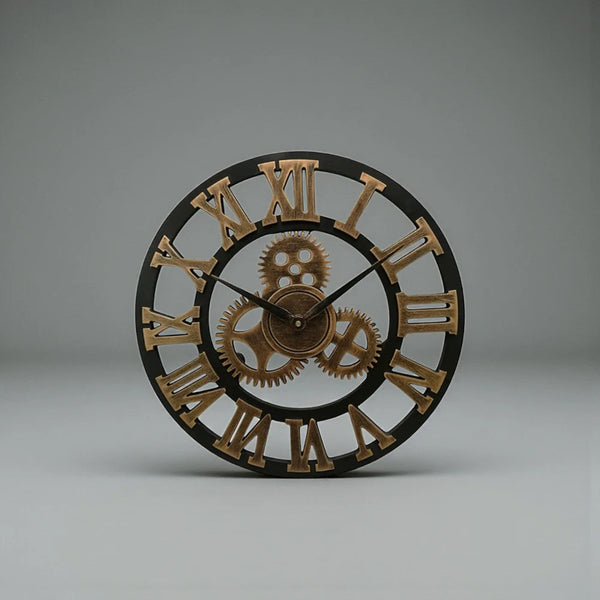
When a mechanical clock stops ticking, begin with basic maintenance. Most wall clocks require weekly winding - missing this causes immediate failure. Locate keyholes near the 4 and 8 o'clock positions, insert the key gently, and rotate slowly until resistance appears, typically in a clockwise direction. Avoid over-tightening to prevent spring damage - most mechanisms signal completion with slight resistance. Uneven surfaces disrupt pendulum motion: tilt the clock until the pendulum swings freely without grazing the case. A level surface ensures consistent energy distribution through gears for accurate timekeeping, as even a 2° tilt can disrupt pendulum amplitude.
The Sound of Time: How to Fix an 'Out of Beat' Clock
Listen closely to the ticking pattern. A rhythmic "tick-tock" at equal intervals indicates proper function. Irregularities like "tictac-tactac" mean the escapement mechanism isn't releasing energy symmetrically. Adjust by gently tilting the clock left/right while listening until achieving perfect cadence. Modern movements with Auto Beat technology often self-correct when pendulums swing past normal amplitude. For traditional mechanisms, manually adjust the pendulum suspension by holding the lower pendulum and shifting the upper section until the ticking evens out - this simple fix works for most mechanical issues. Never twist the pendulum itself, as this risks breaking suspension springs.
Clearing Obstructions and Friction
Dust and dried lubricant create friction that stops mechanical clocks. Inspect for debris between hands or gears. Clean accessible areas with a soft brush, avoiding delicate components. Loose hands touching each other or the case cause resistance - tighten connections carefully. Remember: 80% of repairs involve simple cleaning. Avoid household oils like WD-40 or 3-in-1 - these attract dust and solidify, creating abrasive paste. Use specialized horology lubricants with synthetic low-viscosity formulas, applying only pinhead-sized drops to pivot points like gear axles and escapement levers.
Professional maintenance becomes necessary when these steps fail. Annual servicing prevents 70% of common mechanical failures through proper lubrication and inspection. Environmental factors like temperature shifts affect accuracy - metal pendulums expand/contract with heat, altering timing by ±2 minutes monthly. Humidity accelerates oxidation in brass gears. Immediate correction maintains functionality. For persistent issues, consult a horologist - improper DIY repairs cause 40% of permanent mechanical damage according to industry reports. Regular maintenance every 3-5 years keeps antique clocks running smoothly for generations.
Advanced care and when to call a professional
The crucial role of proper clock lubrication
Using the right lubricant prevents premature wear in clock mechanisms. Clock-specific synthetic oil reduces friction between gears, pivots, and axles. Avoid generic lubricants like WD-40: it evaporates quickly, leaves sticky residues, and attracts dust that forms abrasive paste over time.
Apply lubrication sparingly. A pinhead-sized drop on pivot points (ends of axles) suffices. Excess oil migrates to gear teeth, creating drag and attracting contaminants. Use dedicated applicators like clock oilers or fine wires for precision. Store oils away from UV exposure - sunlight triggers photo-oxidation, thickening the oil and reducing its effectiveness.
Environmental factors matter. Humidity accelerates oil breakdown, while dust accumulates faster in open clock housings. Clean mechanisms before re-oiling - mixing old residue with new lubricant creates damaging sludge. Most antique clocks need re-oiling every 2-3 years if used regularly. Spring-driven clocks require specific oils applied carefully to internal coils.
Knowing your limits: signs you need a horologist
Some issues require expert intervention. Consider professional help if:
- Your DIY troubleshooting steps have all failed
- You notice visible damage to gears, springs, or pivots
- The clock needs deep cleaning and re-oiling you're uncomfortable performing
- The clock stops intermittently without clear cause
Professional servicing involves complete disassembly, cleaning, and recalibration - processes beyond typical home toolkits. Mechanical clocks benefit from comprehensive maintenance every 3-5 years, preventing costly repairs later. Horologists identify hidden wear patterns, like pivot wear in strike mechanisms, that casual inspections miss.
Regular operation matters. Running clocks monthly prevents oil from solidifying and metal components from fusing. If your clock hasn't worked for years, avoid DIY "fixes" - improper lubricants or forceful adjustments risk permanent damage requiring expensive restorations. Professionals use specialized tools to remove oil residue from critical areas like escapement mechanisms, preserving delicate components during deep cleaning.
Getting Your Clock Back on Track
A Summary for Keeping Time
When a wall clock stops, its hands freeze until repaired. This is normal. First, identify the type: quartz or mechanical. Replace dead batteries or clean contacts for quartz clocks. For mechanical models, check worn gears or misalignment. If issues remain, seek professional help.
Simple fixes include ensuring the clock hangs straight, inspecting battery contacts, or adjusting stuck hands. Regular maintenance prevents future issues. DIY works for minor glitches, but complex mechanisms need expert care. Use certified professionals for valuable clocks to preserve function and worth.
A stopped clock isn't broken, it's a fixable puzzle. View repairs as a way to extend its lifespan and keep time moving forward.
When your wall clock stops, it's not the end of the story. Start by identifying if it's quartz or mechanical, each demands its own fix. A fresh battery or a gentle winding might revive it. For persistent issues, professional care ensures longevity. Embrace the rhythm of timekeeping; a little maintenance goes a long way in keeping your clock, and your days, on track.
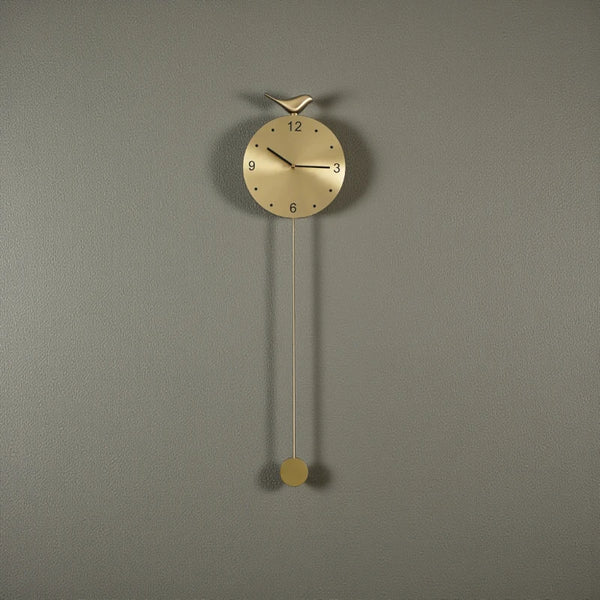
Pendulum wall clocks may stop if the case isn't perfectly level.
Your questions, answered
How can I fix a wall clock that has stopped ticking?
Why isn't my wall clock ticking anymore?
Why does my wall clock keep stopping unexpectedly?
What does it mean when a clock stops ticking?