Flip clocks: a complete buyer's guide for 2026
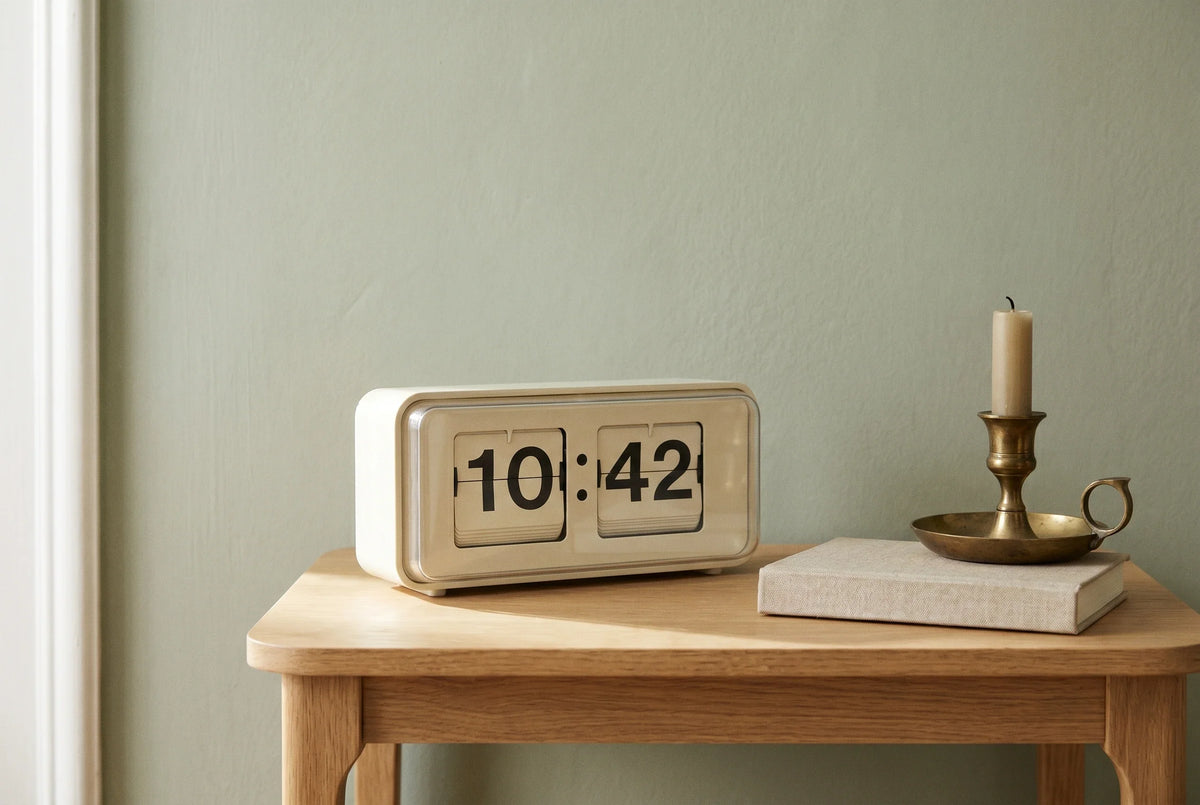
The flip clock, that distinctive split-flap card display, sits in a category of its own. Neither analog nor digital in the modern sense, it remains one of the most tactile ways to read time. This guide covers what makes a flip clock worth owning in 2026, the three main mechanisms, and how to choose between them.
What a flip clock actually is
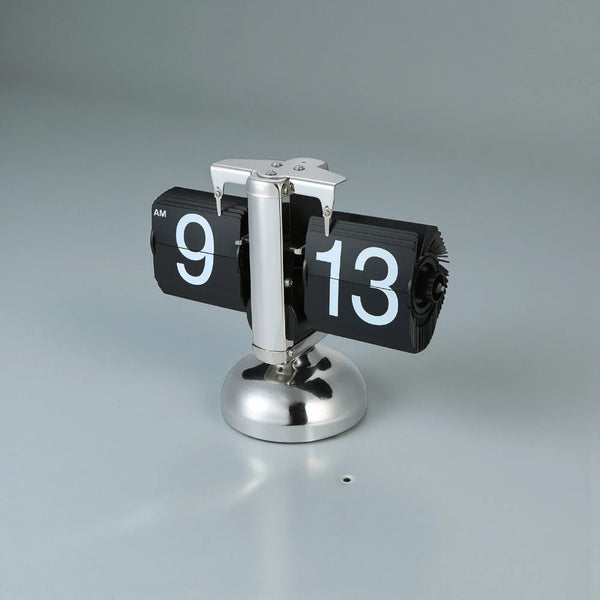
A flip clock displays time using rotating cards bound to a central spindle. As each minute passes, a card pivots down to reveal the next digit. The mechanism is mechanical in origin, patented by Italian engineer Solari di Udine in the 1950s, and the design crossed into bedside clocks, departure boards, and stereo systems through the 1960s and 1970s.
Today, three families exist: mechanical (driven by a small motor and gear train), electric (mains-powered, no batteries), and modern reproductions that use LED segments styled to mimic the flip motion. Each delivers a slightly different aesthetic and sound.
Drawn to retro displays in general? Nixie tubes scratch the same itch; see our nixie tube clock buying guide.
The three mechanisms compared
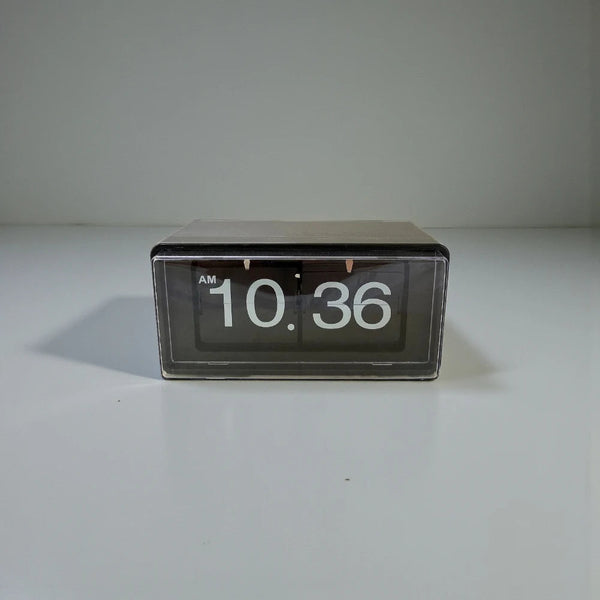
Mechanical flip clocks rely on a synchronous AC motor turning a cam that releases each card. The sound, a soft mechanical tick as the card drops, is part of the appeal. They run continuously when plugged in and rarely need adjustment beyond an initial time set. Browse our flip clocks collection to see current mechanical models.
Electric flip clocks share the same card mechanism but use a quartz movement to drive the flip. They tend to be quieter and more accurate but lose some of the rhythmic sound mechanical purists value.
LED flip-style clocks use no cards at all, they animate digits on an LCD or LED display to simulate the flip motion. The visual is close, the experience is not. For collectors and design enthusiasts, the cardboard or plastic card mechanism remains essential.
How a flip clock fits a room
Flip clocks sit best on a surface, a console, a bedside table, a desk, at eye height when seated. Wall-mounted flip clocks exist (often larger industrial models referencing train station boards) but the genre belongs primarily to table clocks and desk clocks.
Beside a flip clock, the most natural pairing is a piece of soft furniture: a leather chair, a textured throw, a stack of books. The mechanical nature wants a calm, slightly retro context. In a high-contrast modern interior, a flip clock can be the single warm element that anchors the room.
What to check before buying
, Card stock quality. Thin laminated cards fade and warp after a few years of mechanical stress. Look for thick, matte-finished cards.
, Motor noise. A flip clock is meant to be present, not invasive. Listen for the motor hum during quiet hours.
, Card alignment. Misalignment between the top and bottom halves of each digit is the most common manufacturing defect.
, Power. Mains-powered models are more reliable than battery, a flip clock running on AA batteries will exhaust them quickly.
, Replacement parts. Period-correct vintage flip clocks may need new cards or a motor rebuild within a decade. Modern reproductions trade authenticity for serviceability.
Adjacent collections worth exploring
If the flip mechanism appeals but you want a different display, consider our nixie tube clocks, another mid-century display technology revived for contemporary interiors. For something quieter and wall-mounted, our digital wall clocks offer LED clarity without the mechanical complexity. And for the analog purist, our analog clocks page is the natural counterpart.
The flip clock as a small ritual
What makes a flip clock different from any other timepiece is that you watch it work. Once a minute, a card falls. It is the only clock that invites that brief moment of attention, and for that reason, it remains one of the most rewarding objects to own. For a broader perspective on why we still build rooms around standalone timepieces in 2026, see our wall clock trends 2026 guide.